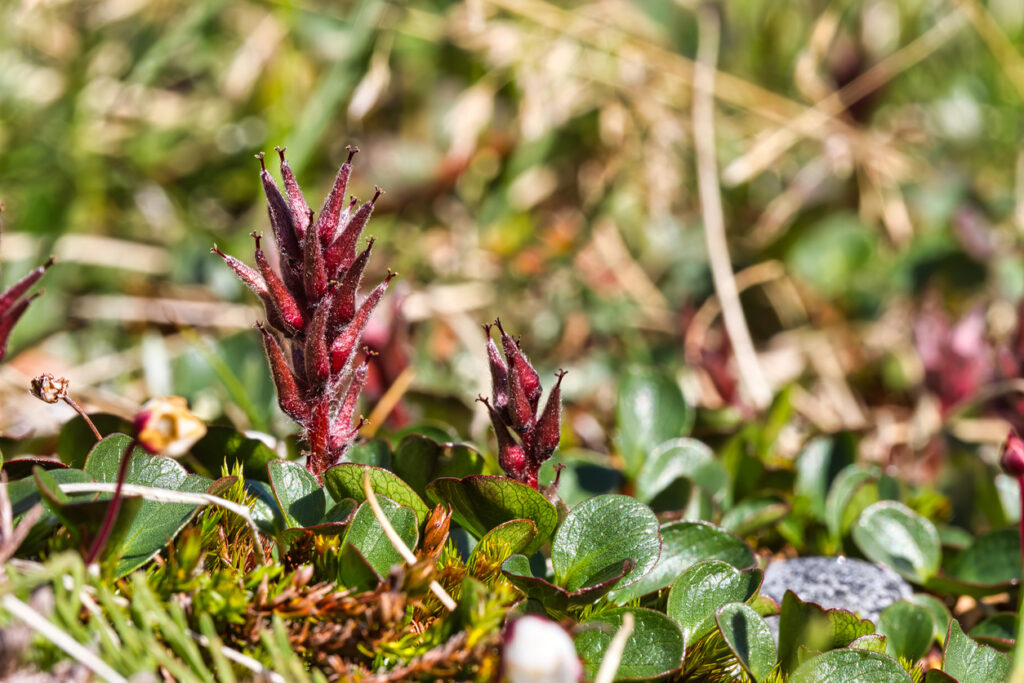
When most people think of a tree, they imagine something tall enough to cast shade or climb. The dwarf willow completely rewrites that picture. This tiny plant grows so close to the ground that you could step over it without noticing, yet botanically it still qualifies as a tree. It survives in places where conditions are brutal, seasons are short and the soil barely exists. The more you look into it, the more surprising it becomes.
1. It’s officially one of the smallest trees on Earth.
The dwarf willow, known scientifically as Salix herbacea, is widely recognised as one of the tiniest tree species in the world. In many cases it grows only one to six centimetres tall, which means it often sits lower than the surrounding grass and moss. If you were walking across alpine ground, you might not realise you were stepping over a tree at all. Its size is so modest that it challenges everything we assume about what a tree should look like.
Despite that height, it still has woody stems and the biological structure that classifies it as a true tree rather than a simple herb. It does not abandon its identity just because it stays small. Instead, it shows that being a tree is about anatomy and growth pattern, not towering presence. That alone makes it one of the most fascinating examples in the plant kingdom.
2. It survives in some of the harshest climates on Earth.
You will find the dwarf willow in Arctic tundra regions and high mountain landscapes, including parts of the Scottish Highlands. These environments experience freezing winds, sudden storms and extremely short summers. The soil is often thin, rocky, and low in nutrients. For most plants, that combination would be too much.
What allows the dwarf willow to survive is its refusal to rise above the elements. By staying low to the ground, it avoids the full force of cold winds and takes advantage of the slight warmth that builds at soil level. It’s not trying to compete with tall trees. It has adapted to a world where survival depends on keeping a low profile.
@brightside.official The plant is dwarf willow 🌱 #PlantLover #LearnOnTikTok #TikTokPartner #atlantic #tiny ♬ original sound – BRIGHT SIDE
3. It grows sideways instead of upward.
Unlike oak or pine trees that stretch skyward, the dwarf willow spreads horizontally. Its stems creep along the ground, forming a small network that hugs the surface. Its sideways growth pattern helps anchor it against strong winds that would snap taller plants.
Growing outward also allows it to maximise sunlight during the short Arctic and alpine growing seasons. When the sun finally appears for longer periods, every patch of exposure counts. Spreading across the surface gives the plant more opportunity to absorb light without risking damage from standing tall.
4. Snow is actually one of its protectors.
It might seem surprising, but heavy snow can help this tiny tree rather than harm it. A thick layer of snow acts like insulation, shielding the plant from extreme temperature drops and biting winds. Beneath the snow, the dwarf willow remains dormant but protected.
When spring finally arrives and the snow melts, the plant is ready to resume growth almost immediately. In these climates, snow cover can be the difference between survival and exposure. For the dwarf willow, winter is not just endured. It’s managed through smart adaptation.
5. It still produces catkins like larger willows.
Even though it’s miniature, the dwarf willow follows the same reproductive pattern as its much taller relatives. During the brief summer, it produces small catkins, the flowering structures typical of willow species. These appear close to the ground, almost hidden among surrounding vegetation.
The timing of the process is critical. The growing season in tundra regions is short, so pollination and seed production must happen quickly. The dwarf willow makes the most of that narrow window, proving that size does not limit complexity or function.
@dingdongsgarden Dwarf Arctic, or Nana, Willow is a Salix purpurea with extremely fine stems and small narrow leaves. It maintains these characteristics as it grows creating a large bushy plant. In addition to making for a great hedge, the stems of Dwarf Arctic Willow are excellent for fine basketry work. #willow #gardening #floraldesign #flowerfarm #willowcuttings #basketrywillow ♬ original sound – dingdongsgarden
6. It plays a key role in fragile ecosystems.
In tundra and alpine habitats, even the smallest plant can be ecologically important. The dwarf willow provides food for insects and grazing animals that rely on hardy vegetation. It also helps stabilise loose soil in landscapes where erosion can happen easily. Without low-growing plants like this, the delicate balance of these ecosystems would be disrupted. The dwarf willow may look insignificant at first glance, but it contributes to a web of life that depends on resilience and adaptation at every level.
7. Its leaves are tiny but built for survival.
The leaves of the dwarf willow are small, rounded, and close to the ground. Their compact shape reduces exposure to cold air and strong wind. Being small also helps limit water loss, which is important in environments where moisture can be scarce despite the cold. These leaves are not designed for show. They are practical, efficient, and suited to harsh conditions. Every part of the plant reflects the same theme: survive first, impress later.
8. It challenges what we mean by the word tree.
Most people associate trees with trunks, height, and shade. Seeing the dwarf willow forces a rethink. Botanically, it qualifies as a woody perennial plant with the structure of a tree, even if it lacks a towering trunk. This tiny species reminds us that nature does not follow human expectations. Our mental image of a tree is shaped by forests and parks. The dwarf willow proves that the definition is broader than that, and far more interesting.
9. It grows slowly and patiently.
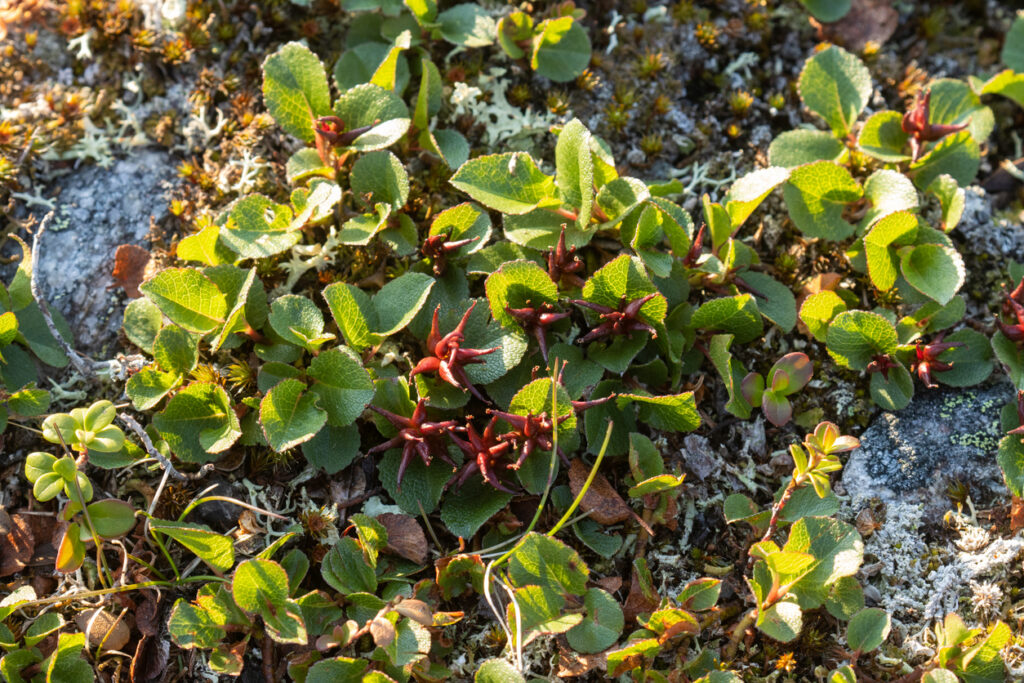
Life in extreme climates demands patience. The dwarf willow cannot rush its development because suitable conditions only last a short time each year. Growth happens during a narrow summer window when temperatures rise just enough to support activity. For the rest of the year, the plant conserves energy and waits. That slow, steady approach allows it to survive where faster-growing species would fail. It’s a long game strategy in an environment that rewards caution.
10. It’s a symbol of resilience.
The dwarf willow does not dominate its landscape. It does not tower above other plants or draw attention from a distance. Instead, it survives in some of the world’s most demanding environments by staying adaptable and close to the ground. Its strength lies in endurance rather than size. In a world where we often equate growth with height and power with visibility, this tiny tree offers a different perspective. Sometimes survival is about knowing exactly how small to be.