Most drivers assume that as long as they’ve got a tow bar and a bit of common sense, they’re good to go, but the UK’s towing laws are a total minefield of specific weights and dates.

It’s more than just hooking up a trailer and heading off; the rules changed significantly depending on when you passed your test, and there are strict limits on the total mass your vehicle can actually handle. If you’re not careful, you could easily find yourself in a situation where your insurance is void, or you’re facing a massive fine because your caravan is a few kilograms over the limit.
It’s a classic case of the law moving faster than most people’s awareness. We’re looking at the 10 most common ways people accidentally fall foul of the DVSA and what you need to check before you even think about hitting the motorway.
Your driving licence might not cover what you’re towing.

This is one of the biggest traps. What you’re allowed to tow depends heavily on when you passed your driving test. Drivers who passed before 1 January 1997 usually have “grandfather rights” that allow them to tow heavier trailers. Anyone who passed after that date has tighter limits unless they’ve taken additional tests.
Many people assume that because they’ve been driving for years, they’re automatically covered. They’re not. Towing a trailer that exceeds your licence entitlement can invalidate your insurance instantly, even if everything else is perfect. It’s one of those issues that only becomes obvious after something goes wrong.
You may be exceeding weight limits without realising.

Towing limits aren’t based on guesswork or what “feels fine” on the road. They’re based on exact figures: the car’s kerb weight, maximum towing capacity, and the trailer’s Maximum Authorised Mass. These numbers don’t always match what people assume, especially with modern cars.
A common mistake is loading a trailer heavily because the car seems to handle it. Stability doesn’t equal legality. Being over the legal weight can lead to fines, penalty points, and insurance refusal after an accident, even if the vehicle felt under control.
The 85% guideline is misunderstood.

You’ll often hear advice saying your caravan should weigh no more than 85 percent of your car’s kerb weight. Many drivers treat this as a legal rule, but it’s not. It’s a safety recommendation, not law.
The problem is that some people ignore actual legal limits because they think they’re fine if they stick to the 85% figure. Others assume they’re illegal if they go above it. Unfortunately, neither is correct. Legal towing limits always override guidance, and confusing the two can land you in trouble.
Nose weight rules are commonly ignored.
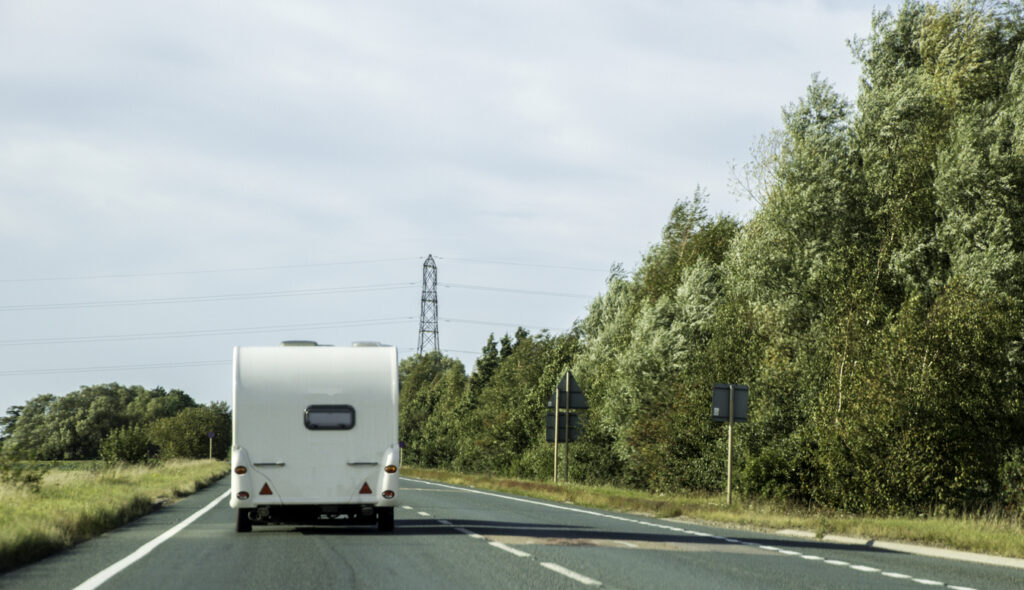
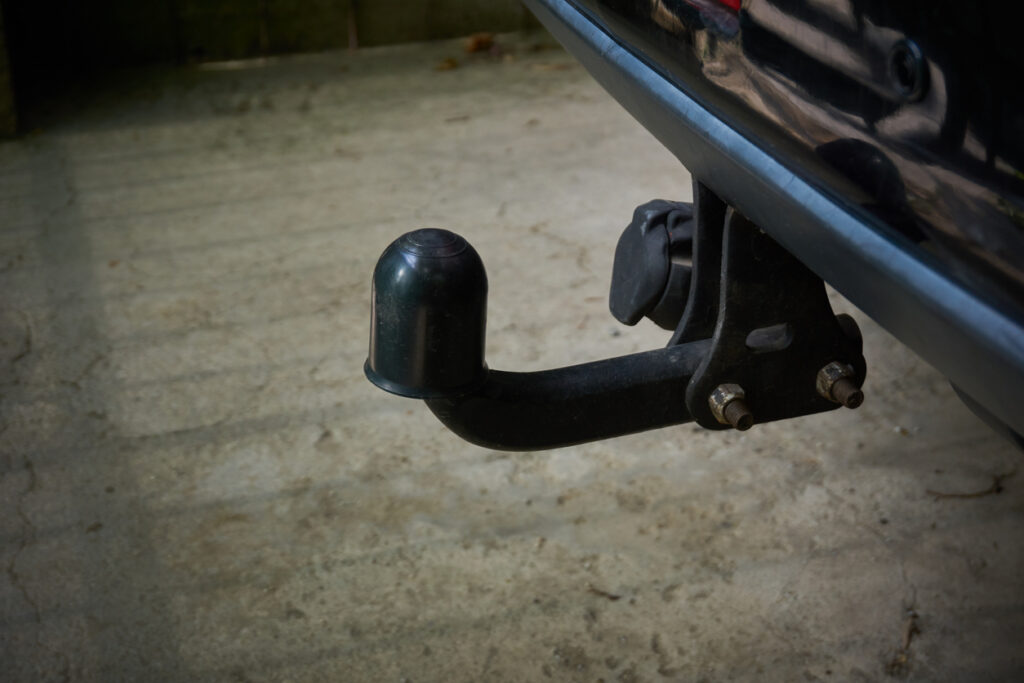
Nose weight is the downward force the trailer exerts on the tow ball. It’s a small detail that makes a big difference to stability, braking, and legality. Both the vehicle and the tow bar have maximum nose weight limits.
Many drivers never check this at all. Overloading the front of a trailer or caravan can cause dangerous handling issues and breach manufacturer limits. Police and DVSA checks do include nose weight, especially at roadside inspections.
Your mirrors might not be legal for towing.
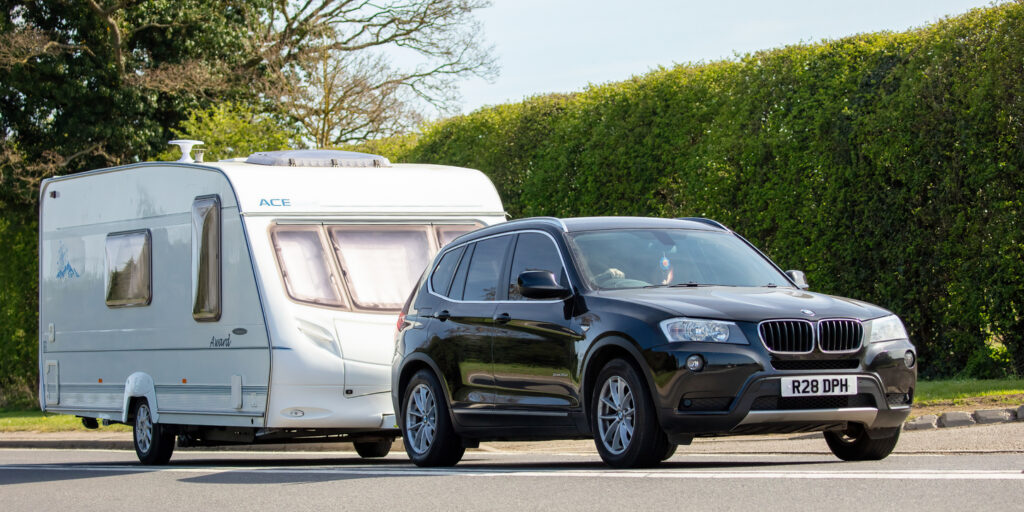
If your trailer or caravan is wider than your car, you’re legally required to fit extended towing mirrors. This applies even if you feel you can “see well enough” without them. Failing to use proper mirrors can result in fines and penalty points. It’s also a common reason drivers fail roadside checks. This one catches people out because it feels minor, but enforcement officers don’t see it that way.
Breakaway cables and safety chains are often fitted incorrectly.
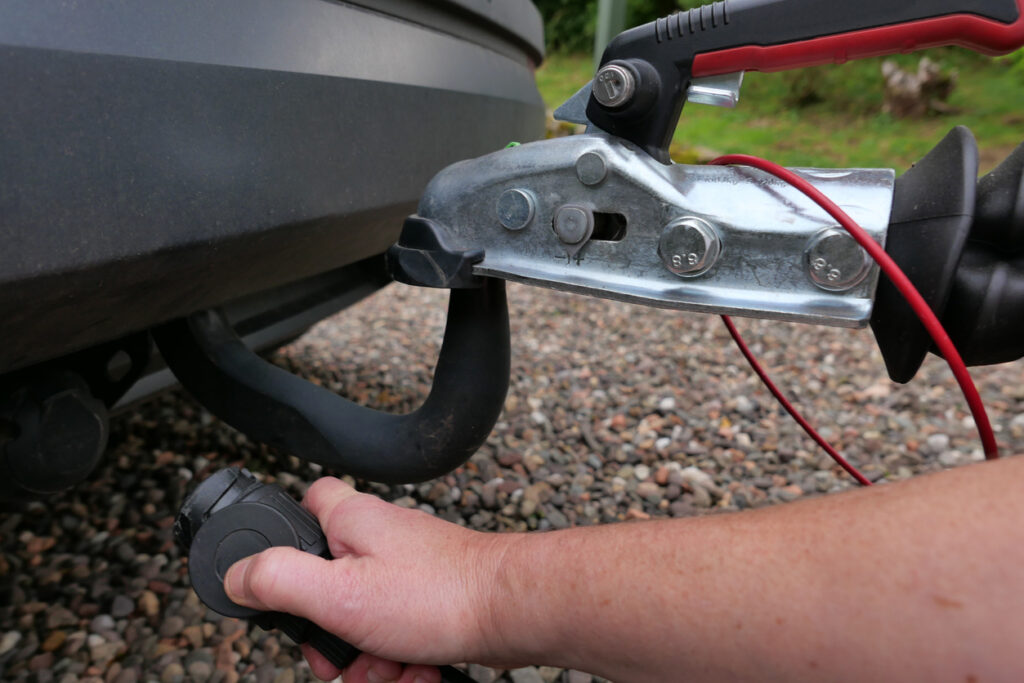
Trailers and caravans over certain weights must have a breakaway cable fitted correctly. That cable is designed to apply the trailer brakes if it detaches from the car. A common mistake is looping the cable incorrectly around the tow ball or attaching it to the wrong point. If it’s not fitted as designed, it doesn’t count. In the event of an incident, incorrect fitting can be treated the same as not having one at all.
Your trailer lights may not meet legal standards.

Towing vehicles must have fully functioning lights on the trailer, including indicators, brake lights, and number plate illumination. Faulty wiring, mismatched bulbs, or intermittent connections are extremely common. Drivers often don’t notice because the car lights work fine. Police checks focus on trailers precisely because these faults are so widespread. A single failed indicator can be enough for a fine or prohibition notice.
Speed limits for towing are lower than you think.
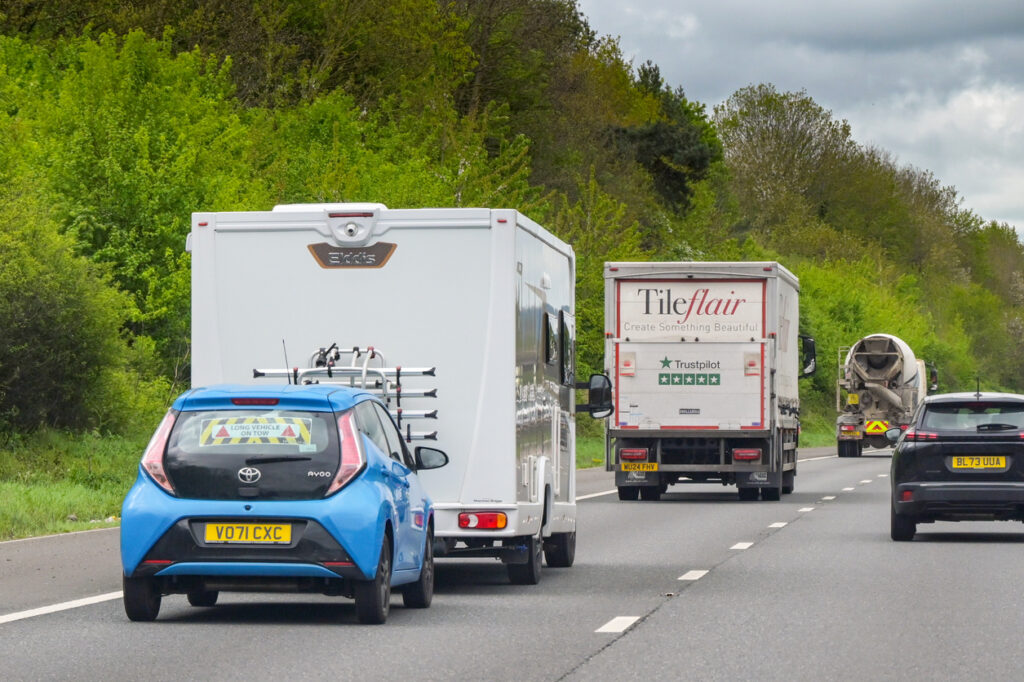
When towing, national speed limits change. On single carriageways, the limit drops to 50 mph. On dual carriageways and motorways, it’s 60 mph. The standard 70 mph motorway limit doesn’t apply.
This catches out drivers who are otherwise careful and law-abiding. Speed cameras don’t care that traffic flow is faster or that your vehicle feels stable. Exceeding towing speed limits can lead to points and fines, just like any other offence.
You may be illegally towing in certain lanes.
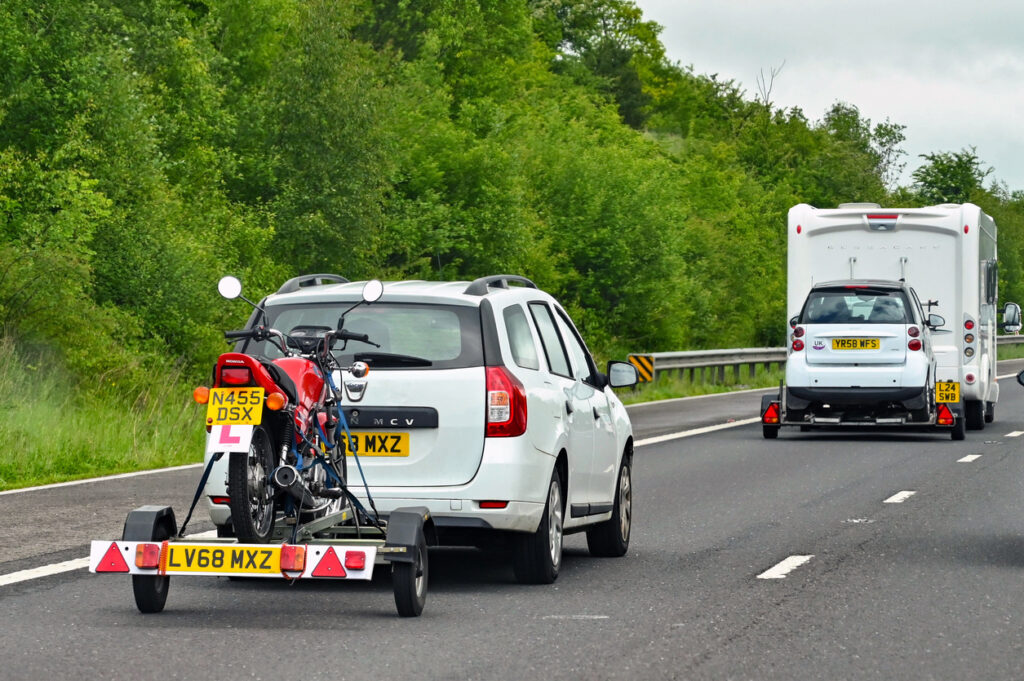
Vehicles towing trailers are not allowed in the right-hand lane of motorways with three or more lanes, except where directed. Many drivers either don’t know this or forget once they’re on the road. This rule is enforced more than people realise, especially with camera evidence. Sitting in the wrong lane while towing is a straightforward offence, even if traffic is light and conditions are good.
Your insurance might not cover what you assume it does.
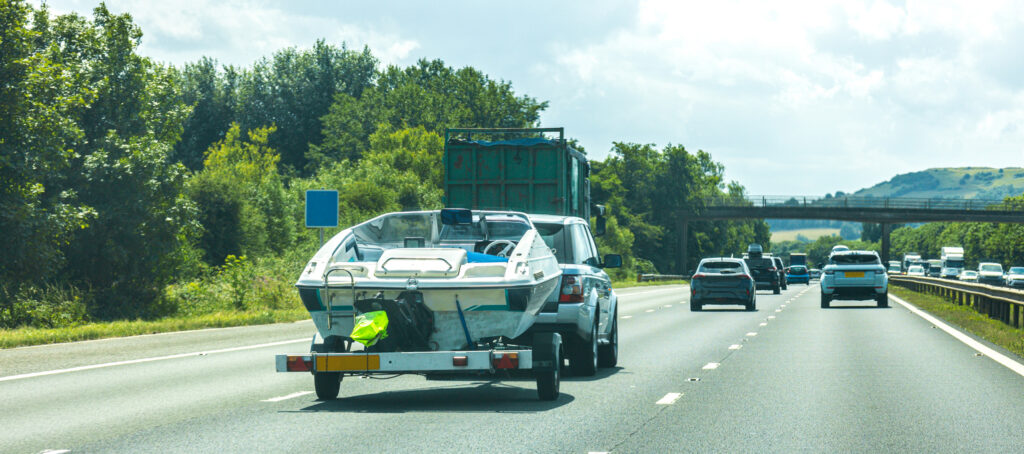
Some insurance policies require you to declare towing, particularly for caravans or larger trailers. Others include towing as standard but only within strict legal limits. If you’re involved in an accident while towing illegally, even unknowingly, insurers can refuse to pay out. That includes third-party claims. Many drivers only discover this gap when it’s far too late.
How to avoid falling foul of the law
Towing in the UK doesn’t require being an expert driver or feeling confident behind the wheel. However, you do need a solid understanding of a web of rules that don’t always match intuition. Most people who break towing laws aren’t reckless. They’re uninformed, relying on assumptions, outdated advice, or what they’ve seen others do for years without consequence.
The uncomfortable truth is that towing laws are enforced most strictly after something goes wrong. Roadside checks, collisions, and insurance claims are when technical breaches suddenly matter a great deal. Taking the time to check licence entitlements, weights, and fittings isn’t overkill. It’s the difference between a minor mistake and a serious legal headache.