When people think of Australian wildlife, the focus usually falls on the high-energy icons like kangaroos or the sleepy appeal of the koala.
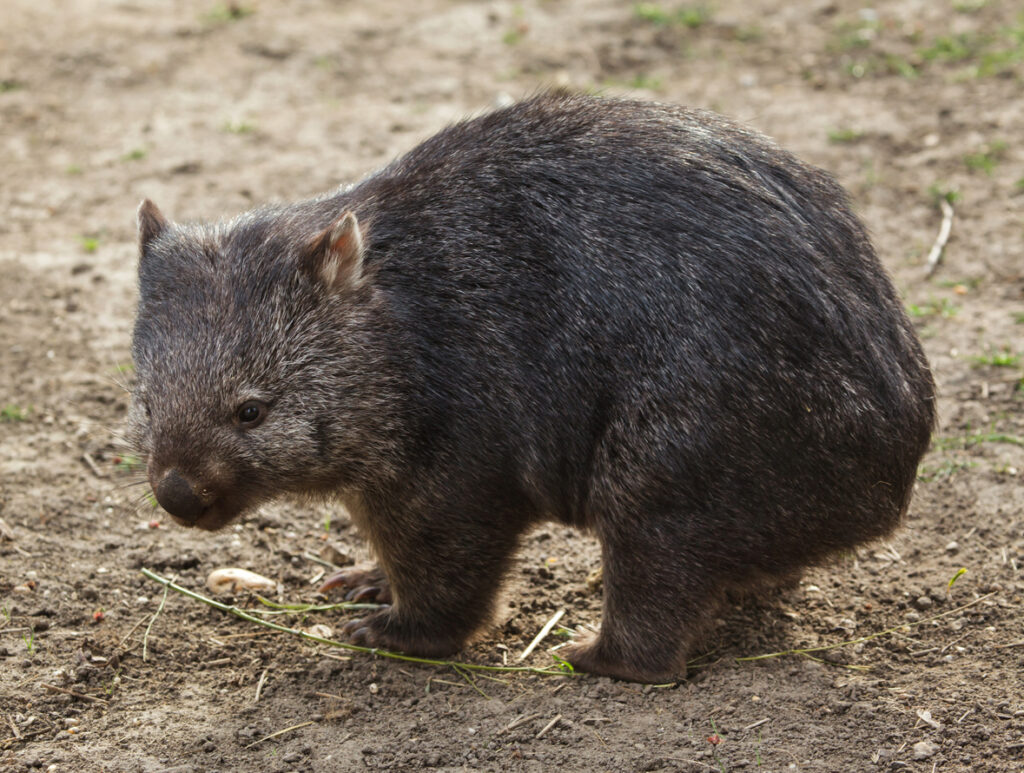
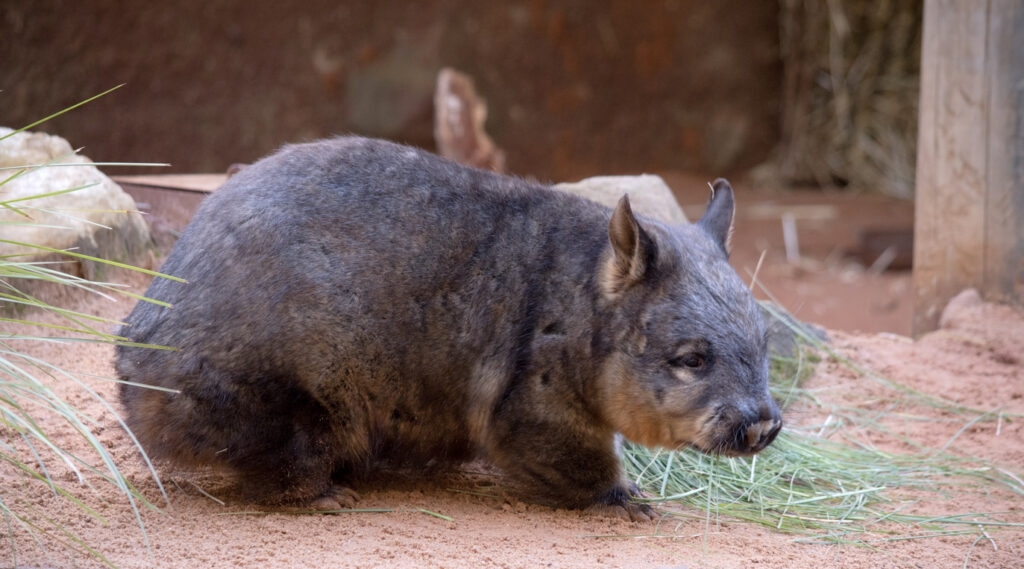
However, tucked away in the cooler, southern corners of the continent is the bare-nosed wombat, a heavy-duty, earth-moving specialist that is essentially the bulldozer of the marsupial world. While they might look like slow, bumbling boulders of fur, these animals are master engineers capable of digging tunnel systems so complex they often provide emergency shelter for other species during bushfires. They’re surprisingly fast, incredibly tough, and possess a set of biological quirks (including their famous cube-shaped droppings) that make them one of the most uniquely adapted survivors in the bush.
They’re among the world’s largest burrowing animals.
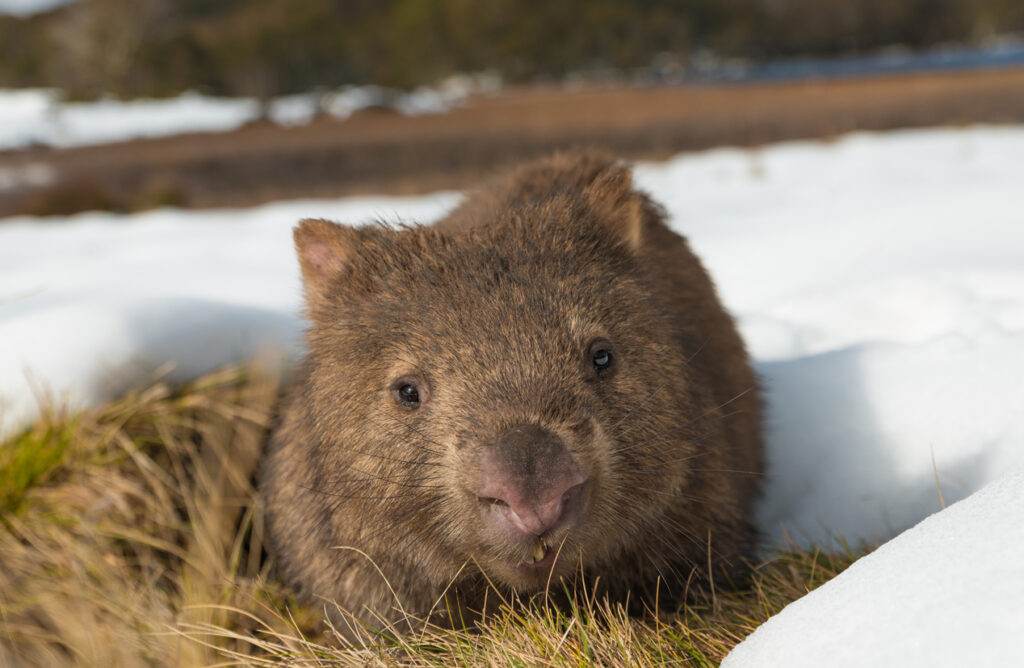
Bare-nosed wombats are seriously impressive diggers, ranking as some of the biggest burrowing mammals on the planet. They’ve got powerful shoulders, short broad feet, and flattened claws that work like excavation tools. Their barrel-shaped body might look cuddly, but it’s built for serious underground engineering. A single wombat can shift massive amounts of soil when digging its burrow system, and they’re so good at it that early settlers called them badgers.
Their pouches open backwards to keep dirt out.
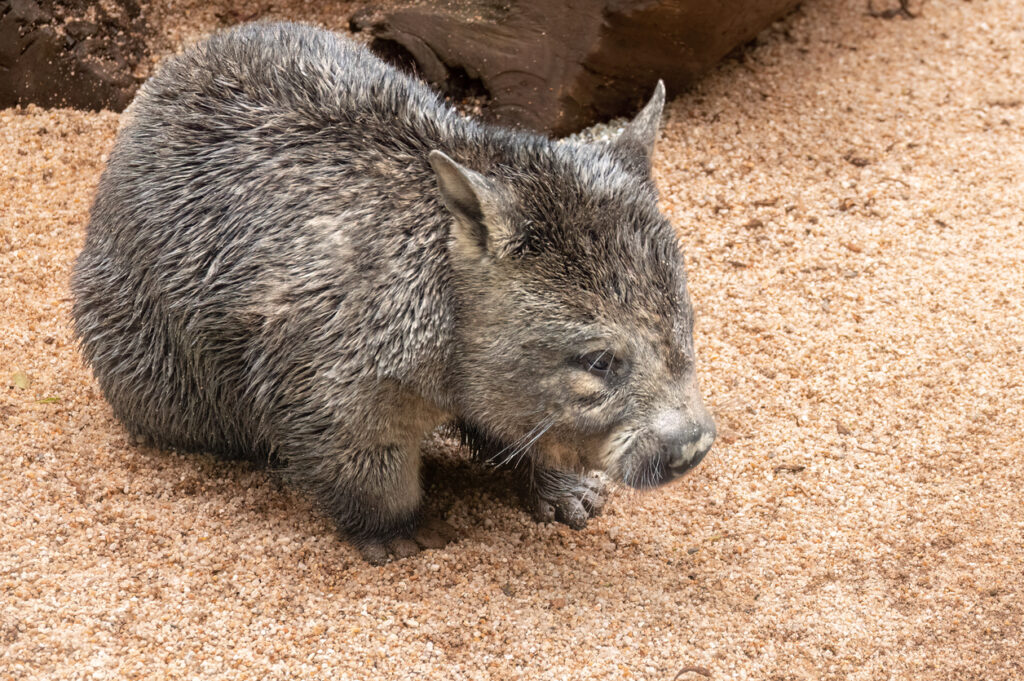
Unlike kangaroos, whose pouches open at the top, wombat pouches face towards the rear. This backwards design prevents soil from getting in while the mother is digging burrows. It’s a clever bit of evolution that makes perfect sense when you consider how much time wombats spend underground. The joey stays safe and clean in the pouch even when mum is excavating tunnels and shifting dirt around.
They produce cube-shaped poop.
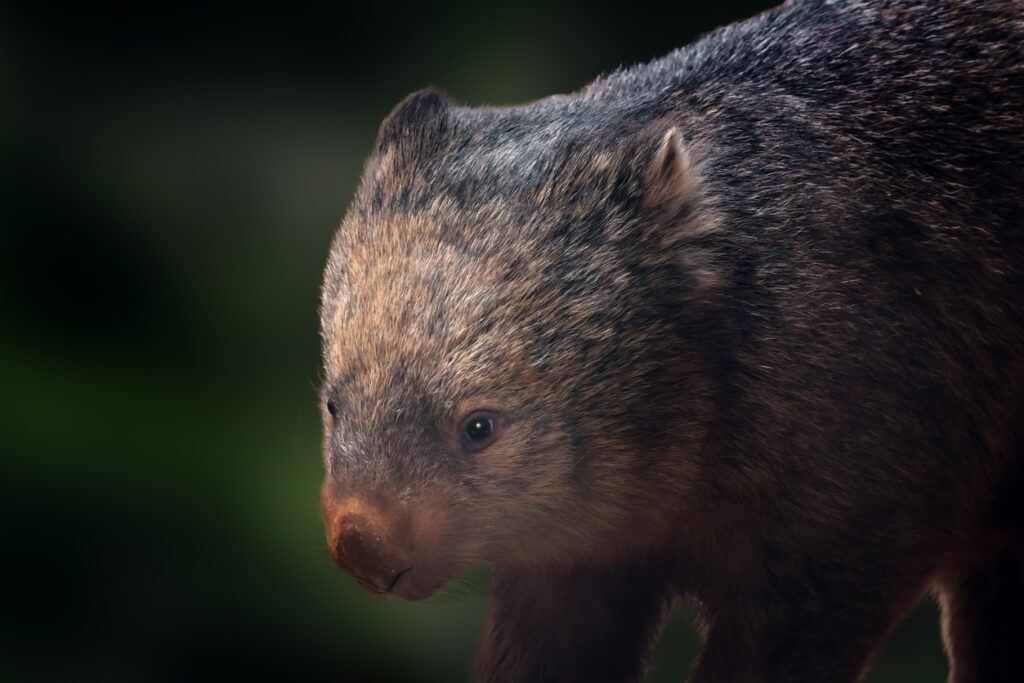
Wombats are the only animals in the world that produce cubic droppings. Their incredibly long, irregular intestines process food so thoroughly that the poop comes out in neat little cubes rather than round pellets or sausage shapes. This unusual shape helps the droppings stack on rocks and logs without rolling away, which wombats use to mark their territory. Scientists reckon the elastic properties at the ends of their large intestines are what create the distinctive cube shape.
Their teeth never stop growing.
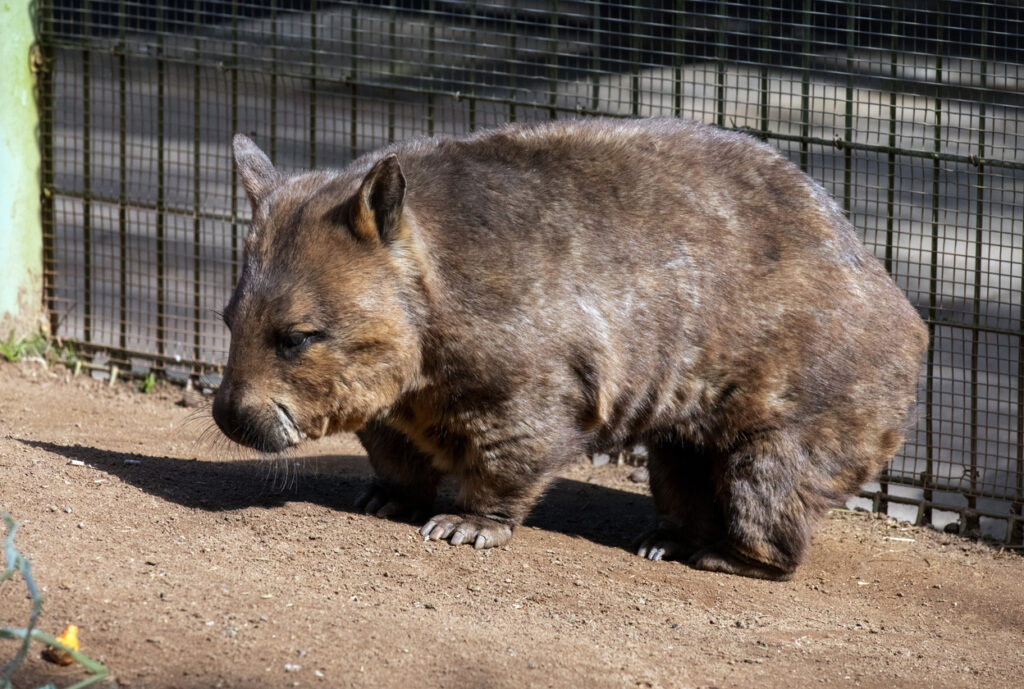
Bare-nosed wombats have only two incisors in their upper jaw, which sets them apart from other marsupials. These front teeth are rootless and grow continuously throughout their entire life, much like a rodent’s teeth. They need this constant growth because their diet of tough grasses, roots, and bark wears the teeth down constantly. Wombats sometimes use their ever-growing teeth to cut through obstructions, working a bit like a beaver gnawing through wood.
Mainland wombats are bigger than island ones.
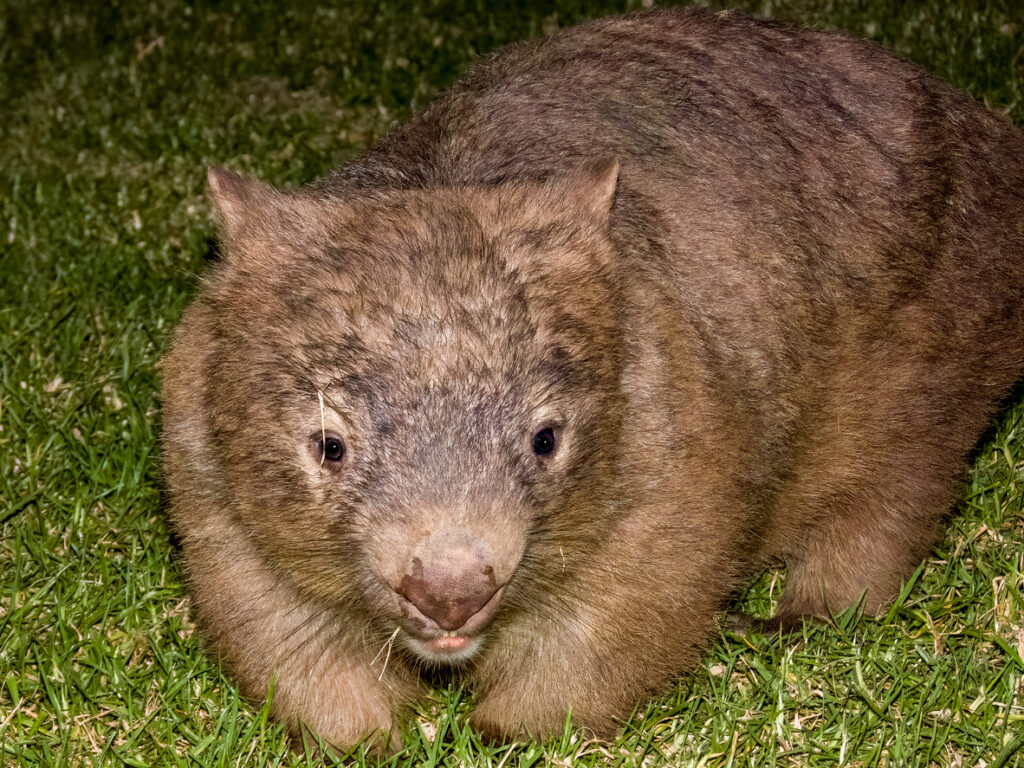
There are three subspecies of bare-nosed wombat, and they vary quite a bit in size depending on where they live. Mainland wombats average about 1 metre in length and 27 kilograms in weight, with some specimens reaching up to 1.2 metres and 35 kilograms. Tasmanian wombats are smaller at around 85 centimetres and 20 kilograms, while Flinders Island wombats are the smallest at just 75 centimetres long. This size variation probably evolved to suit the different environments each population lives in.
They can run at 40 kilometres per hour when necessary.
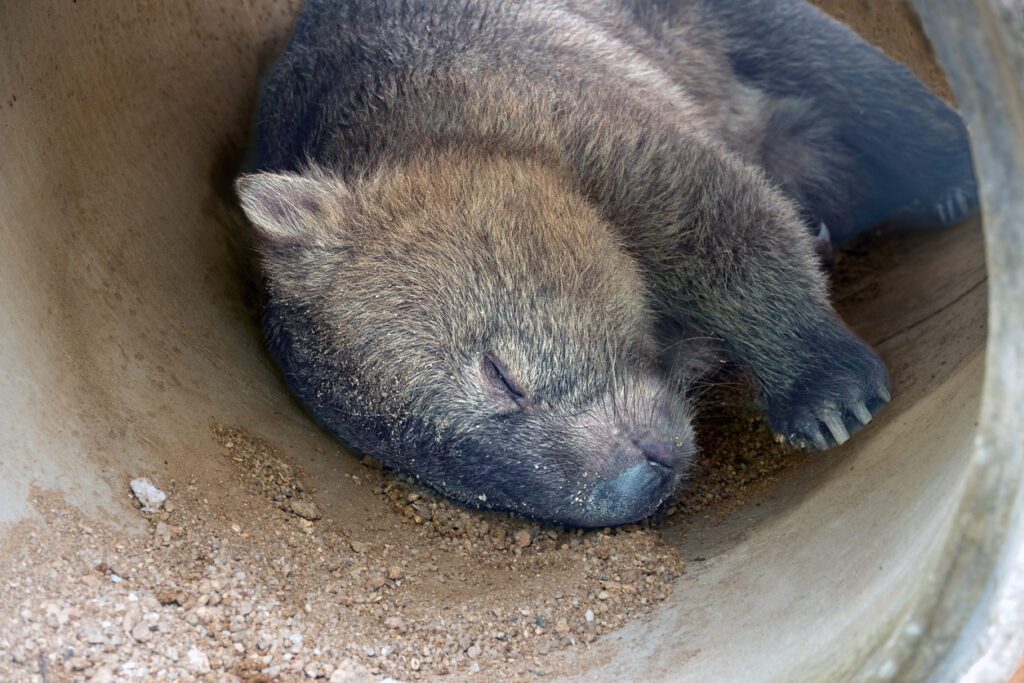
Despite their stocky build and characteristic waddle, wombats are surprisingly fast when they need to be. They can hit speeds of 40 kilometres per hour in short bursts, which is pretty impressive for an animal that looks like it moves slowly. This speed helps them escape predators and get back to their burrows quickly when threatened. You wouldn’t expect such a chunky animal to shift that fast, but wombats are full of surprises.
Their bum is their best defence weapon.
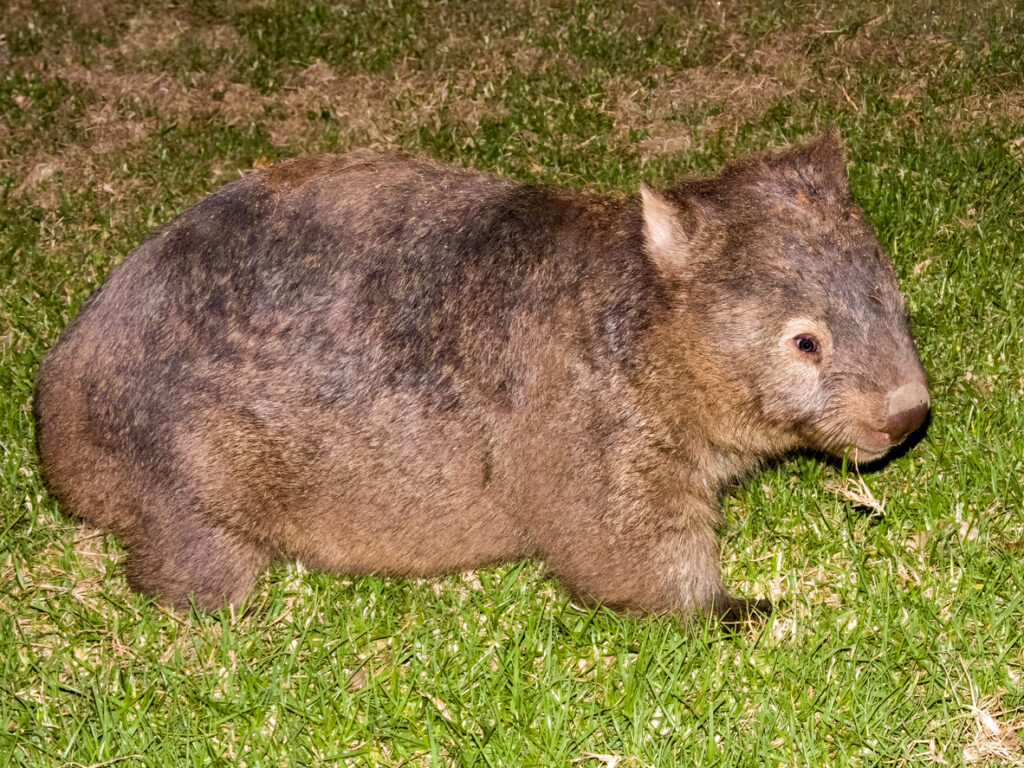
Wombats have incredibly tough cartilage, fat, and fur protecting their rear ends, creating what’s essentially body armour. When a predator chases them into a burrow, they use their reinforced backside to block the entrance and protect the rest of their body. They can also crush an attacker’s head against the burrow roof using their powerful rump. Crushed fox and dingo skulls have been found near wombat burrows, suggesting this defence strategy is brutally effective.
A single wombat can have up to twelve burrows.
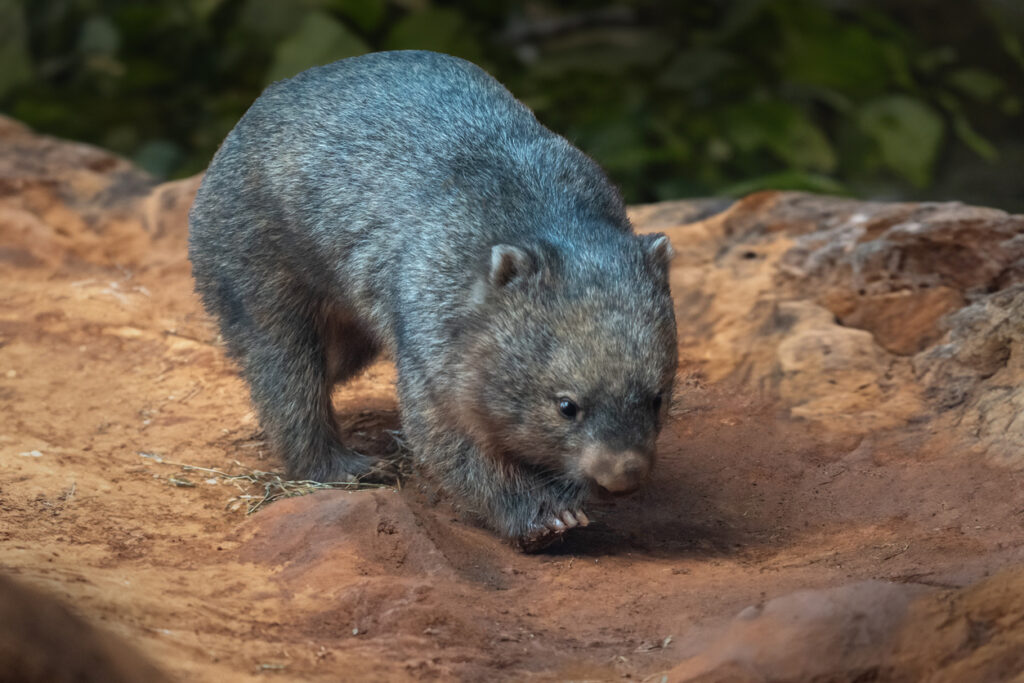
Bare-nosed wombats don’t just dig one burrow and stay there, they create an entire property portfolio of underground homes. An individual might have up to twelve burrows scattered across its territory, with three to four main ones that get regular use. These burrow systems can range from 2 to 20 metres in length with multiple side tunnels, entrances, and sleeping chambers. Wombats typically spend a few days in one burrow before moving to another, though the reasons for this rotation aren’t entirely clear.
They’re nocturnal grazers who spend ages digesting their food.
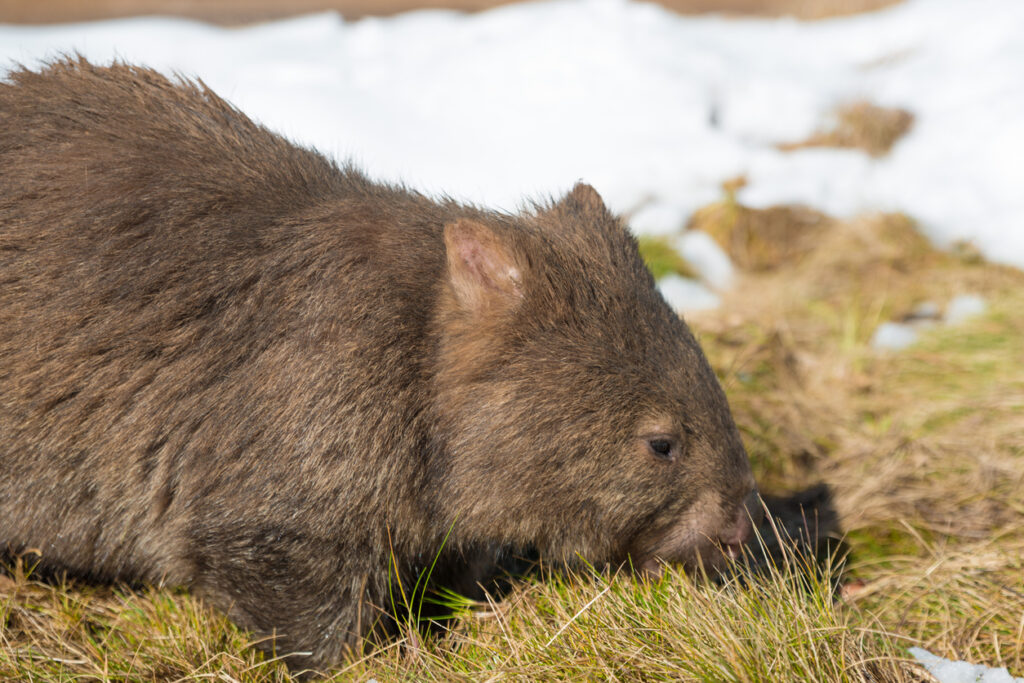
Wombats venture out at night and during cooler mornings and evenings to graze on grass, which makes up the bulk of their diet. They’ll also eat shrubs, roots, bark, and moss depending on what’s available. Their digestion is incredibly slow and thorough, taking anywhere from eight to fourteen days to process a meal. This extended digestion extracts maximum water and nutrients from their food, which is why their droppings are so incredibly dry and compact.
Baby wombats are tiny when born.
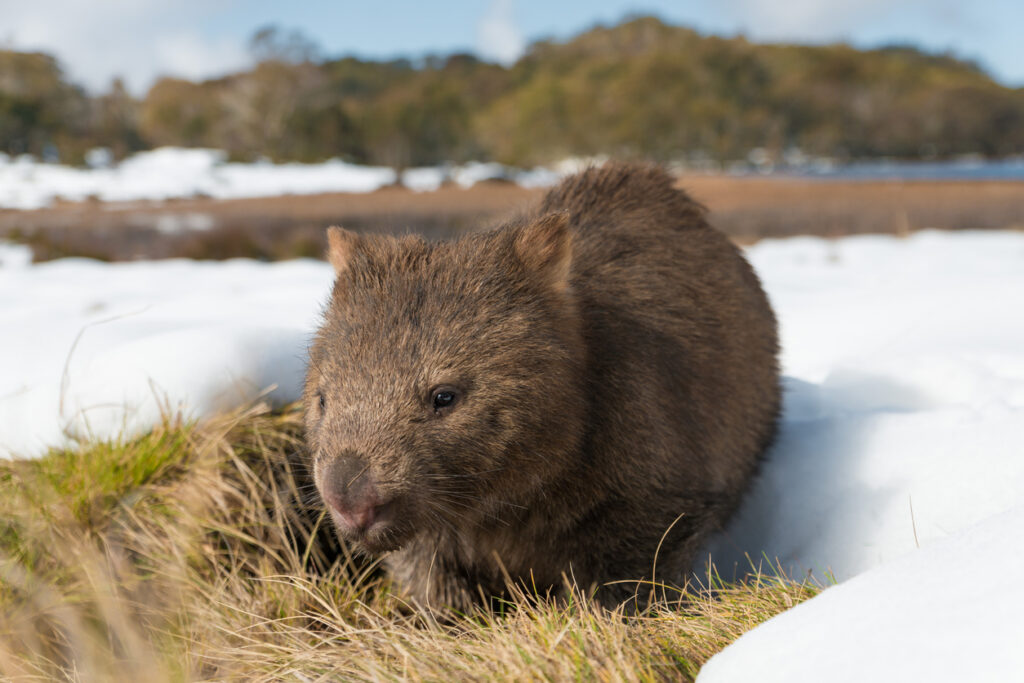
After a gestation period of only 20 to 30 days, a wombat joey is born weighing just one gram, about the size of a jellybean. The underdeveloped baby crawls into the mother’s pouch where it attaches to a teat, which then expands in the joey’s mouth to lock it in place. The joey stays in the pouch for six to eight months before emerging, and even then, it’ll keep crawling back in to feed or escape danger. Young wombats become fully independent at around seven months and reach sexual maturity at two years old.
They’re considered vermin in Victoria but protected everywhere else.
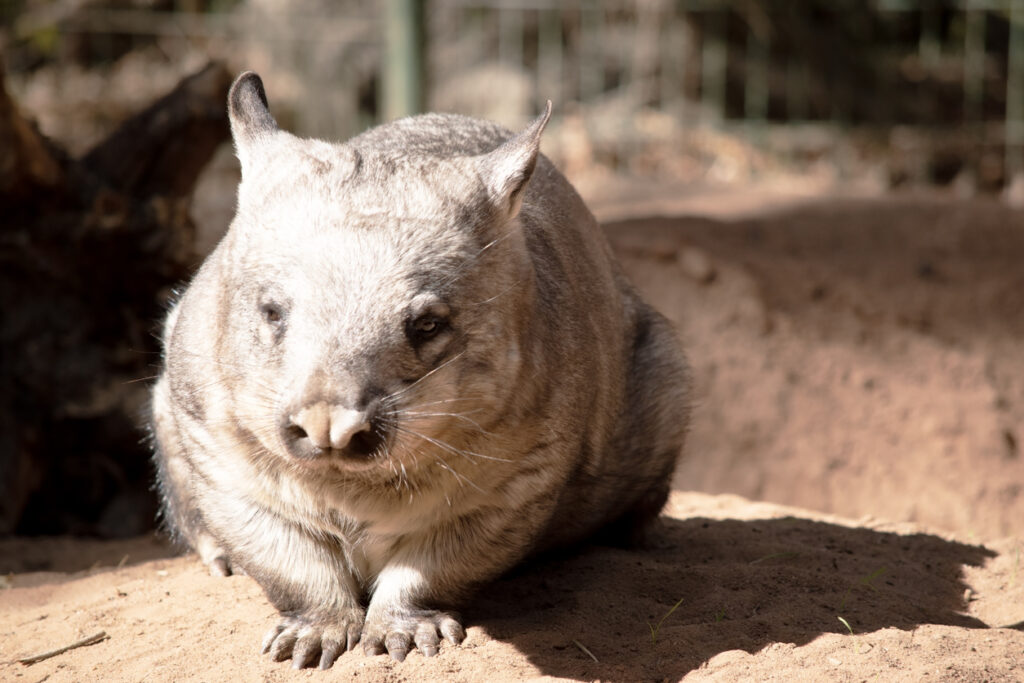
The conservation status of bare-nosed wombats is complicated. The species is listed as Least Concern by the International Union for Conservation of Nature, suggesting healthy populations overall. However, they’re protected by law across most of Australia because their numbers have declined from historical levels. Victoria is the exception, where they’re still classified as vermin because of the damage their burrows cause to agricultural fencing and the belief they contribute to erosion. Their dual status as both protected wildlife and agricultural pest creates ongoing management challenges.
Sarcoptic mange is their biggest threat.
The greatest danger facing bare-nosed wombats today is sarcoptic mange, a parasitic skin disease that occurs throughout their entire range. In severe cases, mange affects the wombat’s vision and ability to eat, gradually weakening the animal until it dies. Other threats include habitat loss from land clearing, predation by wild dogs and foxes, and vehicle collisions. Climate change and introduced diseases from domestic livestock also pose risks, while early settlers hunted them extensively for food and fur, with Victoria even paying a bounty for dead wombats between 1926 and 1966.