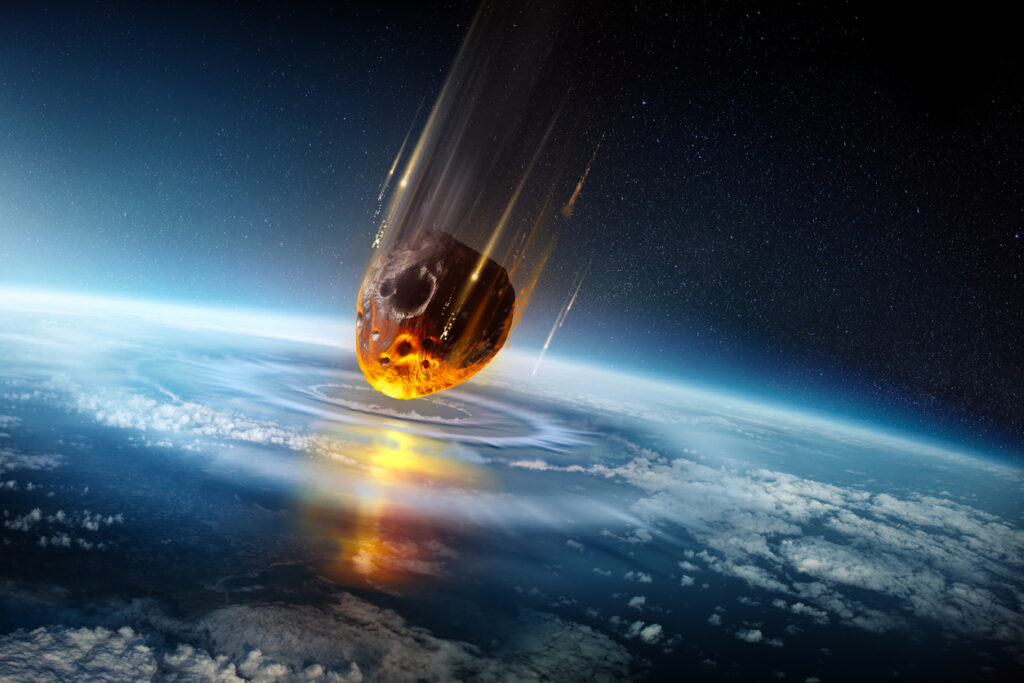
When we look up at the night sky, we tend to see asteroids as simple, wandering rocks—the leftover debris from the birth of our solar system. However, these celestial travellers are far from uniform. Depending on where they formed and what they’ve collided with over the last few billion years, their composition can vary wildly, ranging from loose piles of rubble to solid masses of precious material. Some are icy remnants from the cold outer reaches, while others are the shattered metallic cores of ancient, dead planets. When you learn what’s really packed inside these space rocks, you start to uncover the history of our planetary neighbourhood and, potentially, the future of deep-space industry.
The simple answer? Rock, similar to what we find on Earth
Many asteroids are made mostly of rocky material that isn’t that different from the rocks under your feet. These are often rich in silicate minerals, the same basic building blocks found in Earth’s crust. They formed closer to the Sun, where lighter materials like ice couldn’t survive. These rocky asteroids tend to look grey or slightly reddish and are usually pretty dense. When they break off and fall to Earth as meteorites, they often look like ordinary stones, which is why they’re called ordinary chondrites.
Iron and nickel metal
Some asteroids are loaded with metal, especially iron and nickel. These are thought to be the exposed cores of early planet-like bodies that were smashed apart before they could fully form. Metal-rich asteroids are extremely dense and heavy for their size. If one the size of a small mountain hit Earth, the damage would be far greater than a rocky asteroid of the same size because of that extra mass.
@abc Asteroid v meteorite… do you know the difference? ☄️#Comet#Asteroid#Meteorite#SpaceChats#Space @.astrokirsten ♬ original sound – ABC Australia
Carbon-rich material
Carbonaceous asteroids are some of the darkest objects in the solar system. They’re packed with carbon compounds, along with water-bearing minerals and organic molecules. These asteroids are especially interesting because they contain some of the basic ingredients linked to life. Many scientists think impacts from these objects helped deliver water and organic material to early Earth.
Water locked inside minerals
Even asteroids that look dry can contain water, just not in liquid form. The water is trapped inside minerals that formed when rock reacted with water long ago. This tells us that parts of the early solar system were wetter than they are now. It also means some asteroids could one day be used as water sources for space missions.
Dust and rubble loosely held together
Not all asteroids are solid chunks. Many are what scientists call rubble piles, collections of rocks, dust, and debris held together by weak gravity. These formed after repeated collisions shattered larger bodies. Instead of breaking completely apart, the pieces slowly reassembled into lumpy, fragile objects with lots of empty space inside.
Organic molecules
Some asteroids contain complex organic molecules, including amino acids. These aren’t signs of life, but they are the same types of chemicals life uses. The fact that these molecules can form in space and survive for billions of years changes how we think about where life’s building blocks come from. Earth may not be as unique as it once seemed.
Sulphur and other volatile elements
Alongside rock and metal, asteroids often contain sulphur and other elements that vaporise easily. These materials give clues about the temperatures and conditions where the asteroid formed. Asteroids rich in these elements tend to come from colder regions of the solar system. Studying them helps scientists map out how the early solar system was structured.
Ancient material older than Earth
Asteroids are time capsules. Most of their material formed over 4.5 billion years ago and has barely changed since. Unlike Earth, which has geology that constantly reshapes it, asteroids preserve early solar system material almost exactly as it was. That makes them incredibly valuable to science.
@kevinjdebruin ASTEROID What are Asteroids made of? #space #nasa #science #stem #stemeducation #stemforkids #sciencevideos #education #stemforkids #tech #technology #math #astronomy #asteroid #rocks #geology ♬ original sound – Kevin J DeBruin
Tiny grains from other stars
Some asteroids contain microscopic grains that actually formed before the Sun existed. These grains came from ancient stars that exploded long before our solar system formed. Finding these inside asteroid samples is like discovering stardust frozen in time. It proves that asteroids are made from material far older than Earth itself.
A mix that depends on location and history
Very few asteroids are made of just one thing. Most are messy blends shaped by heat, collisions, and distance from the Sun. That variety is why no two asteroids are exactly alike. Each one tells a slightly different story about how the solar system came together and why it looks the way it does today.
Asteroids might look simple from a distance, but they’re more like cosmic junk drawers. Every one of them holds clues about where we came from, what Earth was built from, and how much raw material is still drifting around space.