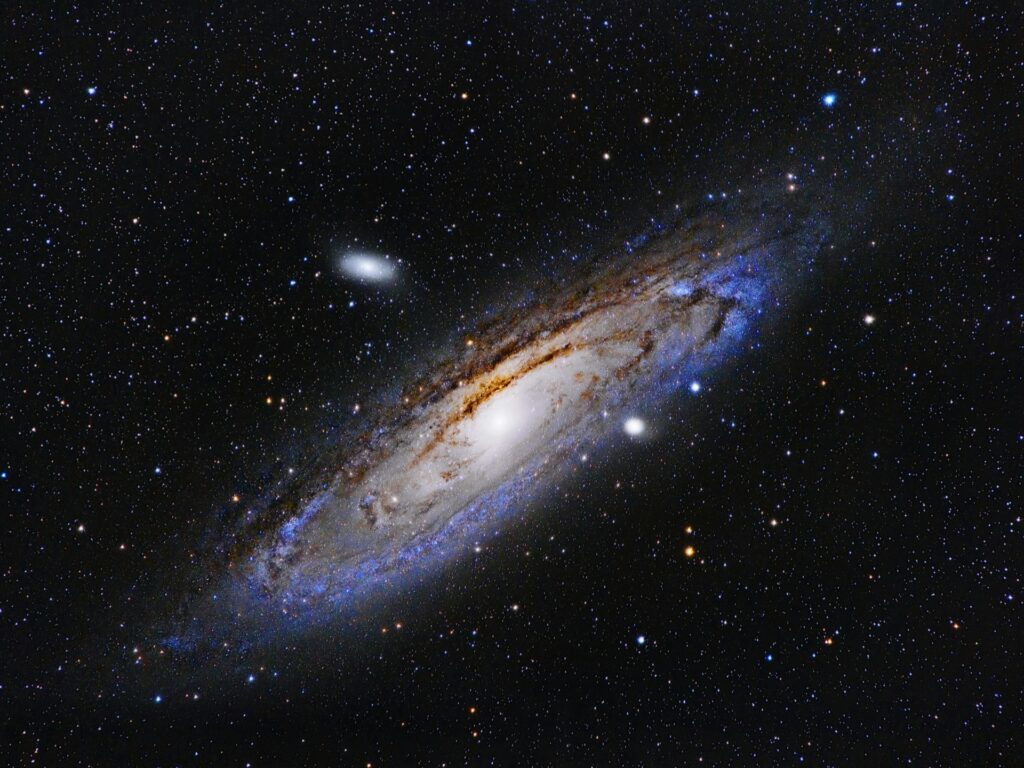
When people hear “the universe running out of energy,” it sounds dramatic, like everything suddenly switching off. In reality, it’s far quieter, slower, and stranger than that. Energy doesn’t disappear, but the way it’s organised changes. Over unimaginable stretches of time, the universe drifts toward a state where nothing useful can happen anymore—no stars forming, no heat flowing, no structure doing meaningful work. These are the stages scientists believe unfold as the universe gradually winds down.
Stars stop being born.
Right now, the universe is still busy making stars. Clouds of gas collapse under gravity, ignite nuclear fusion, and light up galaxies. But this process depends on raw material, mainly hydrogen gas, being available in the right conditions. Over time, that fuel gets used up or locked away in stars, planets, and stellar remnants.
As star formation slows, galaxies begin to age. Fewer new stars appear to replace old ones that burn out. The night sky, if anyone were around to see it, would slowly grow darker as stellar nurseries fall silent and galaxies become collections of fading lights rather than vibrant factories of energy.
Existing stars burn through their remaining fuel.
Every star has a lifespan. Smaller stars burn slowly and can last trillions of years, while massive stars live fast and die young. Eventually, though, every star exhausts the fuel that keeps it shining.
As this happens across the universe, the balance shifts. Bright, active stars give way to white dwarfs, neutron stars, and black holes. The universe doesn’t go dark all at once. It dims gradually, star by star, over timescales so long they’re difficult to comprehend.
@blitzphd Some clarification is needed for what I feel wasn’t well conveyed – it’s not that if the universe has zero energy, it must have a beginning. It’s just that if it has zero energy, the quantum eternity theorem doesn’t guarantee it *doesn’t* have a beginning. By the way, you could still invoke magic and say it *did* begin and just has the appearance of being able to be “wound back,” but no one should really take that seriously. #stem #science #physics #quantum #eternity #universe #explained ♬ original sound – Dr. Blitz
Galaxies lose their structure.
Galaxies are held together by gravity and shaped by ongoing interactions between stars, gas, and dark matter. As star formation ends and energetic processes slow, galaxies become more static and fragile. Over extreme timescales, gravitational interactions cause stars to drift away or fall into central black holes. Spiral arms fade. What were once dynamic systems slowly unravel into sparse collections of cold remnants orbiting emptiness.
Black holes become the dominant objects.
As stars die and collapse, black holes become increasingly common relative to shining stars. They don’t emit light of their own, but they influence their surroundings through gravity.
Eventually, most remaining matter ends up trapped in black holes or orbiting them at great distances. The universe enters a phase where the most influential objects are also the least visible, quietly shaping space without producing usable energy.
Black holes slowly evaporate.
Even black holes aren’t permanent. Over unimaginably long periods, they lose mass through a process known as Hawking radiation. It’s incredibly slow, especially for large black holes, but it means they will eventually disappear.
When the last black holes evaporate, one of the final engines capable of organising matter and energy shuts down. What remains is a universe without dense structures, filled mostly with low-energy particles drifting through space.
Temperature differences fade away.
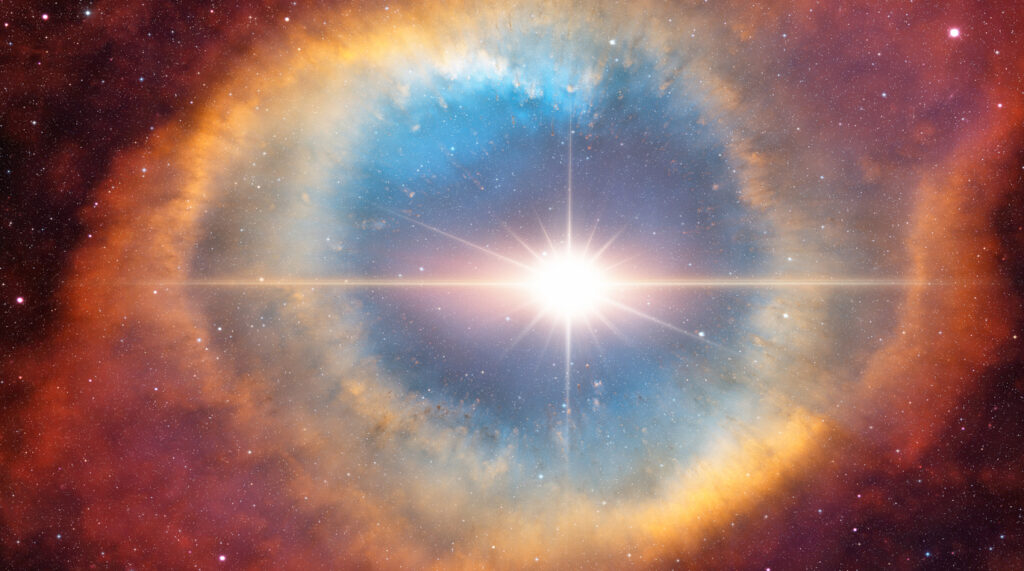
Useful energy depends on differences. Hot and cold. Dense and empty. Fast and slow. As the universe ages, these differences smooth out. Heat spreads evenly, and temperature gradients disappear.
Once everything reaches roughly the same low temperature, there’s no way to extract work from energy anymore. This state is often described as heat death, not because everything dies suddenly, but because nothing meaningful can happen.
Chemical reactions stop.
Chemistry relies on energy. Atoms bond, break apart, and rearrange themselves because there’s enough energy to drive those changes. As the universe cools and energy becomes evenly distributed, chemical reactions slow and eventually cease. Without chemistry, there’s no chance for complex structures, life, or even basic change. Matter still exists, but it’s inert, locked into simple forms that never evolve into anything new.
Time still passes, but nothing changes.
One of the strangest aspects of this future is that time doesn’t end. Seconds still tick by, at least in theory. But without events, motion, or change, time loses its meaning. It’s a universe where “after” and “before” no longer describe anything different. Existence becomes static, frozen not by ice, but by the absence of usable energy.
@spacefrenz 3 ways our Universe could END! #Space #science #universe #scary #fact #mystery ♬ Inspirational Epic – Yevhen Lokhmatov
Space becomes almost empty.
As structures dissolve and particles drift apart, the universe grows increasingly empty. Distances between remaining particles stretch as space itself continues to expand. What’s left is a thin, cold scattering of particles spread so far apart that interactions are almost impossible. The universe doesn’t collapse or explode. It simply thins out until interaction becomes vanishingly rare.
The universe reaches a quiet end state.
The final outcome isn’t destruction in the dramatic sense. It’s exhaustion. A universe that has done everything it can do and has no remaining way to organise energy into action. Nothing is broken. Nothing is wrong. The universe has simply run its course, settling into a state of maximum entropy where change, complexity, and life are no longer possible.
What makes this ending so unsettling isn’t violence or catastrophe, but silence. The universe doesn’t rage against its end. It drifts there slowly, patiently, over timescales that dwarf everything we know. And for now, we live very early in that story, in a brief, energetic chapter where stars still shine and things can still happen at all.