The December solstice marks a turning point in the year, though what that turning point means depends entirely on where you’re standing on the planet. For half the world, it’s the shortest day and the beginning of winter’s deepest stretch. For the other half, it’s the longest day and the official start of summer. Either way, it’s been significant to humans for thousands of years, and understanding what’s actually happening astronomically makes it even more fascinating.
The Earth tilts, not the sun
The solstice isn’t about the sun doing anything unusual. It’s about Earth’s axial tilt, which sits at roughly 23.5 degrees. As our planet orbits the sun throughout the year, this tilt means different parts of Earth receive varying amounts of direct sunlight. During the December solstice, the North Pole is tilted as far away from the sun as it gets, but the South Pole leans towards it. This creates the extreme differences in daylight hours between the northern and southern hemispheres. The sun sees to reach its lowest point in the sky for those in the north and its highest for those in the south.
It’s the astronomical start of winter or summer.
@museumofscience What is the #wintersolstice and why is it the darkest day of the year? #solstice #winter #sciencetok #astronomytok #MuseumOfScience #ScienceForAll ♬ original sound – Museum of Science
Meteorologists and astronomers define seasons differently. Meteorological seasons are based on temperature patterns and calendar months, but astronomical seasons are determined by Earth’s position relative to the sun. The December solstice marks the official astronomical beginning of winter in the Northern Hemisphere and summer in the Southern Hemisphere. From this point forward, the days will gradually start getting longer in the north and shorter in the south. The shift is subtle at first but becomes more noticeable as weeks pass.
The exact moment varies each year.
The solstice doesn’t happen at midnight or at the start of a specific day. It occurs at a precise moment when the sun reaches its southernmost point in the sky, and that moment shifts slightly each year. In 2024, for example, it falls on December 21st, but the exact time depends on your time zone. This variation happens because Earth’s orbit isn’t perfectly circular, and our calendar doesn’t align exactly with the astronomical year. Leap years help adjust for this drift, but the solstice still wanders by a few hours year to year.
Ancient cultures built monuments around it.
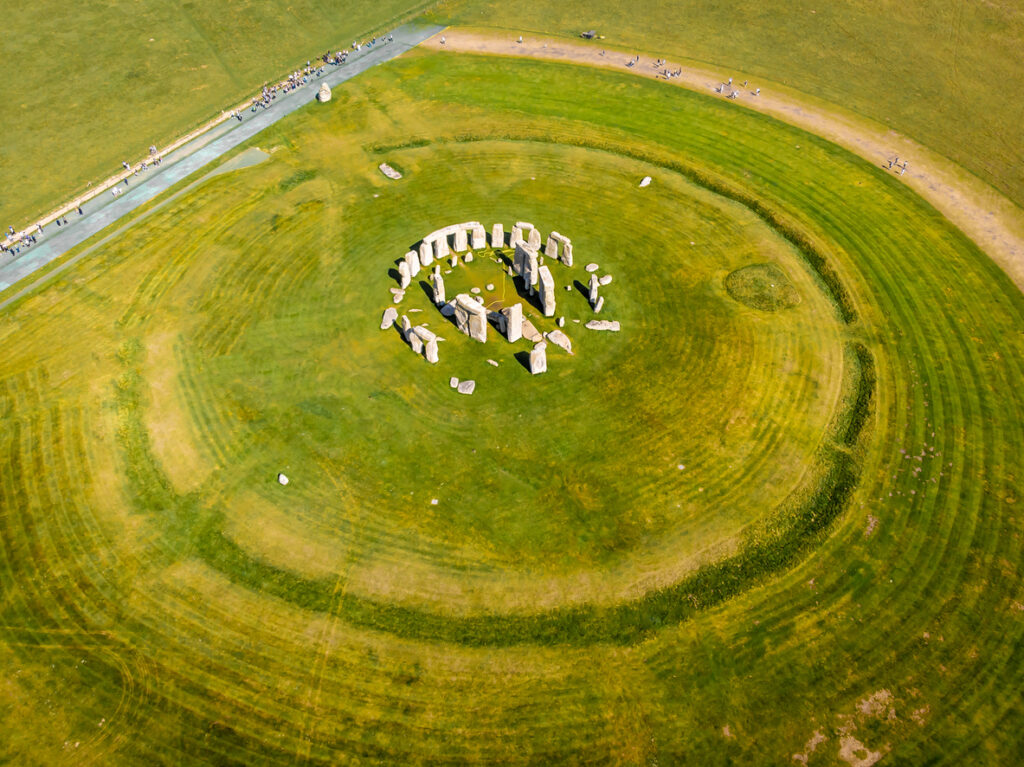
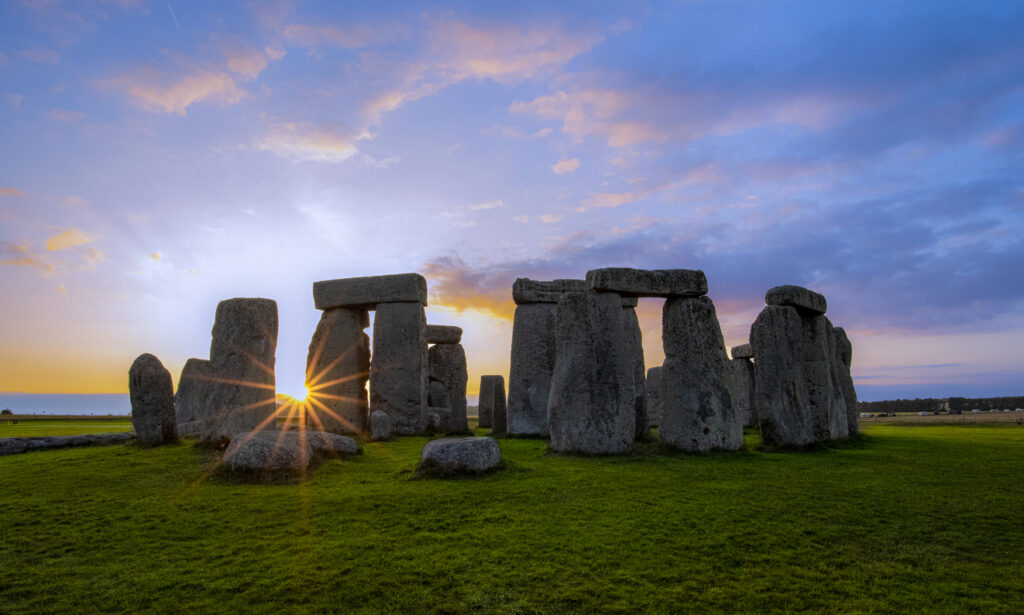
Long before anyone understood axial tilt or orbital mechanics, people noticed the solstice and considered it deeply important. Stonehenge in England aligns with the sunset on the winter solstice, suggesting it was designed with this astronomical event in mind. Newgrange in Ireland has a passage that lights up with the sunrise on the solstice morning. Cultures across the world, from the Inca to the ancient Chinese, tracked the solstices carefully and built rituals around them. These weren’t just arbitrary traditions but survival tools, marking the turning point when the days would begin lengthening again and spring would eventually return.
The shortest day doesn’t mean the earliest sunset.
This catches a lot of people off guard. The winter solstice is the shortest day of the year in the Northern Hemisphere, but the earliest sunset actually happens a couple of weeks before it, usually in early December. Similarly, the latest sunrise occurs a few days after the solstice in early January. This happens because of the way Earth’s elliptical orbit and axial tilt interact, creating something called the equation of time. Solar noon, the moment when the sun is highest in the sky, shifts throughout the year, which throws off the symmetry between sunrise and sunset times.
Different hemispheres, opposite experiences.
When people in London or New York are bundling up and dealing with long, dark evenings, those in Sydney or Buenos Aires are experiencing their longest day and the height of summer. The solstice is a reminder that our experience of the seasons is entirely dependent on geography. For people living near the equator, the solstice barely registers because day length stays relatively consistent all year. But for those closer to the poles, the difference is dramatic. In places like northern Norway or Alaska, the sun might not rise at all on the winter solstice, while in southern Chile or New Zealand, it barely sets during their summer solstice.
It’s been celebrated for millennia.
The December solstice has inspired countless festivals and traditions. The Roman festival of Saturnalia, which involved feasting, gift-giving, and role reversals, took place around this time. Yule, a festival celebrated by Germanic peoples, marked the winter solstice and eventually influenced many modern Christmas traditions. In Iran, Yalda Night celebrates the longest night of the year with family gatherings, poetry, and pomegranates. Even today, people gather at Stonehenge to watch the sunrise, continuing a tradition that stretches back thousands of years. The solstice represents hope, the promise that the darkest days are behind us and light will gradually return.
It affects more than just daylight.
The solstice influences ecosystems, animal behaviour, and even human mood. Many animals time their breeding, migration, or hibernation patterns around changing day length. Plants respond to the shifting light, which is why certain flowers bloom in specific seasons. For humans, the lack of sunlight during winter months can contribute to seasonal affective disorder, a type of depression linked to reduced daylight. The solstice marks the point when this begins to reverse, and for many people in northern climates, that turning point brings psychological relief even if the coldest weather is still ahead.
The term “solstice” literally means “sun stands still.”
The word comes from the Latin sol (sun) and sistere (to stand still). From our perspective on Earth, the sun appears to pause at its lowest or highest point in the sky before reversing direction. For a few days around the solstice, the change in the sun’s position at noon is almost imperceptible. Ancient observers noticed this apparent standstill, and the name stuck. It’s a fitting description for a moment that feels suspended, a hinge point between the year’s darkest or brightest days and the gradual shift back towards balance.
It’s a reminder of Earth’s constant motion.
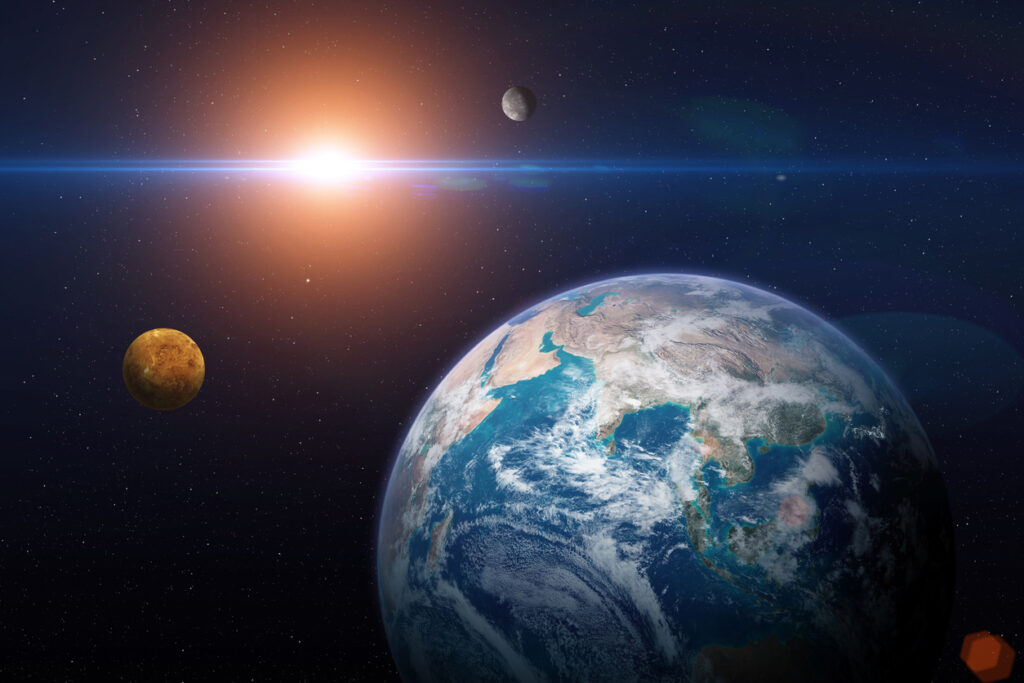
We experience the solstice as a single day, but it’s really a snapshot of Earth’s continuous journey around the sun. Our planet is always tilting, always moving, always shifting the angle at which sunlight hits different parts of the surface. The solstice is just the moment when that tilt reaches its extreme, but the process never stops. Understanding this puts our place in the solar system into perspective. We’re on a spinning rock hurtling through space, and the solstice is one of the signposts along that journey, a moment when the mechanics of our orbit become visible in the length of our days.
Modern technology hasn’t diminished its significance.
Even though we have electric lights, central heating, and accurate calendars, the solstice still matters. It connects us to the natural rhythms that governed human life for most of history. Before artificial light, the return of longer days after the winter solstice was a matter of survival. Crops depended on sunlight, and so did people’s ability to work, travel, and gather food. That ancient importance hasn’t entirely disappeared. We still feel the psychological weight of short winter days and the relief when they start lengthening again. The solstice reminds us that despite all our technology, we’re still deeply connected to the sun and the planet’s tilt.
It happens on other planets too.
@yuryrockit The 2025 Winter Solstice arrives with rare symbolism. An interstellar comet ,3I/ATLAS, passes safely through our solar system, just days before the light is reborn in the Northern Hemisphere. At the same time, we’re held in the stillness of a Sagittarius New Moon a lunar reset rooted in truth, meaning, and higher understanding. This isn’t fear-based astrology. It’s awareness. Solstices have always been portals of renewal. New Moons are moments of intention. Sagittarius reminds us to lift our eyes beyond survival and ask what kind of future we want to participate in. If you feel called to slow down, reflect, and realign right now trust it. We’re not meant to rush through this threshold. The light returns. And so does clarity. ✨ DM me if you want to explore how this moment activates your personal chart or Human Design. #WinterSolstice2025 #SagittariusNewMoon #CosmicTiming #InterstellarMessenger #ConsciousnessShift ♬ original sound – Yury RockIt
Earth isn’t the only planet with solstices. Any planet with an axial tilt experiences them, though the effects vary wildly depending on that tilt and the planet’s distance from the sun. Mars has solstices, and because its tilt is similar to Earth’s, it experiences recognisable seasons. Uranus, however, is tilted so extremely, at nearly 98 degrees, that its solstices are bizarre. During a Uranian solstice, one pole can point almost directly at the sun, while the other sits in total darkness for decades. Our solstice might feel dramatic, but it’s relatively mild compared to what happens elsewhere in the solar system.
The solstice doesn’t determine the coldest or warmest days.
You’d think the shortest day would be the coldest, but it’s not. The coldest days in the Northern Hemisphere typically arrive in January or February, well after the winter solstice. This lag happens because of thermal inertia. The oceans and land take time to release stored heat, so even though days start getting longer after the solstice, temperatures continue dropping for a while. The same applies in reverse for summer. The longest day doesn’t bring the hottest temperatures, those usually peak in late July or August. The solstice marks a turning point in daylight, but the temperature effects take weeks to catch up.
It’s a global event experienced locally.
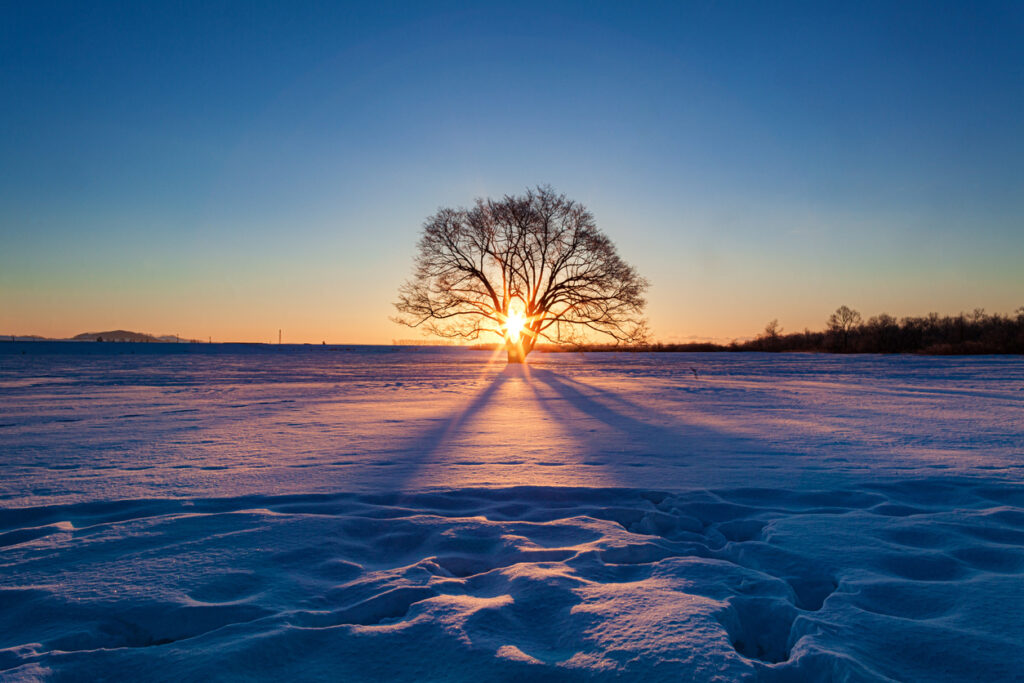
Everyone on Earth experiences the December solstice, but how you experience it depends entirely on where you live. Someone in northern Scotland might see only a few hours of weak daylight, while someone in Australia is enjoying long, bright summer evenings. People near the Arctic Circle might not see the sun at all, but those near the Antarctic Circle are bathed in nearly 24 hours of daylight. The solstice is both universal and deeply personal, a shared astronomical event filtered through the specific circumstances of your latitude and longitude. It connects us all, and reminds us how different our experiences of the same planet can be.
It’s been used to reset calendars throughout history.
Many ancient cultures used the solstices and equinoxes as anchor points for their calendars. The winter solstice was often treated as a kind of new year, a moment of rebirth when the sun’s power began returning. The Roman calendar was eventually adjusted so that the winter solstice fell near the end of December, and many New Year traditions still carry echoes of solstice celebrations. Even today, the solstice serves as a natural marker in the year, a point where we can pause, reflect, and acknowledge the turning of the seasons. It’s a moment that transcends culture and history, reminding us that we’re all passengers on the same tilted, spinning planet orbiting the same star.