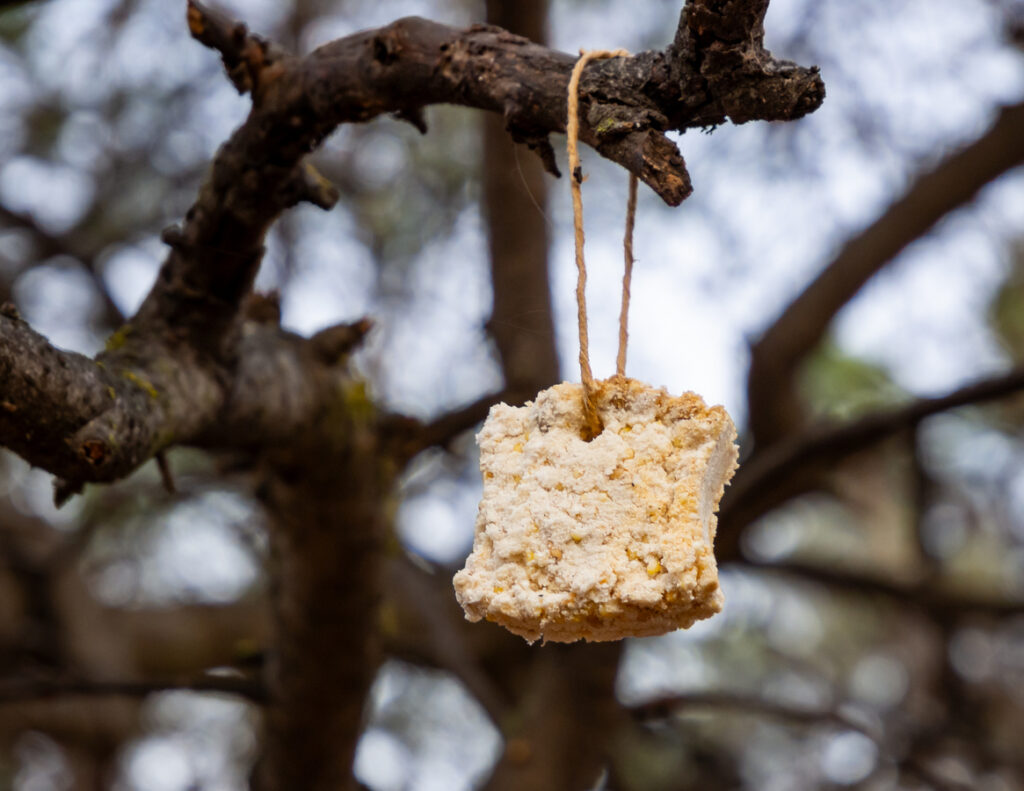
When winter arrives and natural food becomes scarce, you can help your garden birds survive the cold by making them a simple treat. It takes about ten minutes, uses ingredients you probably already have, and birds genuinely need the extra calories when temperatures drop and daylight hours shrink.
1. Gather your basic ingredients.
You’ll need solid fat and seeds, that’s the foundation of any decent bird treat. Lard works brilliantly, and it’s cheap, but you can also use suet from the butcher or even coconut oil if you’ve got some lying about. For the seeds, grab whatever’s in your cupboard, sunflower seeds, wild bird seed mix, oats, raisins, grated cheese, crushed peanuts. Birds aren’t fussy, and they’ll eat most things you throw together.
2. Melt the fat properly without overheating it.
Put your lard or suet in a saucepan on low heat and let it melt slowly. Don’t rush this bit by turning the heat up high because you’ll end up with smoking fat that’s useless. You want it completely liquid, but not bubbling away like you’re deep-frying something. Once it’s melted, take it off the heat straightaway and let it cool for a minute or two before adding anything else.
3. Mix in your dry ingredients at the right ratio.
The general rule is roughly one part melted fat to two parts dry ingredients, though you can adjust this depending on what you’ve got. Tip your seeds and bits into the melted fat and stir it all together until everything’s coated. You want it to look like a thick, sticky mixture rather than soup with seeds floating in it. If it seems too runny, add more dry ingredients, and if it’s too stiff, melt a bit more fat.
4. Choose your mould and prep it.
@themichaelgriffiths Make Your Own Bird-Friendly Fat Balls! Here's what you'll need: – Dry ingredients like oats, bread or cake crumbs, grated cheese, currants, raisins, sultanas, unsalted peanuts, grated apple or pear, or mealworms – Lard or beef suet – Old yoghurt pots and string Instructions: 1. Mix dry ingredients in a bowl (1 part fat to 2 parts dry mix) 2. Melt lard/suet, pour over dry mix, and stir until glossy 3. Fill yoghurt pots with mixture, press down, and chill overnight 4. hang your solid fat balls for the birds to enjoy!
Old yoghurt pots work perfectly, as do empty coconut shells, pine cones, or even just a plain baking tin if you want to make a slab you can break up later. If you’re using something smooth like a yoghurt pot, you might want to poke a hole through it before you fill it so you can thread string through for hanging. Coconut shells and pine cones already have natural gaps where you can tie string around them.
5. Pour the mixture while it’s still warm.
Spoon or pour your bird treat mixture into whatever containers you’ve chosen before it starts to set. Work reasonably quickly because fat begins to solidify as soon as it cools down, and you want it to settle into your moulds while it’s still pliable. Don’t fill them right to the top if you’re using pots, leave a bit of space so they’re easier to hang up later without the whole thing crumbling apart.
6. Add string or wire for hanging.
If you haven’t already sorted out your hanging method, do it now while the mixture’s still soft enough to push string through. Garden twine works fine, or you can use wire if you’ve got some. Make sure whatever you use is long enough to actually hang from a branch or hook, at least 20 cm or so. Push it through the mixture or wrap it round if you’re using a pine cone, and make sure it’s secure because you don’t want the whole thing falling apart when a hungry pigeon lands on it.
7. Let everything set completely in the fridge.
Pop your bird treats in the fridge for at least two hours, though overnight is better if you can wait that long. They need to be rock solid before you try to hang them up; otherwise they’ll just melt in your hands and make a right mess. Don’t be tempted to put them outside before they’re properly set, even if it’s freezing because the fat needs time to solidify properly and rushing this step means they’ll fall apart.
8. Remove them from the moulds carefully.
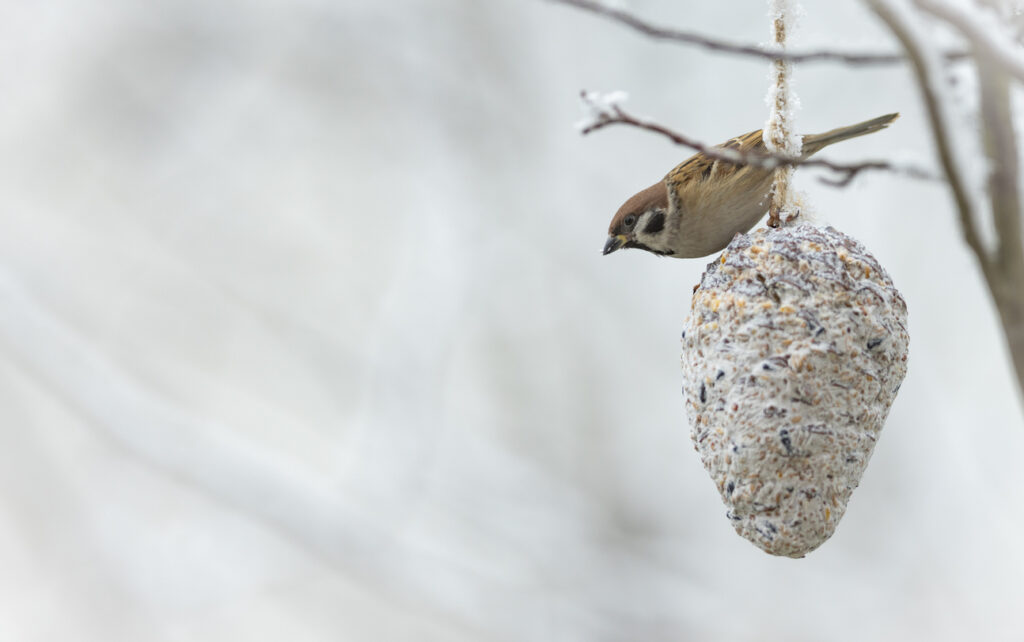
Once they’re solid, you can take them out of whatever containers you used. If you’ve used yoghurt pots, you might need to cut the plastic away rather than trying to slide them out. Coconut shells don’t need removing, obviously, and pine cones should already be ready to go. The mixture should feel firm and waxy, not crumbly, and it shouldn’t leave much residue on your hands when you touch it.
9. Hang them in sheltered spots around your garden.
Find places that offer a bit of protection from wind and rain, but are still visible to birds. Under the eaves of a shed works well, or hanging from a branch that’s got some cover above it. Don’t put them too close to windows because birds can fly into the glass, but keep them somewhere you can actually see from inside so you get to watch the birds feeding. Space them out a bit rather than clustering everything in one spot, so birds aren’t fighting over the same treat.
10. Refill regularly throughout winter.
Birds will demolish these treats surprisingly quickly once they find them, especially during proper cold snaps when they’re desperate for calories. Check on them every few days and make a new batch when they’re running low. You can make several at once and store them in the fridge until you need them, they’ll keep for weeks as long as they’re cold. The birds will come to rely on your feeding spot once they know it’s there, so try to keep it stocked rather than letting it run empty for ages.