Praying mantises have this calm, almost polite look about them, but they’re surprisingly fierce when it comes to catching dinner.
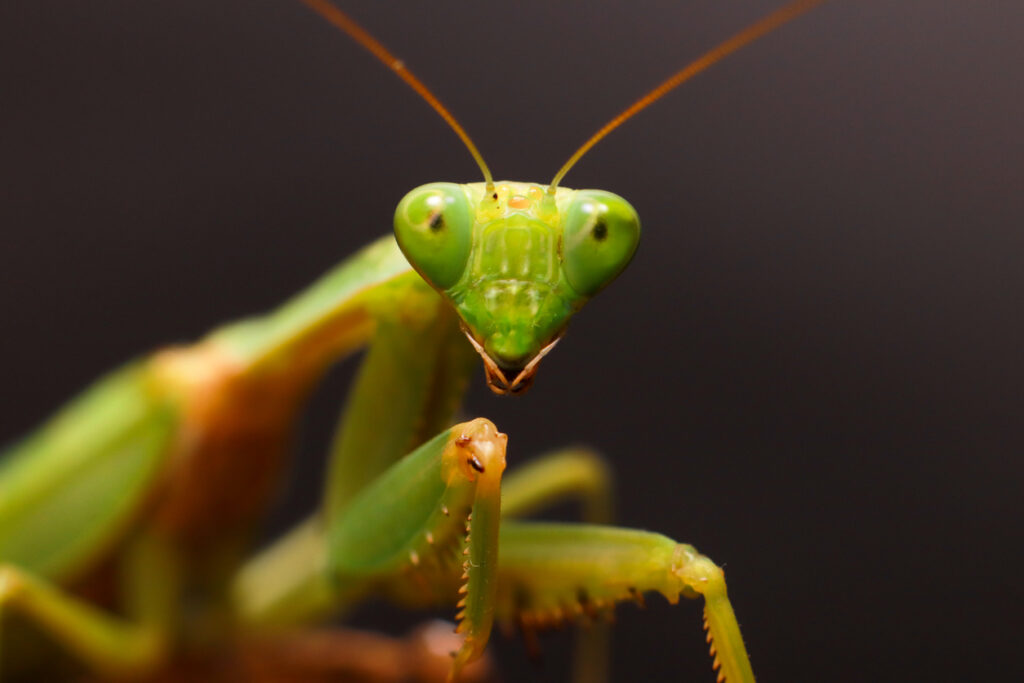
If you’ve ever watched one sit perfectly still on a leaf, you’d never guess it’s basically waiting to snatch something at lightning speed. They’re built for the job in ways most people never notice, and once you learn what those tiny details do, it’s hard not to respect how efficient they are.
They don’t rely on strength alone. A mantis uses patience, timing and a seriously clever set of tools nature has given it. From the way its eyes work to how it positions its body, everything is geared toward spotting prey, staying hidden and striking at the exact second it matters. They’re small, but their hunting game is on another level, and that’s why so many scientists consider them some of the sharpest predators in the insect world.
Their eyes can see in three dimensions like humans.
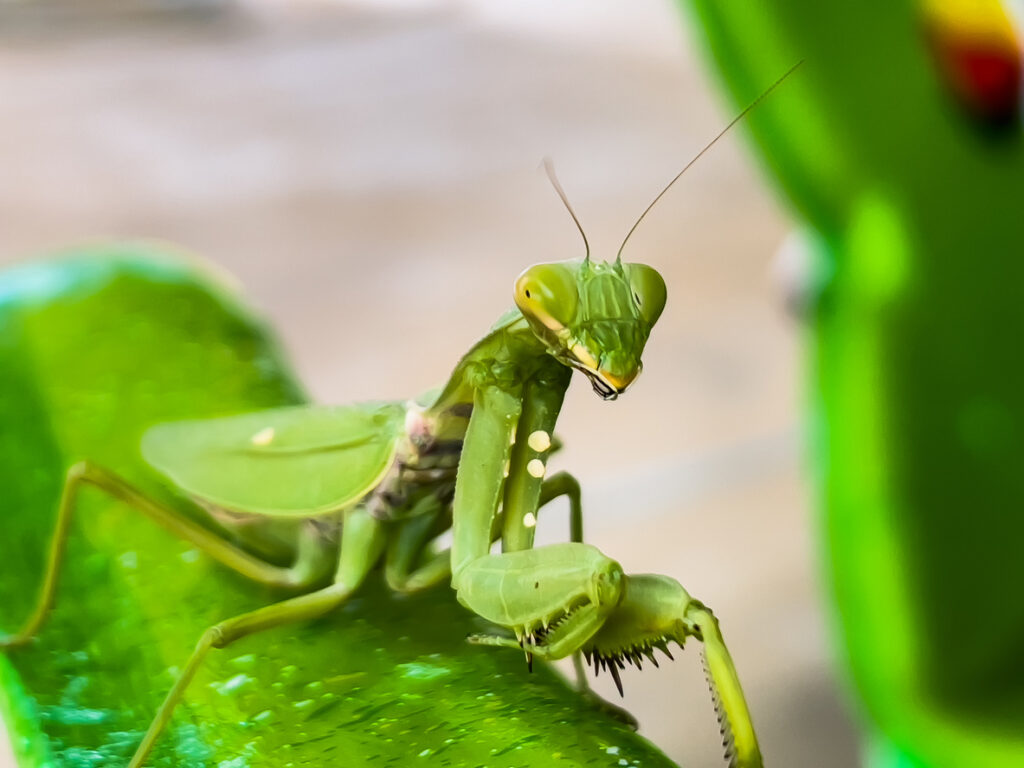
Mantises are the only insects that can see in proper 3D, which means they can judge distances accurately like we do. They’ve got five eyes in total, with two massive compound eyes on the sides of their head that give them this depth perception. It’s an ability that’s absolutely crucial for their hunting style because they need to know exactly how far away their prey is.
Having 3D vision lets them calculate the perfect moment to strike with incredible accuracy. When a mantis launches its attack, it needs to grab its prey on the first attempt because there’s usually no second chance. Their ability to judge distance better than any other insect gives them a massive advantage when timing their lightning-fast strikes.
They can rotate their heads 180 degrees.
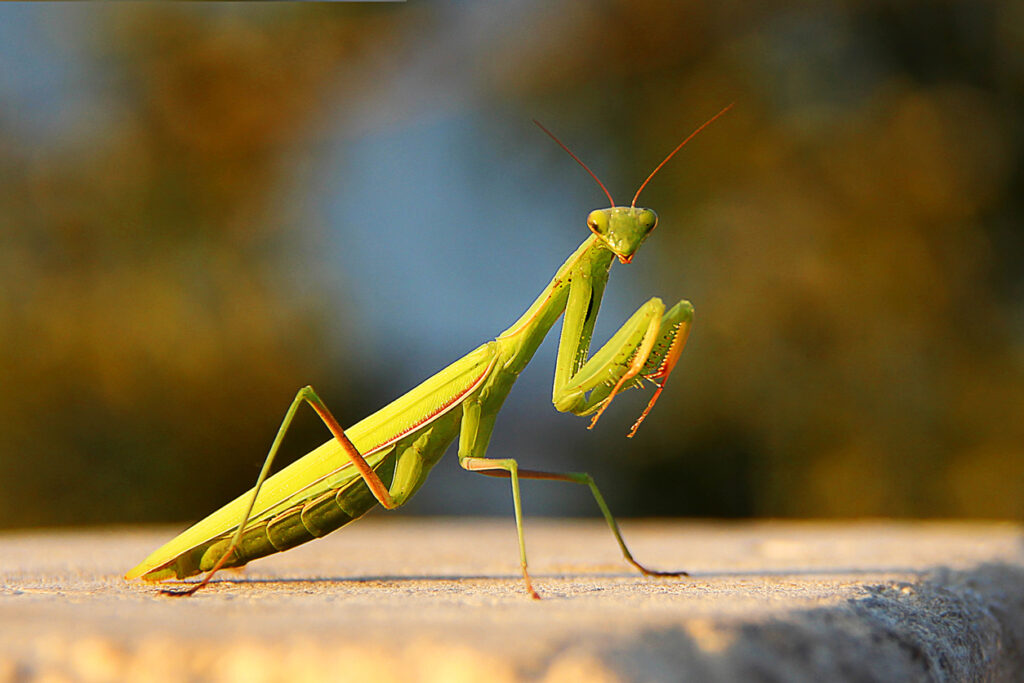
Mantises are the only insects that can turn their heads almost all the way around, just like an owl. Their head rotation means they can track prey without moving their body, which would give away their position. They can watch a fly buzzing around behind them while staying completely still and looking innocent.
Their neck flexibility is a game changer for hunting because it lets them monitor everything happening around them without blowing their cover. Other insects have to turn their whole body to look around, but mantises can scan their surroundings while also maintaining their ambush position. It’s like having security cameras built into your head.
Their front legs can strike faster than you can blink.

When a mantis strikes, its front legs shoot out in about 50 milliseconds, which is literally faster than a human eye blink. These attacks are so quick that prey doesn’t have time to react or escape. The mantis goes from perfectly still to grabbing its victim before the target even registers what’s happening.
That incredible speed comes from the way their leg muscles are built, working like a spring-loaded trap that releases all at once. The mantis builds up tension in its legs as it waits, then unleashes everything in one explosive movement. By the time the prey sees the attack coming, it’s already too late to do anything about it.
Their camouflage makes them invisible to prey.
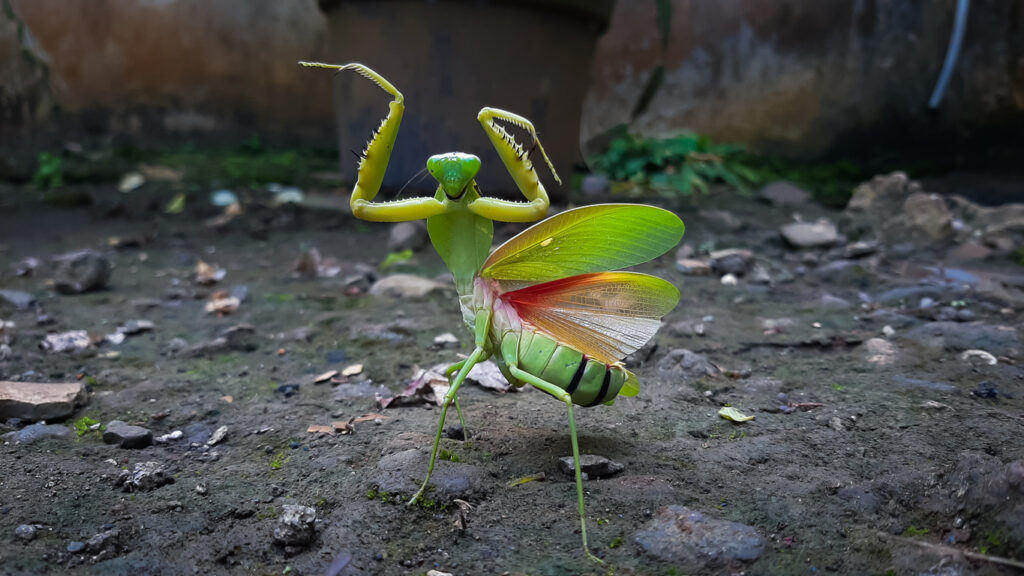
Mantises are masters of blending into their surroundings, with body shapes and colours that make them look exactly like leaves, flowers, or sticks. Some species look so much like orchids that insects land on them thinking they’re actual flowers. The disguise isn’t just about colour, their whole body shape mimics the plants around them.
Their camouflage works both ways for hunting. Prey animals don’t see the mantis as a threat because it looks like part of the scenery, so they wander right up to it. The mantis just sits there looking like a harmless leaf as dinner literally walks into striking range without a clue what’s about to happen.
5. They stay absolutely motionless for hours while waiting.
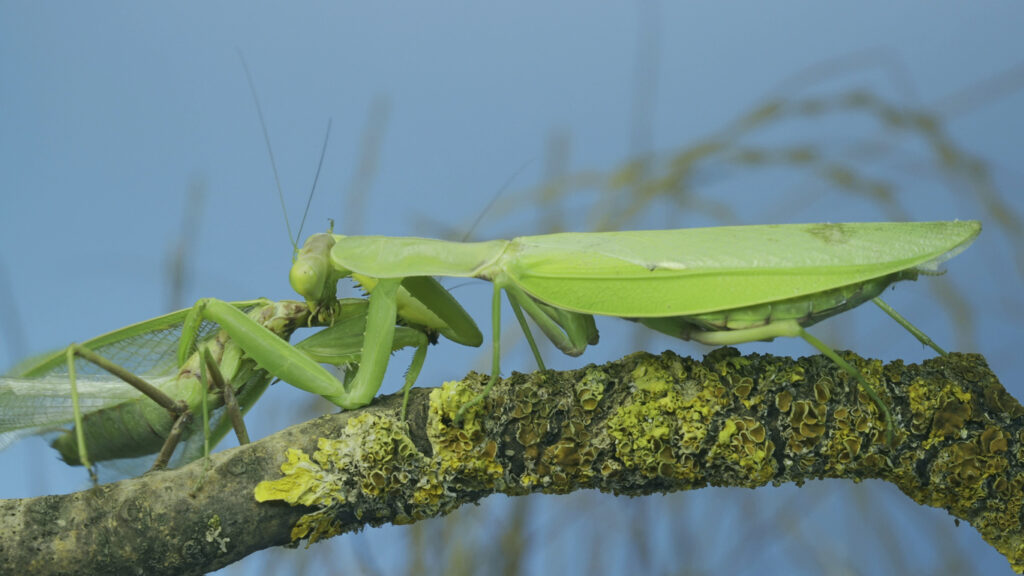
Mantises can remain completely frozen in their hunting position for hours without moving a muscle. That level of patience is incredibly rare in the insect world, where most creatures are constantly twitching or moving around. The mantis just locks into position and waits, looking exactly like a dead leaf or twig.
Stillness is crucial for ambush hunting because any movement would alert prey that something’s wrong. The mantis can track potential meals with just its eyes, keeping its body perfectly still until the exact right moment. Most prey animals rely on detecting movement to spot predators, so a motionless mantis is essentially invisible to them.
6. Their spiky front legs work like deadly traps.
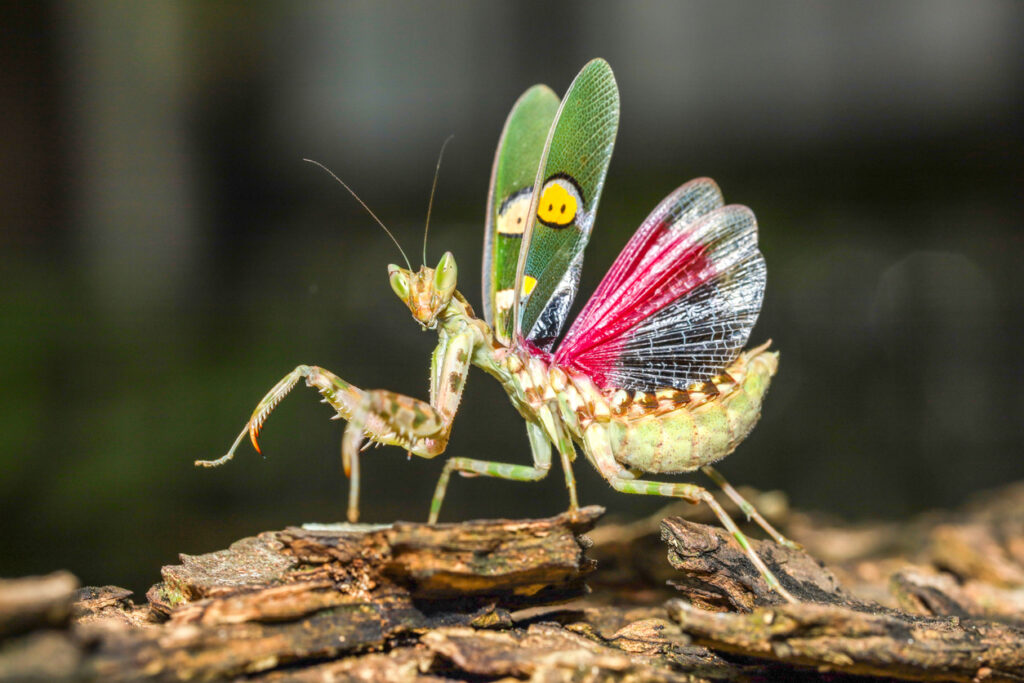
The front legs of a mantis are covered in sharp spines that face inward, creating a trap that prey can’t escape from once caught. When the mantis grabs something, these spines lock together like the teeth of a bear trap. The harder the prey struggles, the deeper the spines dig in.
Their modified legs are perfectly designed for grabbing and holding struggling insects that are trying desperately to escape. The spines pierce through the prey’s body, keeping it firmly in place while the mantis positions it for eating. Once those legs close around something, there’s basically no chance of breaking free.
7. They can take down prey much larger than themselves.
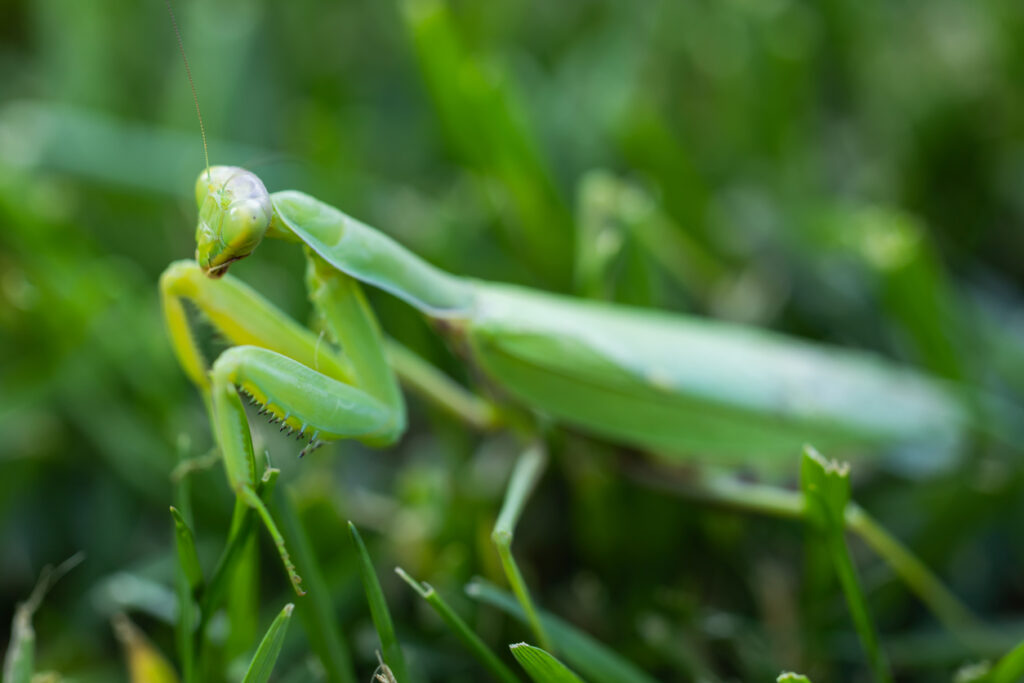
Mantises regularly attack and kill insects that are bigger than they are, and some larger species even catch small birds, lizards, and frogs. They’ve got no fear when it comes to prey size because they’re confident in their hunting abilities. A mantis will happily have a go at something twice its size if it thinks it can win.
Their confidence comes from their powerful front legs and their ability to bite through tough exoskeletons with their strong jaws. They know that once they’ve got something in their grip, size doesn’t matter much. Their willingness to tackle large prey means they can get more food from a single kill, making them incredibly efficient hunters.
8. Their hunting strategy is based on perfect timing.
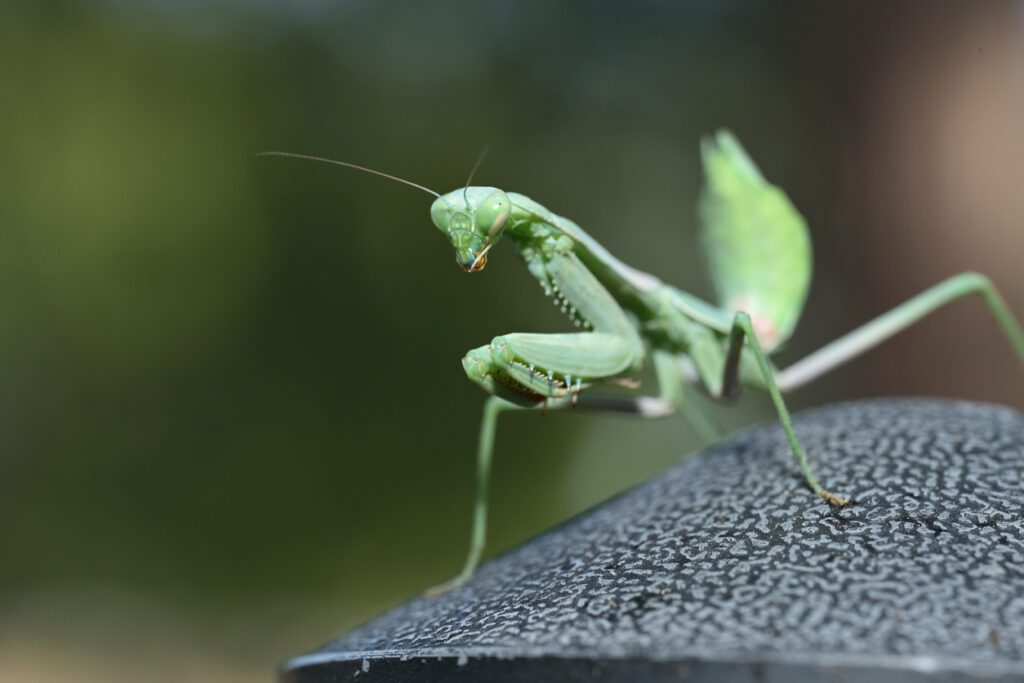
Mantises don’t chase their prey around like most predators do. Instead, they wait for the absolute perfect moment when prey is close enough and positioned just right. They’ll let dozens of potential meals pass by if the timing isn’t perfect, only striking when success is virtually guaranteed.
Having such patience and precision means mantises have an incredibly high success rate when they do attack. Unlike predators that chase prey and fail most of the time, mantises wait for absolute certainty before committing to a strike. When they finally move, it’s because they’ve calculated that this is the moment with the best odds of success.
9. They eat their prey alive, starting with the head.
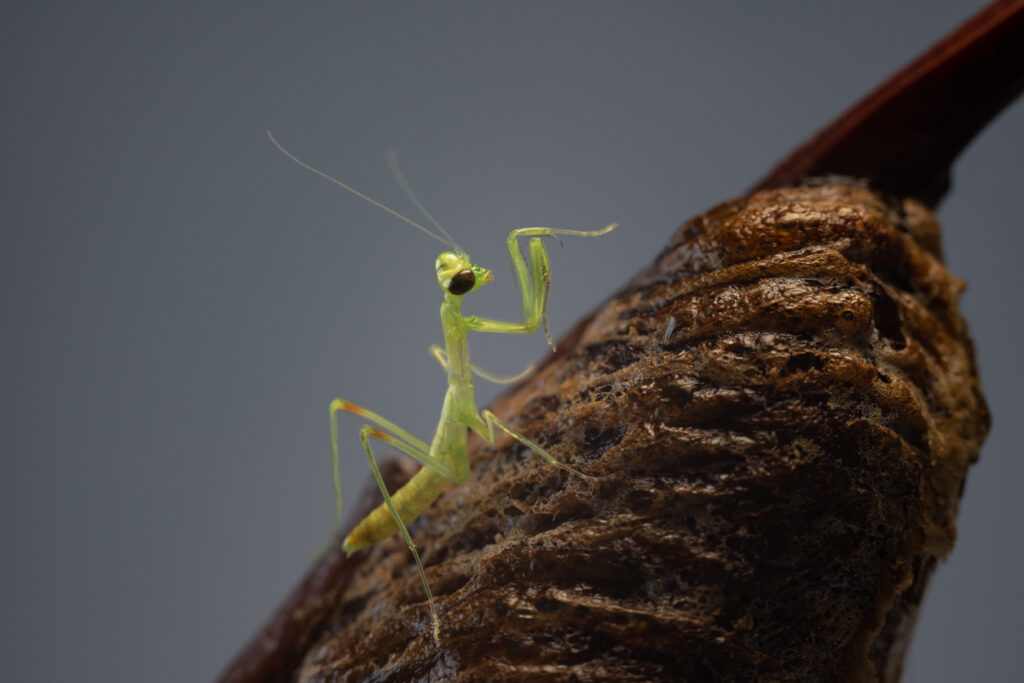
Mantises don’t kill their prey before eating it, like many predators do. They start munching while the victim is still alive, usually beginning with the head to stop it struggling too much. It might seem brutal, but it’s actually an efficient strategy that stops prey from escaping while it’s being consumed.
By eating the head first, the mantis destroys the prey’s brain and sensory organs, making it stop fighting back. It lets the mantis take its time with the rest of the meal without worrying about it escaping or injuring them. It’s a practical approach that ensures the mantis gets every bit of nutrition from its catch.
10. Their compound eyes can detect the slightest movement.
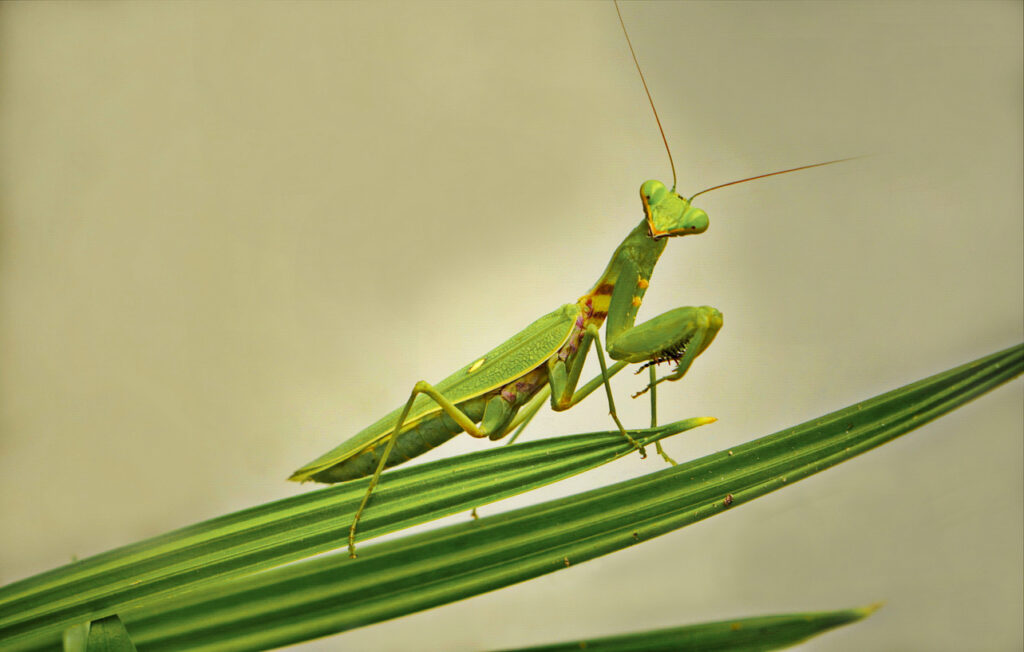
The huge compound eyes of a mantis are incredibly sensitive to motion, able to spot even the tiniest movement from far away. These eyes are made up of thousands of individual lenses, each detecting movement in its part of the visual field. Together, they create a motion detection system that’s almost impossible to fool.
Their sensitivity to movement means a mantis can spot potential prey long before the prey spots them. A fly twitching its wings 30 centimetres away will immediately grab the mantis’s attention. Early detection gives them time to position themselves perfectly and prepare for the strike.
11. They can adapt their hunting style to different prey.
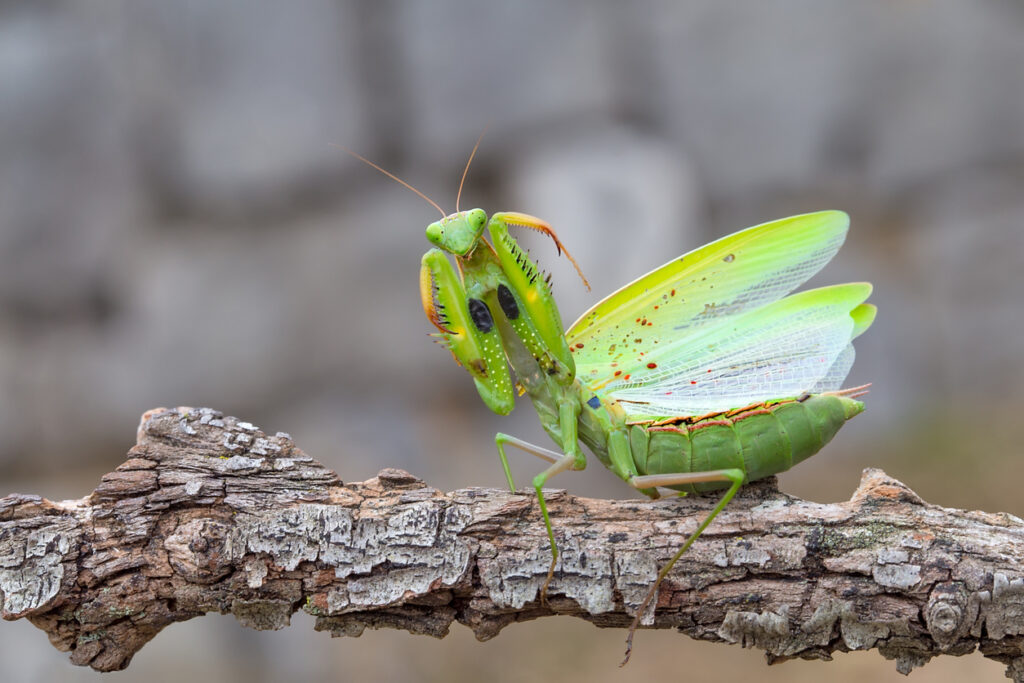
Mantises aren’t stuck with just one hunting method. They adjust their approach based on what they’re hunting, using different strategies for fast-moving flies versus slower caterpillars. That flexibility makes them successful in various environments and against different types of prey.
A mantis hunting a quick fly will position itself differently than when stalking a slow beetle. They learn from experience which techniques work best for specific prey types. Having that sort of adaptability means they can survive in different habitats and take advantage of whatever food sources are available.
12. Their whole body acts as a sensory system
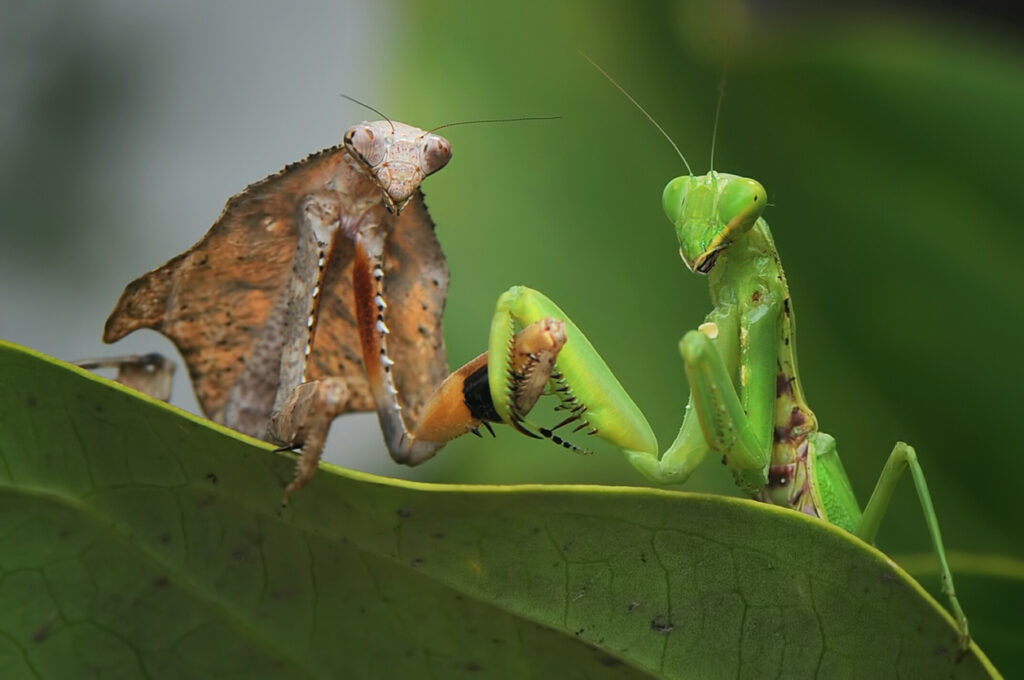
Beyond their incredible eyes, mantises have sensors all over their body that detect vibrations, air currents, and chemical signals. These sensors help them detect prey that might be behind them or out of their direct line of sight. Their entire body is basically a sophisticated prey detection system.
These additional senses give mantises information that vision alone can’t provide. They can feel the vibrations of an insect walking nearby or sense the air displacement from wings beating. Using all their senses means they’re aware of everything happening around them, making it nearly impossible for prey to sneak past undetected.