Bladderwort looks like a delicate little water plant, but it’s nothing of the sort once you pay attention to how it feeds.
Hidden along its stems are tiny traps that pull in prey faster than you can blink, and the whole thing happens quietly beneath the surface. It’s one of those species that seems unassuming until you realise what it’s capable of, and then it becomes a lot more interesting. The speed, the precision, and the fact that it’s doing all this without behaving like a typical plant makes it stand out in a big way.
It’s a carnivorous plant that lives underwater or in boggy ground.
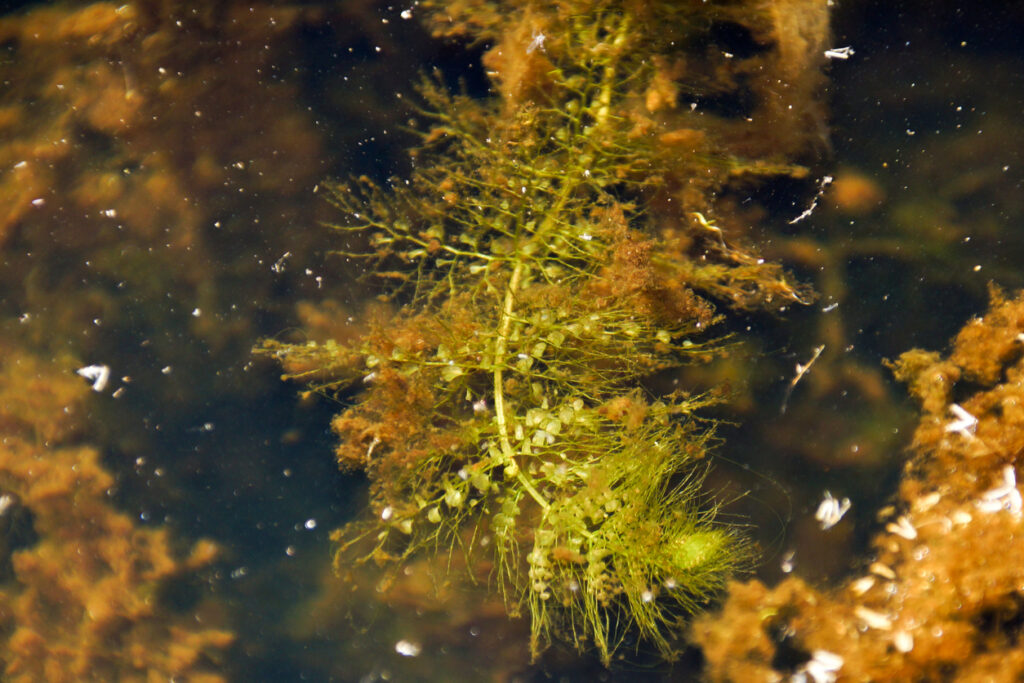
Bladderworts are aquatic carnivorous plants found in ponds, lakes, streams, and waterlogged soil across most of the world. Unlike Venus flytraps that everyone knows about, these plants do their hunting completely submerged, making them less famous but way more fascinating.
There are over 200 species of bladderwort, ranging from tiny thread-like plants to larger floating masses. Most people never notice them because they look like stringy green weeds underwater. That innocuous appearance hides one of nature’s most sophisticated killing machines.
The traps are tiny bladders that suck prey inside.
The “bladder” part of bladderwort refers to thousands of microscopic bladder-shaped traps scattered along the plant’s submerged stems. Each bladder is about the size of a pinhead or smaller, hollow inside, with a trapdoor at one end.
These bladders work like underwater vacuum cleaners. The plant creates negative pressure inside each bladder by pumping water out, making the bladder walls collapse slightly inward. This sets the trap and leaves it ready to spring at any moment.
It catches prey in less than a millisecond.
When a tiny water creature like a water flea, mosquito larva, or microscopic worm brushes against trigger hairs near the bladder’s door, the trap fires in less than a millisecond. That’s faster than a human can blink, faster than a mousetrap snaps shut, one of the fastest movements in the entire plant kingdom.
The speed is absolutely mental when you think about it. The door flies open, water rushes in carrying the prey with it, and the door slams shut again, all in a fraction of a second. The victim is inside the bladder before it even realises something’s wrong.
The vacuum inside literally sucks victims in.
The negative pressure inside the bladder creates a powerful suction when the door opens. Water and anything floating in it gets violently sucked inside as the bladder re-inflates to its normal shape. The prey doesn’t swim in, it gets dragged in by force.
The suction is so strong that prey items have no chance of escape once they’ve triggered the trap. The water accelerates to incredible speeds in that split second, creating forces the tiny creatures can’t possibly resist. It’s like being caught in a microscopic whirlpool.
Trigger hairs around the door act as motion sensors.
Delicate hair-like structures stick out around the bladder entrance, acting as the trigger mechanism. When prey swims past and touches these hairs, it sets off the trap. The plant is essentially blind, but these mechanical sensors let it detect when food is nearby.
The hairs are sensitive enough to detect the tiniest creatures but designed not to fire from water currents alone. This prevents the plant wasting energy on false alarms. Only actual prey contact triggers the lightning-fast response.
Once inside, there’s absolutely no escape.
The bladder door only opens inward and locks shut immediately after catching prey. The victim is now trapped in a chamber that will become its tomb. The door won’t open again until the bladder resets itself by pumping out water, which takes 15 to 30 minutes.
Inside the bladder, digestive enzymes begin breaking down the prey. The plant absorbs the nutrients from the dissolved victim over the next few hours or days. The whole thing is absolutely brutal, despite looking like innocent green threads floating in the water.
A single plant can have thousands of these traps.
One bladderwort plant doesn’t just have a couple of bladders, it can have thousands of them scattered along its stems. Each one operates independently, setting its own trap and catching its own prey. This makes the plant an incredibly efficient predator.
With so many traps active at once, the plant is constantly catching food. Walk past a healthy bladderwort, and dozens or hundreds of its bladders might be digesting recent catches at any given moment. It’s a floating death field for anything small enough to get caught.
It catches prey because the water is too poor in nutrients.
Bladderworts live in nutrient-poor water, where normal plants struggle to survive. The water lacks enough nitrogen and phosphorus for healthy growth, so the plant evolved to get these essential nutrients from prey instead of the environment.
Being carnivorous isn’t about being aggressive or mean, it’s about survival in harsh conditions. The plant turns to hunting because it can’t get what it needs from the water alone. It’s an adaptation to living somewhere most plants can’t cope with.
The plant has no roots at all.
Unlike almost every other plant you can think of, bladderworts don’t have any roots. They float free in the water or sit loosely in wet soil, absorbing water and whatever dissolved nutrients they can find directly through their stems and leaves.
Not having roots means the plant puts all its energy into growing more traps and leaves instead. It’s completely specialised for its carnivorous lifestyle, having evolved away from normal plant structures because they weren’t needed once it mastered catching prey.
It produces surprisingly pretty flowers above the water.
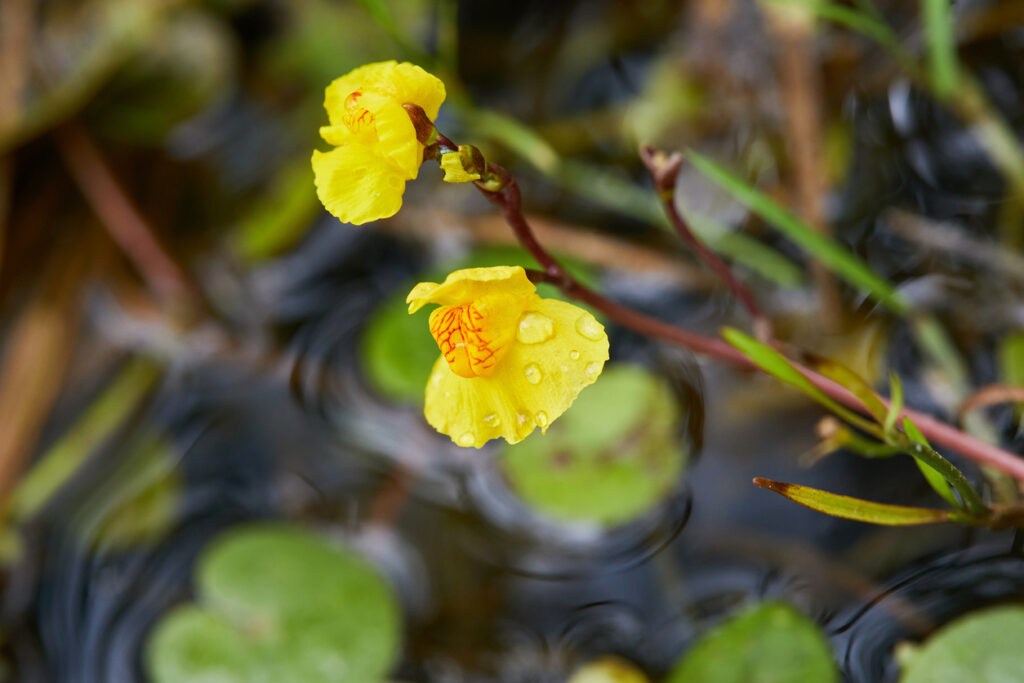
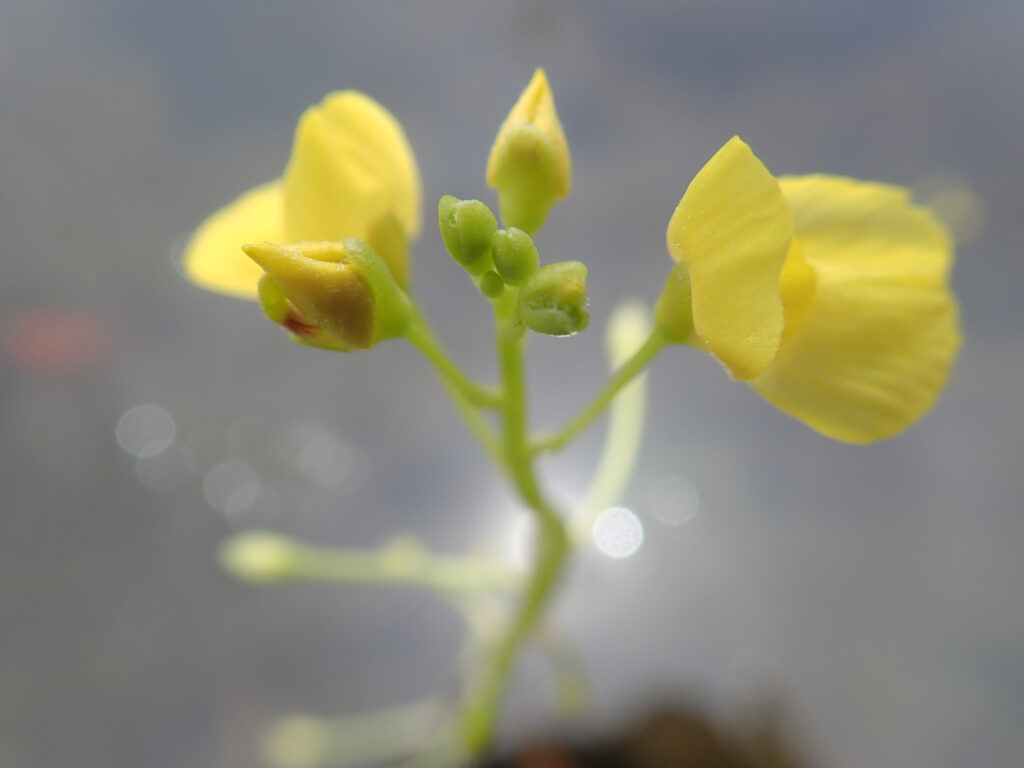
Despite being an underwater killing machine, bladderworts produce delicate flowers that poke above the water surface. The flowers are usually yellow, purple, or white and look like tiny snapdragons or orchids. They’re genuinely beautiful and seem totally at odds with what the plant does beneath the surface.
These flowers attract flying insects for pollination, which is completely separate from the underwater prey-catching operation. The plant basically lives two lives, one as an aquatic predator and one as a pretty flowering plant that needs bees and other pollinators.
Scientists study it to understand ultra-fast plant movements.
Researchers are fascinated by how bladderwort achieves such incredible speed without muscles, nerves, or anything like an animal would use. Understanding the mechanics of these traps helps scientists learn about rapid movements in plants generally.
The trap uses water pressure, specialised plant cells that can change shape quickly, and clever mechanical design to achieve its speed. It’s pure physics and biology working together in ways engineers find impressive. Some researchers think the principles could inspire new technologies.
The traps can catch the same prey multiple times.
Sometimes larger prey items get partially sucked in but are too big to fit completely through the door. When the bladder resets and the door opens slightly to expel waste water, the prey might escape briefly. Then it can get caught again by the same trap or a different one nearby.
This creates a horrible situation for the victim, where escape just leads to recapture. The plant’s multiple traps work together, creating a killing field where prey has very low survival odds once it’s in the area.
It survives winter by forming dormant buds.
In cold climates, bladderworts survive winter by forming special compact buds called turions that sink to the bottom and stay dormant until spring. These buds contain everything needed to regrow the whole plant when conditions improve.
The turions sit in the mud through freezing temperatures, then float back up and sprout when the water warms. Within weeks, a tiny dormant bud transforms back into a full hunting plant with thousands of active traps ready to catch prey again.
Some species can catch prey on land too.
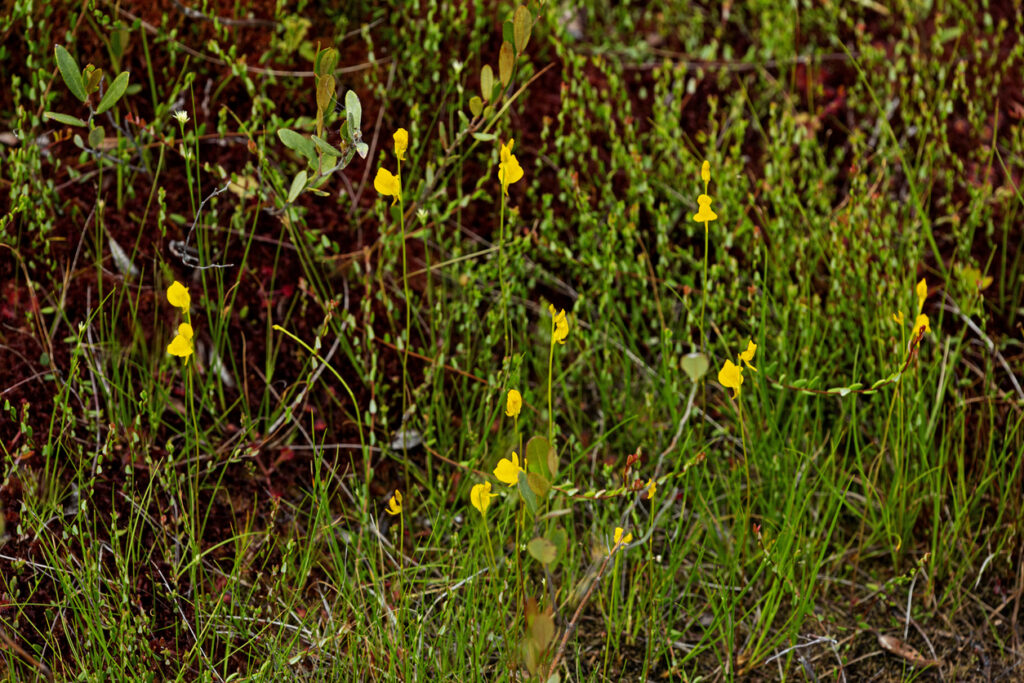
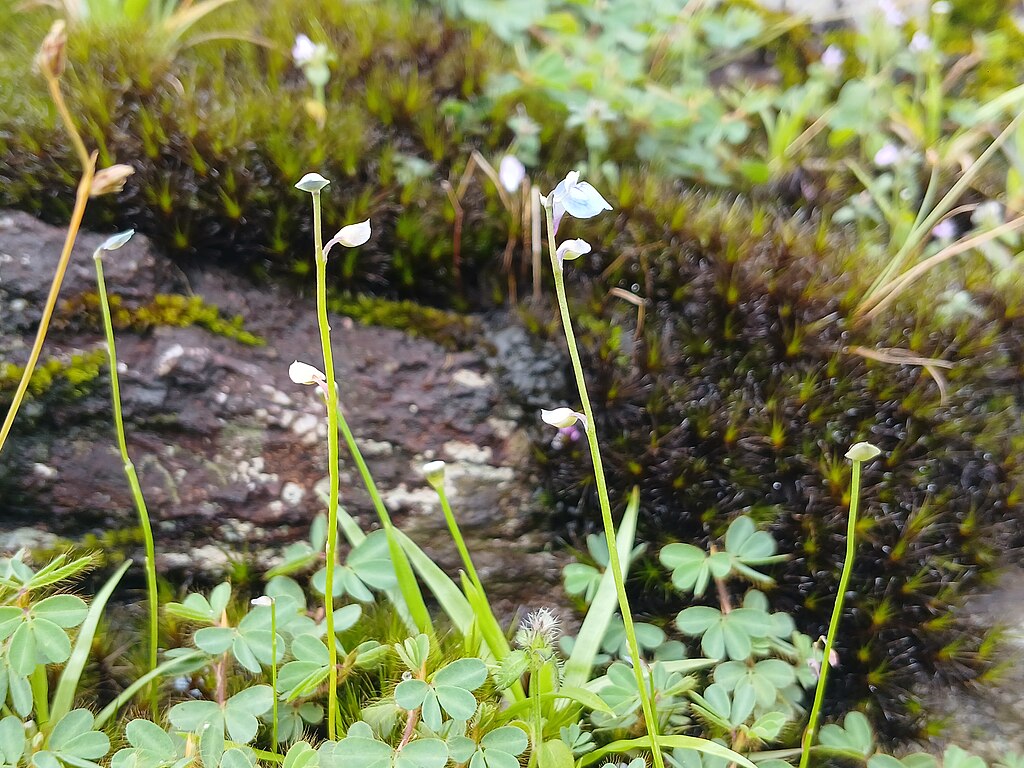
A few bladderwort species have adapted to live in wet soil rather than open water, where they catch soil-dwelling creatures like tiny worms and ground-dwelling larvae. The traps work exactly the same way, but they’re catching terrestrial prey instead of aquatic ones.
These terrestrial species prove how adaptable the bladderwort trap design is. Whether underwater or in soggy ground, the same basic mechanism of suction-based capture works perfectly. It’s one of evolution’s most successful carnivorous plant designs, allowing the plant to dominate poor-nutrient environments worldwide.