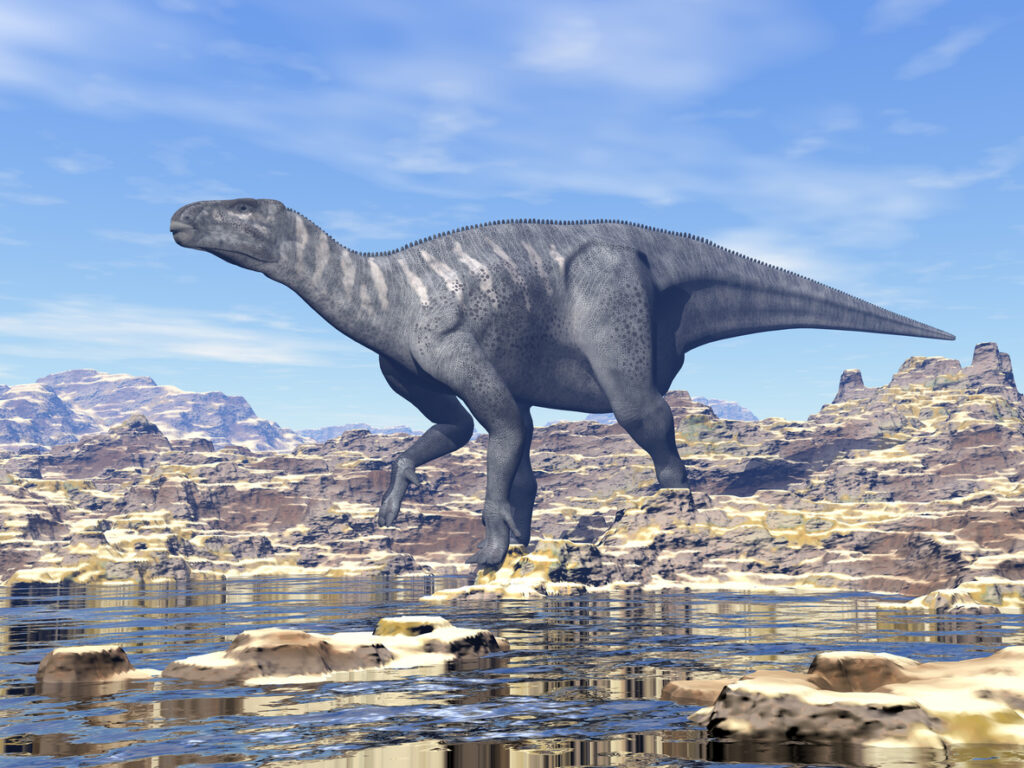
Iguanodon isn’t as flashy as T. rex or as massive as Brachiosaurus, but it holds a special place in dinosaur history. Most people have heard of it, even if they can’t picture exactly what it looked like. There’s a reason this particular dinosaur became so famous: it was one of the first ever discovered and helped prove that dinosaurs actually existed. Its story involves dodgy reconstructions, well-known scientists, and a bizarre dinner party inside a model dinosaur. Here’s how Iguanodon became a household name.
It was one of the very first dinosaurs ever discovered.
In 1822, fossil teeth were found in Sussex by Mary Ann Mantell (though her husband Gideon usually gets the credit). Nobody knew what dinosaurs were yet; in fact, the word didn’t even exist. These weird teeth looked like nothing anyone had seen before, enormous and clearly from some kind of reptile.
Being one of the first dinosaurs ever identified made Iguanodon historically significant from the start. Whilst other fossils had probably been found before, this was one of the first to be properly studied and recognised as something completely new. It helped kick off the entire field of dinosaur palaeontology.
The name means “iguana tooth.”
When Gideon Mantell was trying to work out what these massive teeth belonged to, he noticed they looked like giant versions of iguana teeth. Iguanas were well-known reptiles, so comparing the fossils to something familiar helped people understand what he’d found, even if the comparison wasn’t perfect.
Calling it Iguanodon made it accessible to the public. People could picture a huge iguana-like creature, which was easier to grasp than some completely alien animal. The name stuck and helped make the dinosaur memorable, even though we now know it looked nothing like an iguana.
The Crystal Palace dinosaurs made it famous.
In 1854, life-sized models of dinosaurs were built for the Crystal Palace Park in London. These were the first ever dinosaur sculptures, and Iguanodon was one of the stars. Thousands of Victorians came to see these concrete monsters, which were absolutely mind-blowing at the time.
Those models cemented Iguanodon in public consciousness. They’re still there today, looking totally wrong by modern standards (they’re basically giant iguanas!) but they made dinosaurs real for ordinary people. Seeing a massive three-dimensional creature made much more impact than just reading about teeth.
Scientists had a dinner party inside one.
Before the Crystal Palace Iguanodon was finished, the sculptor Benjamin Waterhouse Hawkins held a dinner party inside the hollow model on New Year’s Eve 1853. Twenty-one guests, including top scientists and Gideon Mantell himself, sat inside this concrete dinosaur eating a fancy meal. It was absolutely bizarre and brilliant publicity.
This dinner became legendary and attracted huge press attention. The story of scientists dining inside a dinosaur captured Victorian imaginations and made Iguanodon the talk of London. It was brilliant marketing before marketing was really a thing, and it ensured everyone knew about this particular dinosaur.
They got the thumb spike completely wrong.
Early reconstructions stuck Iguanodon’s distinctive thumb spike on its nose, thinking it was a horn like a rhinoceros. For decades, pictures showed Iguanodon with this spike on its snout, which looked odd, but nobody knew any better. It became the dinosaur’s defining feature in people’s minds.
When scientists finally realised the spike was actually a thumb, it became a famous example of how science corrects itself. The mistake made Iguanodon even more interesting because there was drama in the story: we got it wrong, then figured it out. That narrative of discovery and correction kept people engaged with this particular dinosaur.
Massive fossil finds in Belgium helped.
In 1878, coal miners in Bernissart, Belgium, discovered an absolute treasure trove of at least 38 Iguanodon skeletons all together. It was one of the most significant dinosaur discoveries ever. Suddenly, scientists had multiple complete skeletons to study instead of just scattered teeth and bones.
These Belgian fossils transformed understanding of Iguanodon and gave palaeontologists the material to finally reconstruct it properly. The sheer number of specimens meant Iguanodon became one of the best-understood dinosaurs of its time. Museums across Europe displayed these skeletons, keeping Iguanodon in the public eye for generations.
It helped prove dinosaurs were real.
In the early 1800s, many people doubted these fossil finds were really from ancient extinct animals. Some thought they were just deformed modern creatures or even fakes. The accumulation of evidence from Iguanodon and other early discoveries gradually convinced the scientific community that enormous reptiles had once roamed the Earth.
Being part of that fundamental shift in understanding gave Iguanodon lasting importance. It wasn’t just another dinosaur; it was one of the fossils that proved dinosaurs had existed at all. That historical significance kept it relevant even as flashier dinosaurs were discovered later.
It appeared in early dinosaur books and museums.
Because Iguanodon was discovered so early, it appeared in pretty much every early book and museum display about dinosaurs. Victorian children learning about prehistoric life would definitely encounter Iguanodon. It became a standard example, the dinosaur everyone used when explaining what these creatures were.
This early and constant presence in educational materials meant multiple generations grew up knowing about Iguanodon. By the time more spectacular dinosaurs were being discovered, Iguanodon was already firmly established in popular culture. It had first-mover advantage in the public consciousness.
The posture debate kept it interesting.
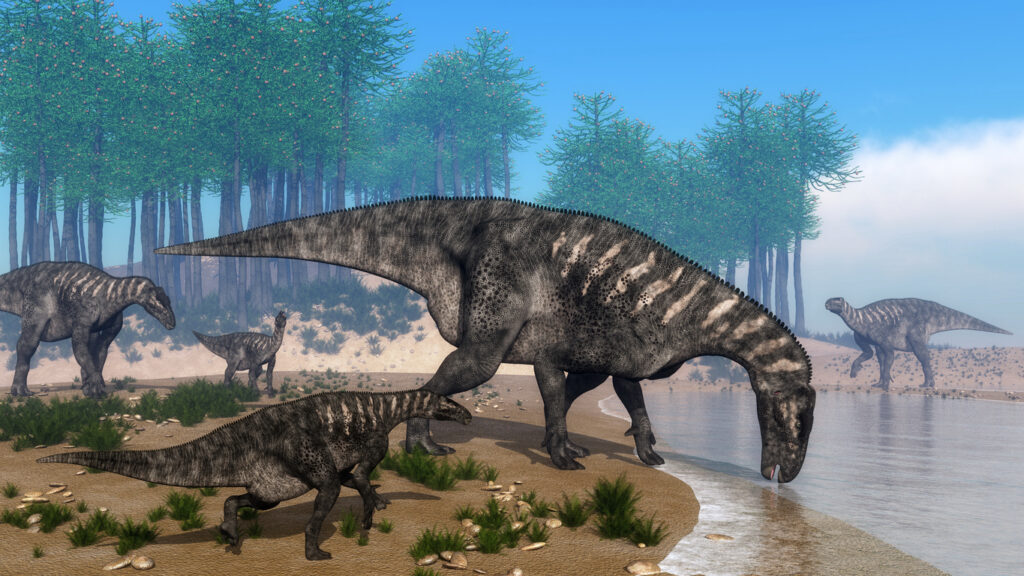
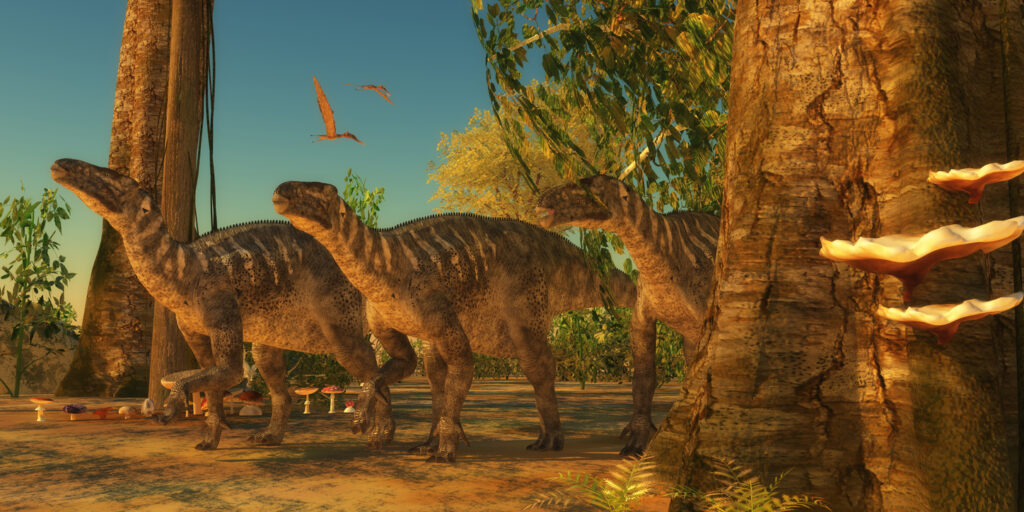
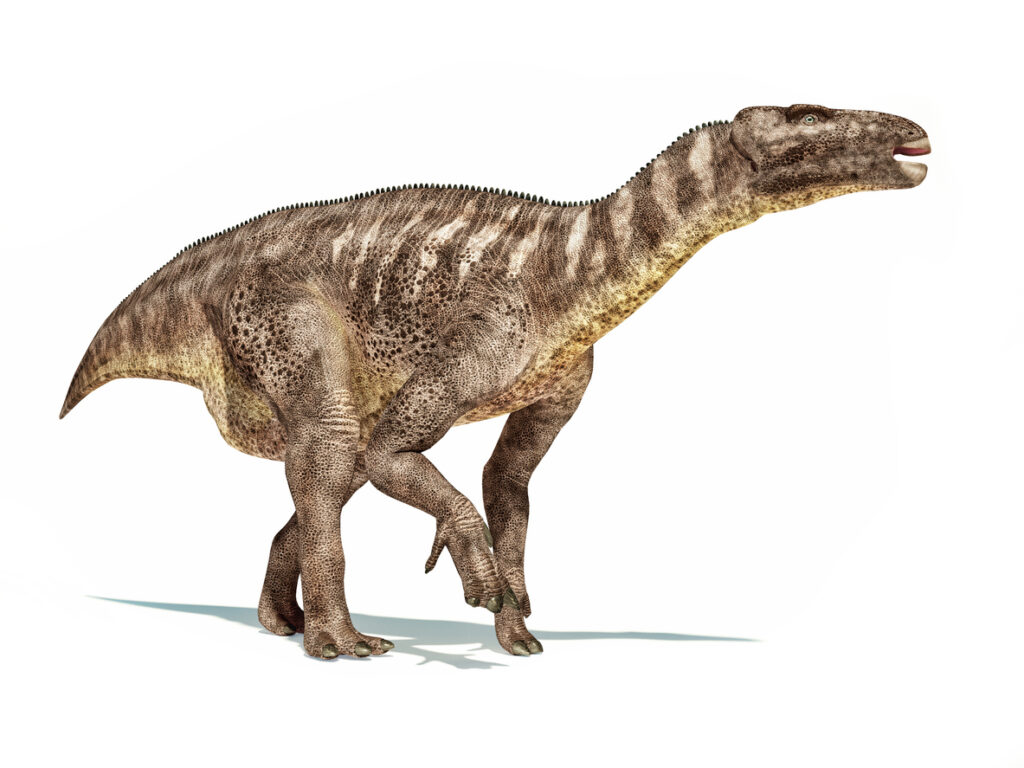
For ages, Iguanodon was shown standing upright like a kangaroo, dragging its tail. Then scientists realised it probably walked on all fours most of the time, with a horizontal body position. The complete reimagining of how the animal looked and moved kept Iguanodon relevant as palaeontology evolved.
Each time our understanding changed, there were new articles, new museum displays, new illustrations. The dinosaur stayed in the news because scientists kept revising what it looked like. The ongoing story of discovery meant Iguanodon remained in public awareness rather than becoming old news.
It represents the history of palaeontology itself.
Iguanodon’s story mirrors the entire development of dinosaur science, from early confusion and wild speculation, through major fossil discoveries, to modern understanding based on proper evidence. Looking at how our reconstruction of Iguanodon changed over 200 years shows how palaeontology works as a science.
This makes Iguanodon symbolically important beyond just being one dinosaur among many. It represents the journey of human understanding about prehistoric life. Museums and books use it to show how science progresses and corrects itself over time. That educational value, combined with its genuine historical importance, is why Iguanodon remains well-known even though it’s not the biggest, fiercest, or strangest dinosaur ever discovered. It earned its fame by being first and by having a fascinating story of scientific discovery attached to it.