
It’s one of those questions that creeps into your mind late at night: what if there’s another version of you somewhere out there? Someone living a life almost identical to yours, but with a few small changes that make it completely different. Maybe they took a different job offer, married someone else, or never moved away from their hometown. The thought is unsettling and fascinating all at once.
Scientists, philosophers, and writers have been obsessed with this idea for decades. Parallel universes, alternate realities, multiverses—whatever you call them, they all raise the same question: could there really be countless versions of us, each living out a slightly different story? It sounds like pure science fiction, but modern physics has taken the question more seriously than ever before, forcing us to wonder if “another you” isn’t just a fantasy after all.
The many-worlds interpretation isn’t fringe science.
Hugh Everett proposed this in 1957 as a legitimate solution to quantum mechanics problems, and it’s still taken seriously by physicists today. Every time a quantum event has multiple possible outcomes, the universe splits, creating parallel realities where each outcome happens.
That means every decision you didn’t make, every coin flip that went the other way, every random event that could’ve gone differently, actually did happen in another universe. It’s not speculation, it’s one explanation for why quantum mechanics works the way it does.
You’d be living every possible version of your life simultaneously.
In some universes, you made different choices at key moments, took the job you turned down, married someone else, moved to a different city. In others, bigger changes happened, your parents never met, or you were never born at all.
The unsettling part is that all those versions are equally real, not hypothetical. If the theory’s correct, there’s a universe where you’re reading this exact article but made one different choice yesterday that’s already changing your trajectory completely.
Quantum events happen trillions of times per second.
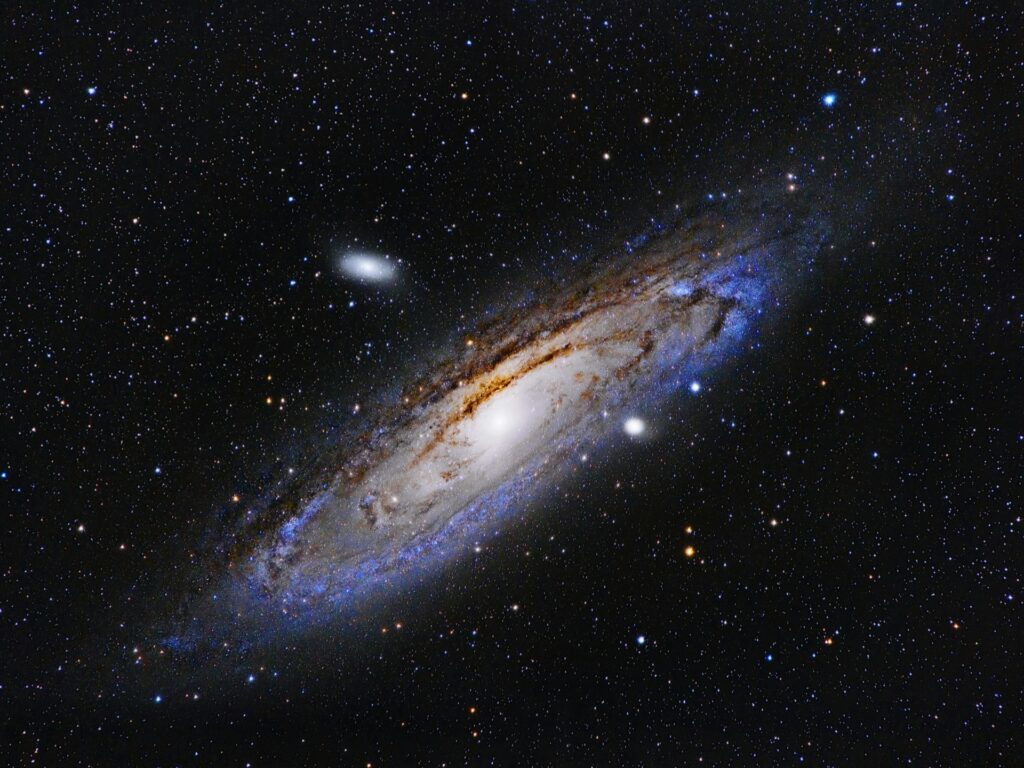
The universe isn’t just splitting at major decision points; it’s branching constantly at the quantum level. Every particle interaction, every photon that could go left or right, every atomic decay, creates new universes where the alternative happened.
That volume is almost incomprehensible. By the time you finish reading this sentence, countless trillions of parallel universes have branched off from this one, each one microscopically different but accumulating into vastly different realities over time.
There’s a universe where you died yesterday.
In some parallel reality, that car did hit you, or the medical test came back different, or you made one choice that led to a fatal outcome. Statistically, if every possibility happens somewhere, your death has occurred countless times in parallel worlds.
The reverse is also true, there are universes where you survived something that killed you here, where you’re living decades longer because one random event went differently. Mortality becomes a probability spread across infinite realities rather than a single endpoint.
You might be immortal from your own perspective.
Quantum immortality suggests that your consciousness only experiences the universes where you survive. Every near-miss you’ve had might actually have killed you in other universes, but you’re only aware of the timeline where you lived through it.
That means from your subjective experience, you might always survive, always finding yourself in the universe where you narrowly avoided death, even as other versions of you died in parallel realities. You’d be immortal to yourself without ever knowing it.
We can’t contact parallel universes, probably ever.
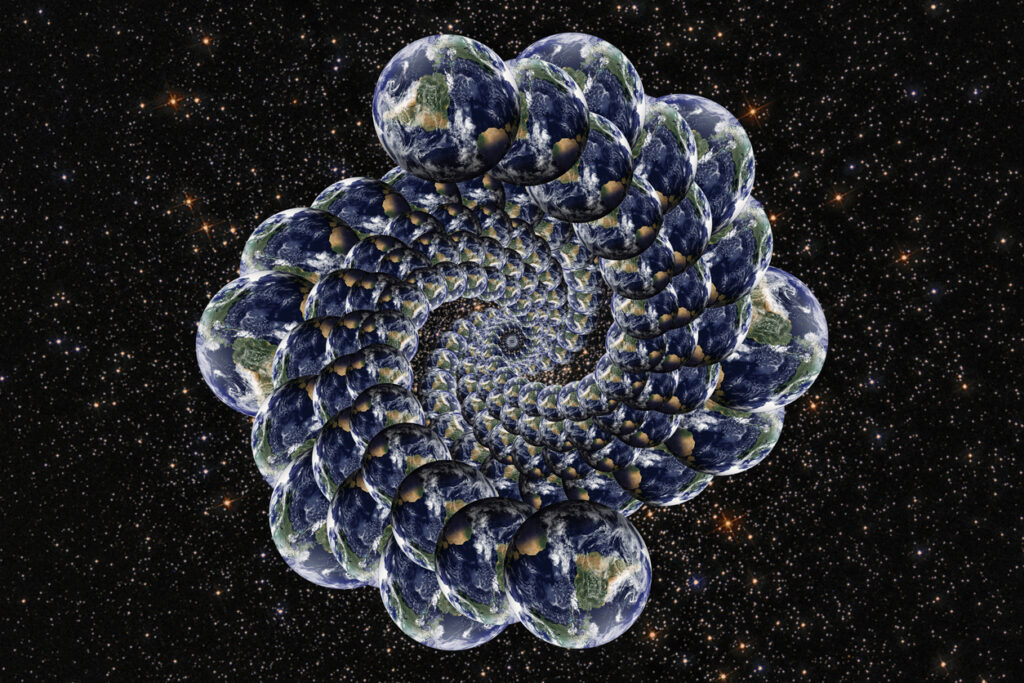
The mathematics that make parallel universes possible also make them completely isolated from each other. Once a universe branches, there’s no going back, no crossing over, no communication between them, they’re fundamentally separate realities.
That isolation means even if infinite versions of you exist, you’ll never meet them, never know what choices they made, never see how things turned out differently. The theory creates infinite possibilities while simultaneously making all of them permanently inaccessible.
Some physicists think it’s the simplest explanation.
The many-worlds interpretation actually removes some of the weird complications in quantum mechanics. Instead of particles being in multiple states until observed, they’re always in definite states, we just experience one outcome while other observers in parallel universes experience different ones.
That simplification is why serious scientists support it, not because they like science fiction, but because it makes the maths cleaner. Reality splitting constantly sounds wild, but it solves problems that other interpretations struggle with.
Historical events went differently somewhere.
There are universes where major historical turning points went the other way. Wars ended differently, leaders were never assassinated, scientific discoveries happened earlier or not at all, completely reshaping civilisation in ways we can barely imagine.
The version of history you know is just one path through infinite possibilities. In some universes, humanity never evolved; in others, we’re far more advanced, and in countless more, we’re similar but with small differences that cascaded into unrecognisable societies.
The theory makes free will even more complicated.

If every choice you could make happens in some universe, did you really choose, or are you just experiencing one outcome while other versions of you experience all the others? Your sense of making decisions might just be observing which branch of reality you’re in.
That doesn’t mean free will is an illusion exactly, but it reframes what choice means. You’re not creating your future, you’re selecting which pre-existing future you experience, while other yous select all the alternatives simultaneously.
We might never be able to prove it either way.
The problem with parallel universes is they might be fundamentally unprovable. If we can never observe or interact with them, there’s no experiment that could confirm they exist, which makes it philosophy as much as physics, even though the maths supports it.
That ambiguity means scientists will probably argue about this for generations. It fits the equations, explains quantum weirdness, and makes logical sense, but without evidence we can test, it remains a compelling possibility rather than confirmed reality, leaving the question genuinely unanswered.