Few creatures command the kind of fear and respect the king cobra does.
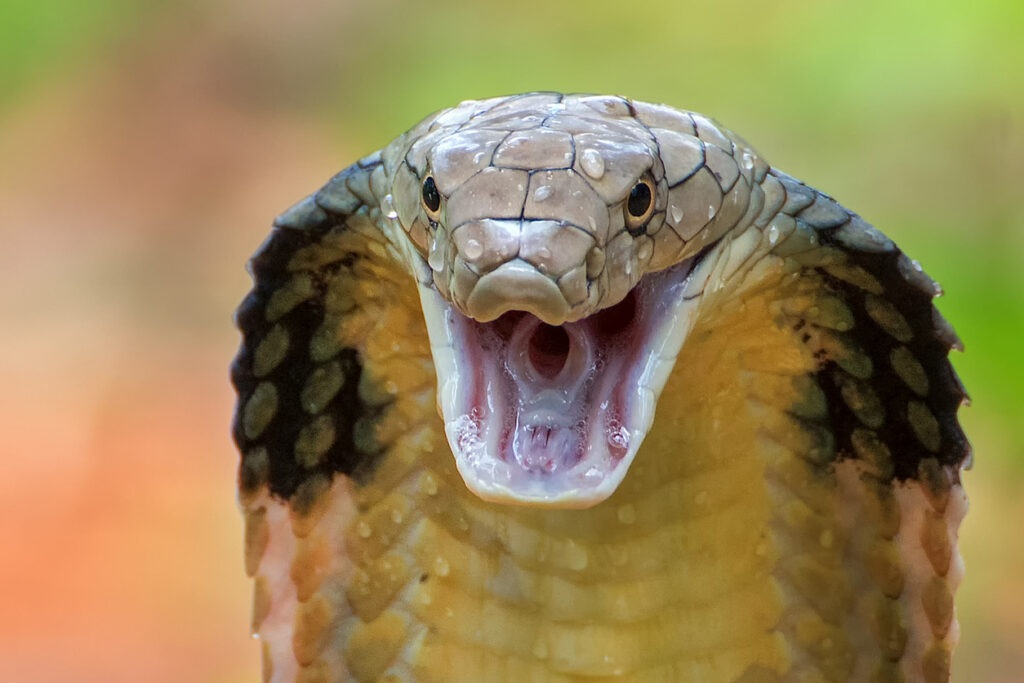
It’s not just its size, though that alone is enough to stop anyone in their tracks. Really, it’s the way it carries itself. When threatened, this snake can lift a third of its body off the ground, rising to eye level with a grown adult. In that moment, you realise you’re not the one in charge.
However, there’s more to the king cobra than its reputation as a deadly predator. It’s an intelligent, complex animal with surprising traits that set it apart from other snakes. From its hunting habits to its parenting instincts, this species proves that even the most feared animals can be fascinating once you have a closer look.
They can lift a third of their body off the ground.
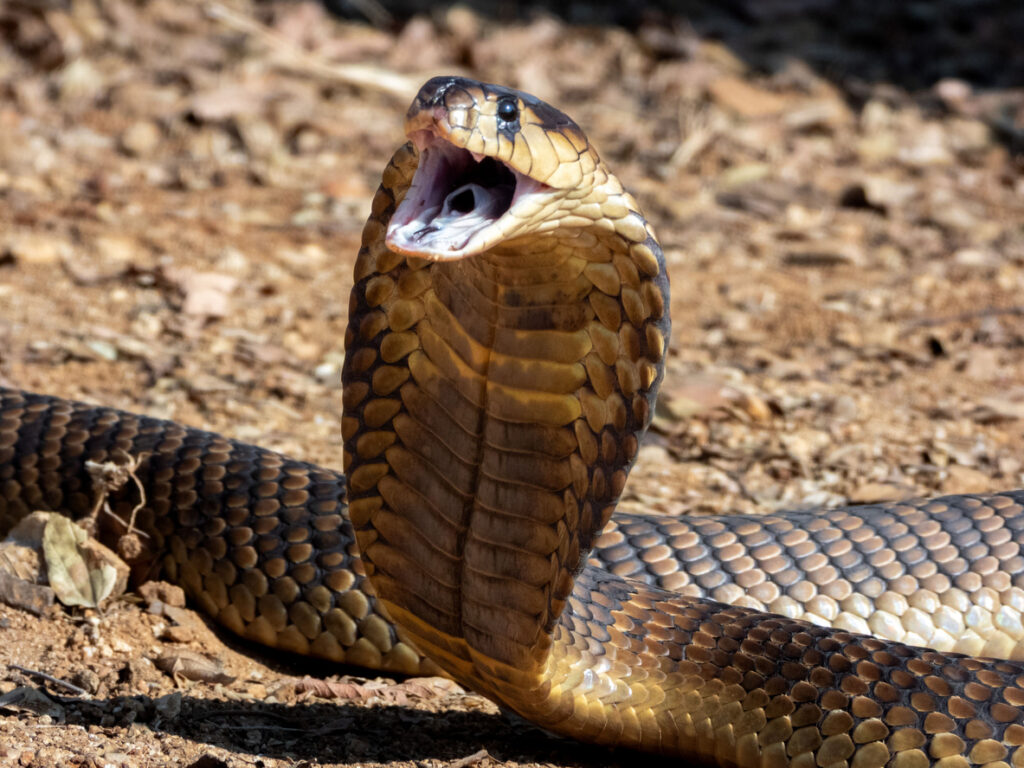
An adult king cobra can raise up to six feet of its body vertically while staying perfectly balanced. That’s taller than most people, and they can hold that position while moving toward you, which is genuinely unsettling to witness. That ability isn’t about intimidation alone, it’s about vision and reach. Lifting that high lets them scan for threats and prey across tall grass and rough terrain, giving them an advantage most ground-level predators don’t have.
They’re the only snakes that build nests.
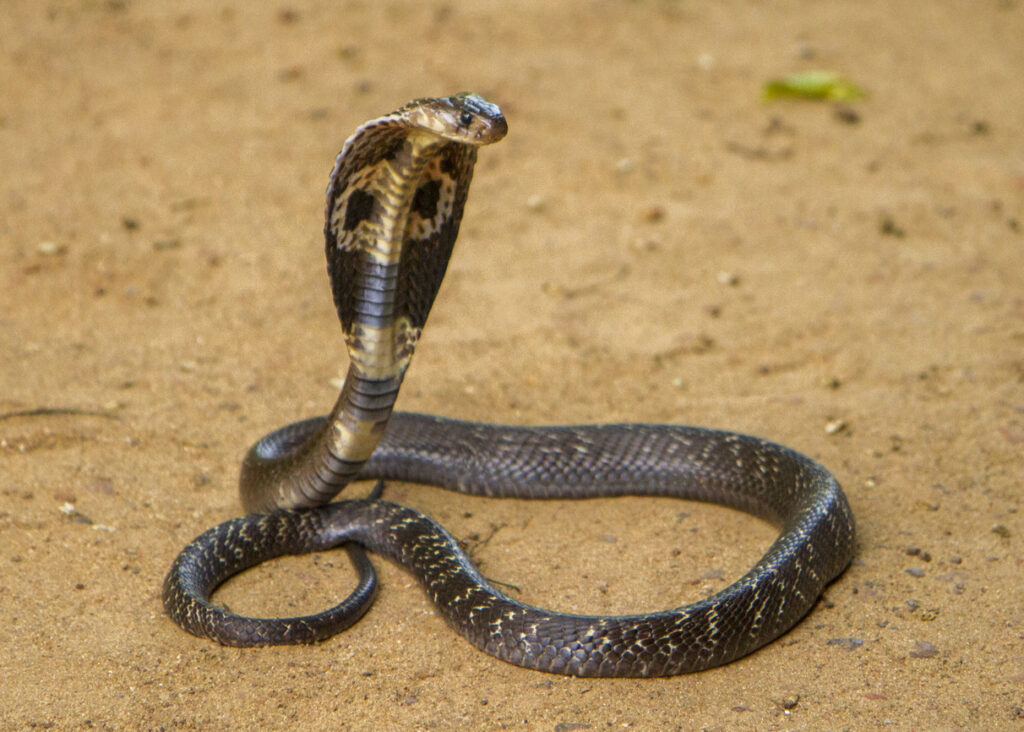
King cobras don’t just lay eggs and leave, the female constructs a two-chamber nest from leaves and vegetation, stays with the eggs for months, and aggressively defends them. No other snake species does this level of parental care. Their protective behaviour makes them far more dangerous during breeding season. A king cobra guarding eggs will chase threats much further than usual, and that maternal instinct overrides their normal avoidance of humans completely.
Their venom isn’t the most toxic, but the volume is lethal.
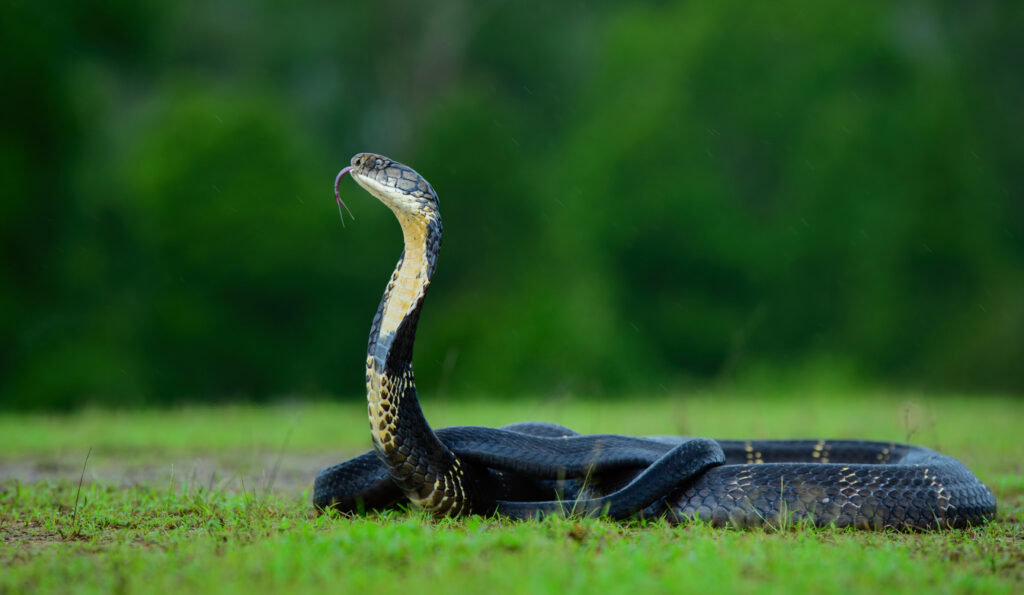
Drop for drop, other snakes have stronger venom, but king cobras deliver up to seven millilitres in a single bite, enough to kill an elephant or twenty people. The sheer quantity overwhelms the system faster than antivenom can work. The high volume means even a defensive bite, where they don’t inject everything, is still medically serious. There’s no such thing as a minor king cobra bite, even when they’re holding back, which they sometimes do.
They hunt other snakes almost exclusively.
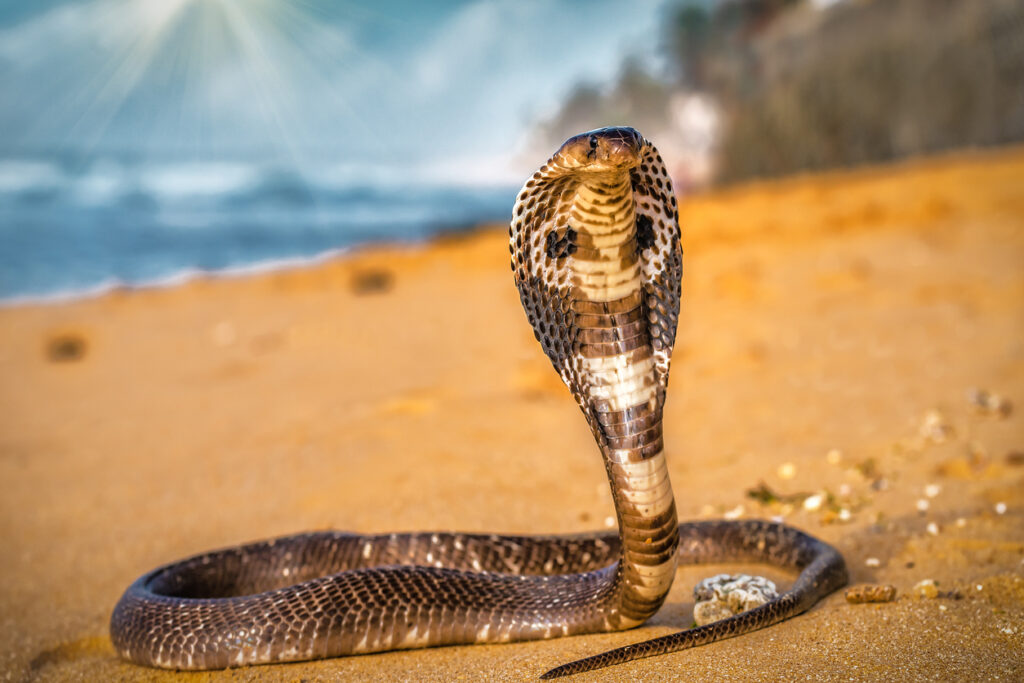
King cobras are ophiophagous, meaning they eat other snakes, including venomous ones like kraits and other cobras. They’re immune to most snake venom, which makes them the apex predator in their ecosystem despite being prey-sized themselves. Their diet makes them harder to keep in captivity and rarer to encounter because they need territory with enough snake populations to sustain them. Where you find king cobras, you’re also in an area dense with other venomous species.
They can “stand” and move forward at the same time.
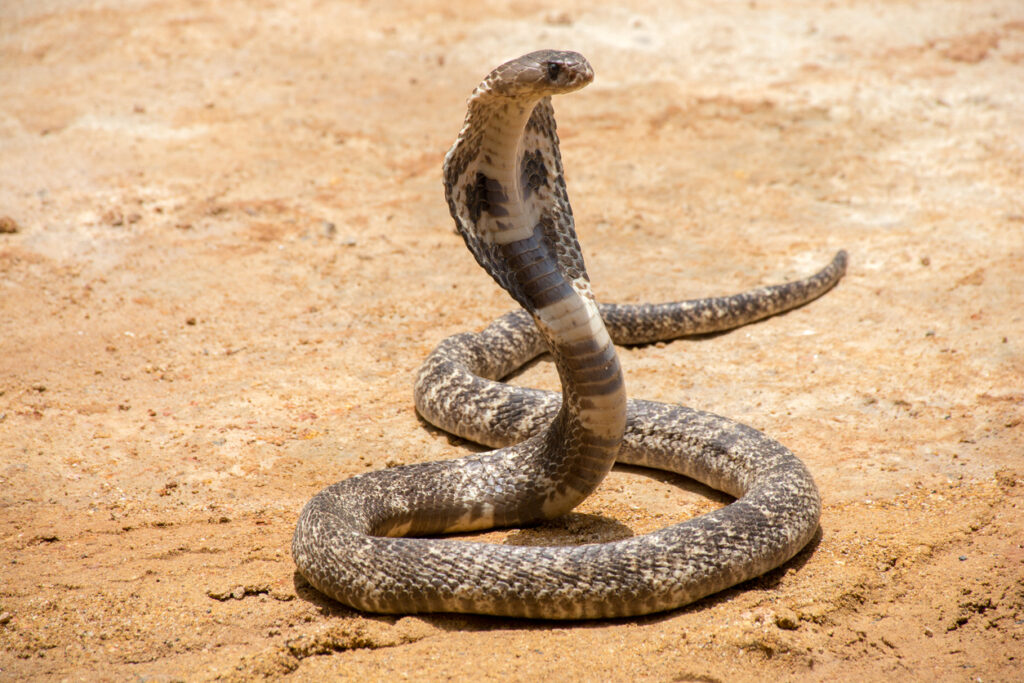
Unlike other snakes that rear up and stay stationary, king cobras can maintain that vertical posture while continuing to move toward you. It’s not a static threat display, it’s active pursuit while staying elevated. Its combination of height and mobility is what makes encounters so dangerous. You’re not dealing with a snake that strikes from the ground, you’re dealing with one that can reach your upper body while advancing, which removes most escape advantages humans normally have.
They growl, not hiss.
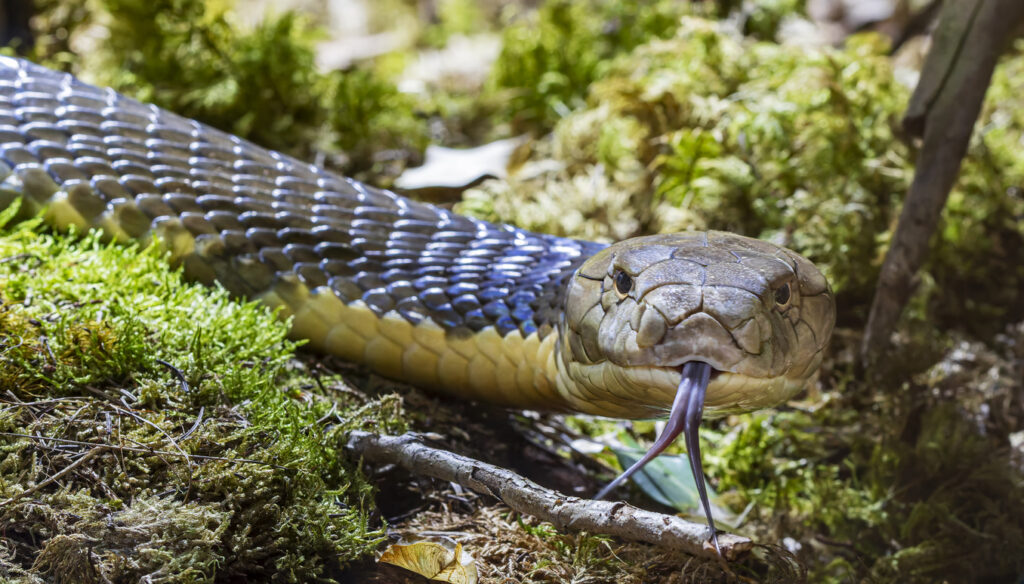
The sound a king cobra makes is lower and more resonant than a typical snake hiss, almost mammalian. It’s produced by air passing through their trachea in a way unique to this species, and it carries further. That growl serves as a long-distance warning, letting threats know they’re too close before visual contact even happens. In dense jungle, you’ll hear a king cobra before you see it, which is intentional communication rather than defensive reflex.
They can go months without eating
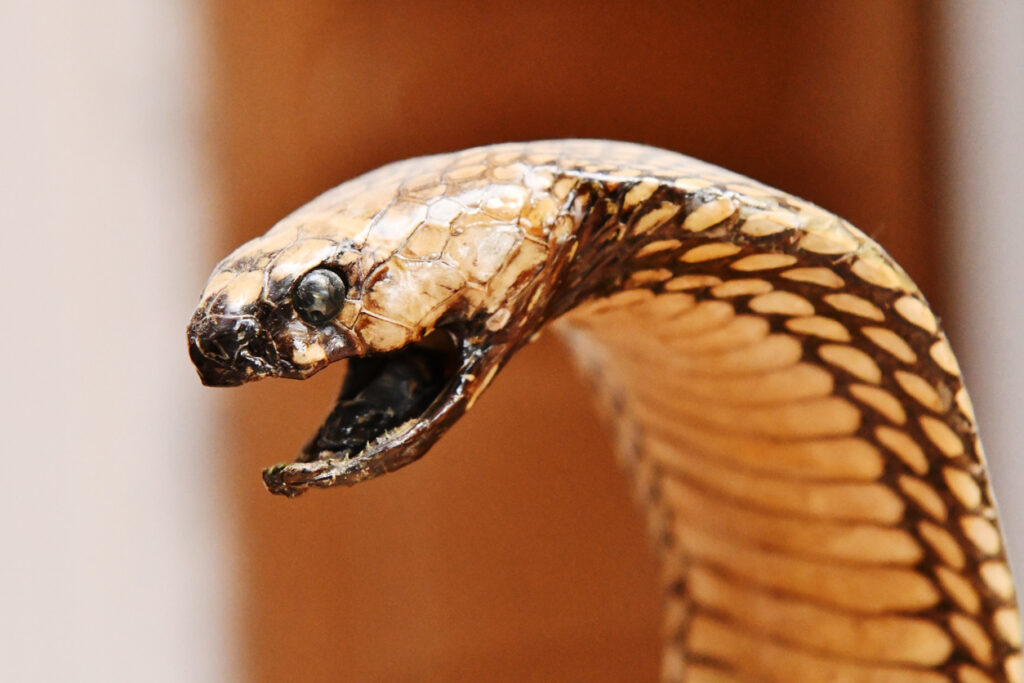
After a large meal, king cobras can survive three to four months without food. Their metabolism slows dramatically, and they’ll avoid unnecessary movement to conserve energy, which makes them unpredictable in territories where food is scarce. Their fasting ability means they don’t need to hunt as often as other predators their size. When they do hunt, it’s calculated and efficient, not desperate, which makes their strikes more precise and their behaviour more deliberate than food-driven aggression.
They’re surprisingly intelligent for reptiles
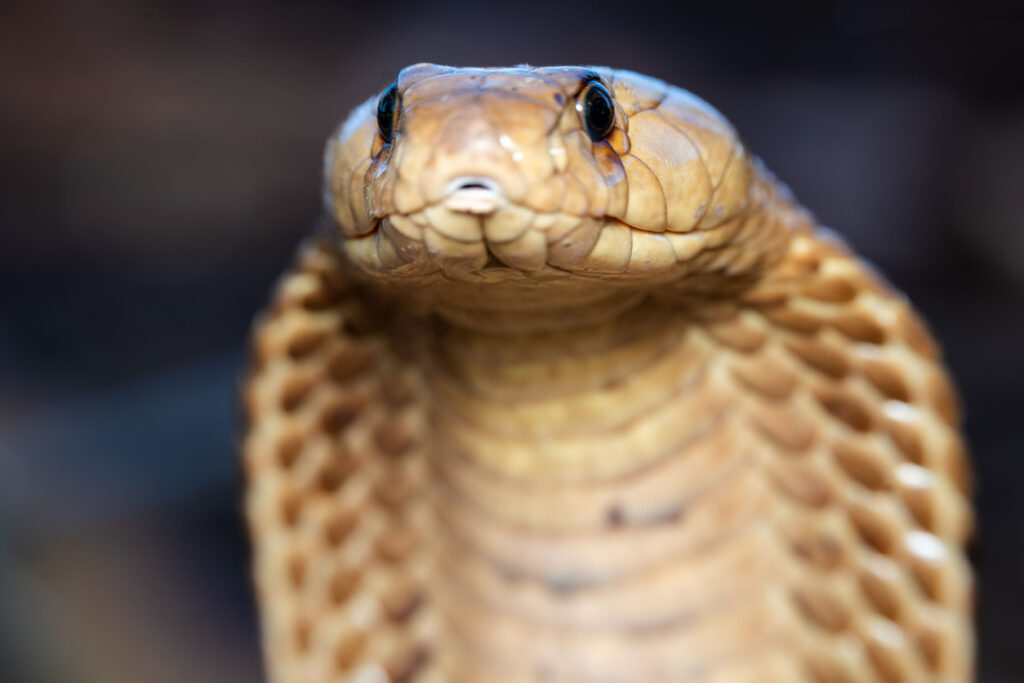
King cobras recognise individual people, remember locations, and show problem-solving behaviour in captivity that’s unusual for snakes. Handlers report they learn routines, anticipate feeding times, and adjust their behaviour based on who’s approaching them.
That intelligence makes them more dangerous in some ways because they’re not purely instinct-driven. They assess situations, remember outcomes, and modify their responses, which means you can’t rely on predictable snake behaviour patterns with them.
They avoid humans unless cornered or protecting eggs.
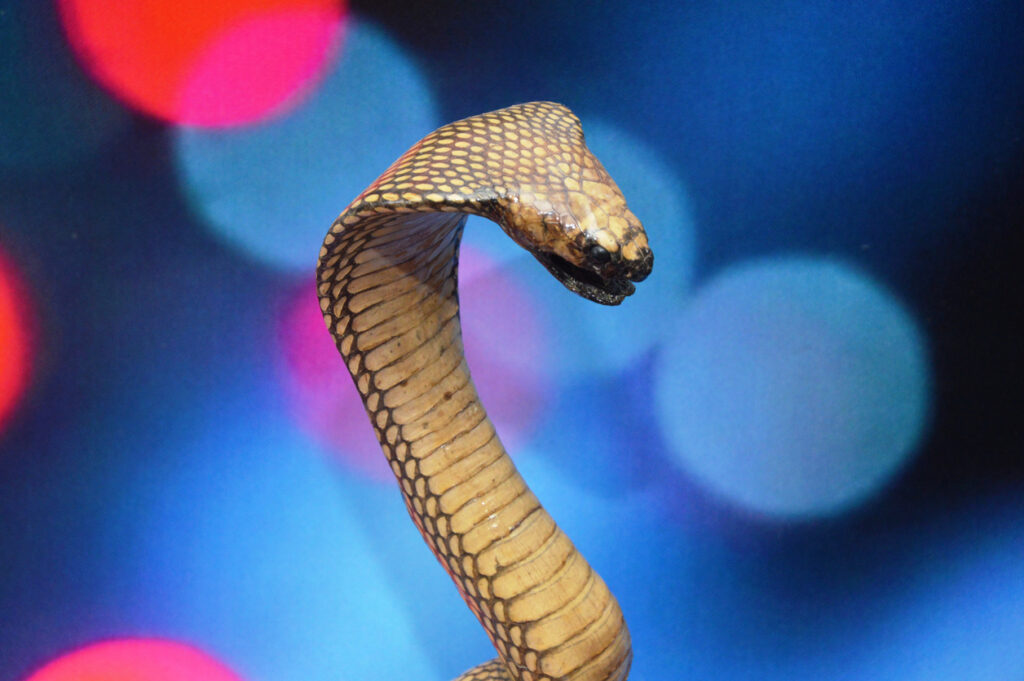
Despite their reputation, king cobras would rather retreat than fight. Most bites happen when people accidentally corner them or stumble into nesting sites, not because the snake was actively hunting or being territorial for no reason.
That reluctance is what keeps fatal encounters relatively rare given their range. They’re not aggressive by nature, they’re defensive, and understanding that distinction matters if you’re ever in their habitat because giving them an escape route usually prevents confrontation.
Their eyesight is better than most snakes.
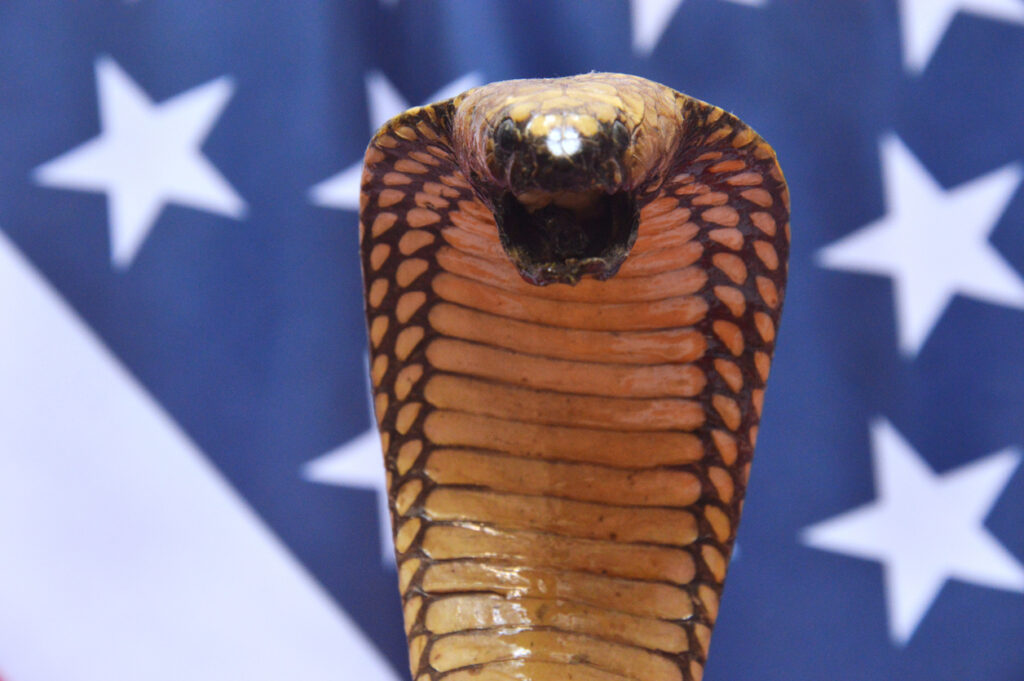
King cobras can see movement from significant distances and track objects better than other snake species. Combined with their ability to raise up high, they’ve got visual range that’s closer to a predatory bird than a typical ground-level reptile. Their vision changes how they hunt and defend. They’re not relying purely on heat sensing or vibration like other snakes, they’re watching and assessing from a distance, which gives them more time to plan their approach or escape route.
A bite can kill in 15 minutes.
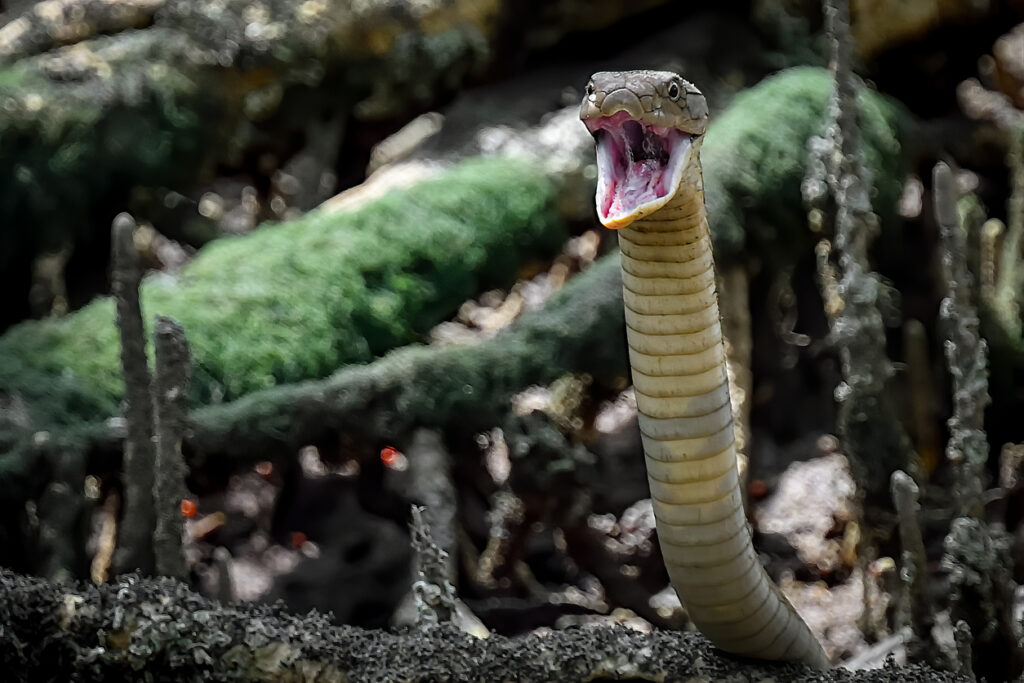
The neurotoxic venom shuts down the nervous system fast, causing respiratory failure before most symptoms even fully develop. Unlike hemotoxic venom that damages tissue over hours, king cobra venom targets the brain and breathing immediately.
That speed means there’s almost no margin for error in remote areas. By the time symptoms are obvious, the window for effective treatment has already narrowed dramatically, which is why their reputation for lethality is deserved even if actual attacks are uncommon.
They can live over 20 years in the wild.
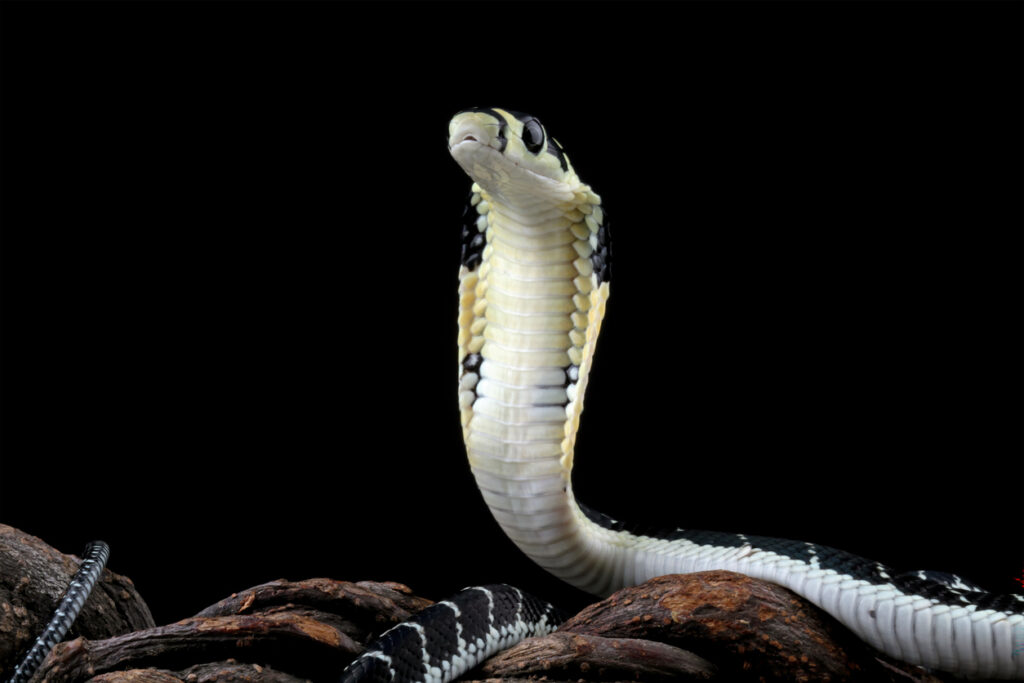
King cobras aren’t just apex predators, they’re long-lived ones, learning and adapting over decades in the same territory. Older individuals are often larger, more experienced, and better at avoiding humans while still dominating their environment.
Their longevity means they accumulate knowledge about their range, including where humans are likely to be and how to avoid them. The king cobras that survive longest are the ones that learned early to stay hidden, making them both more elusive and more successful.
The “king” part isn’t about size.
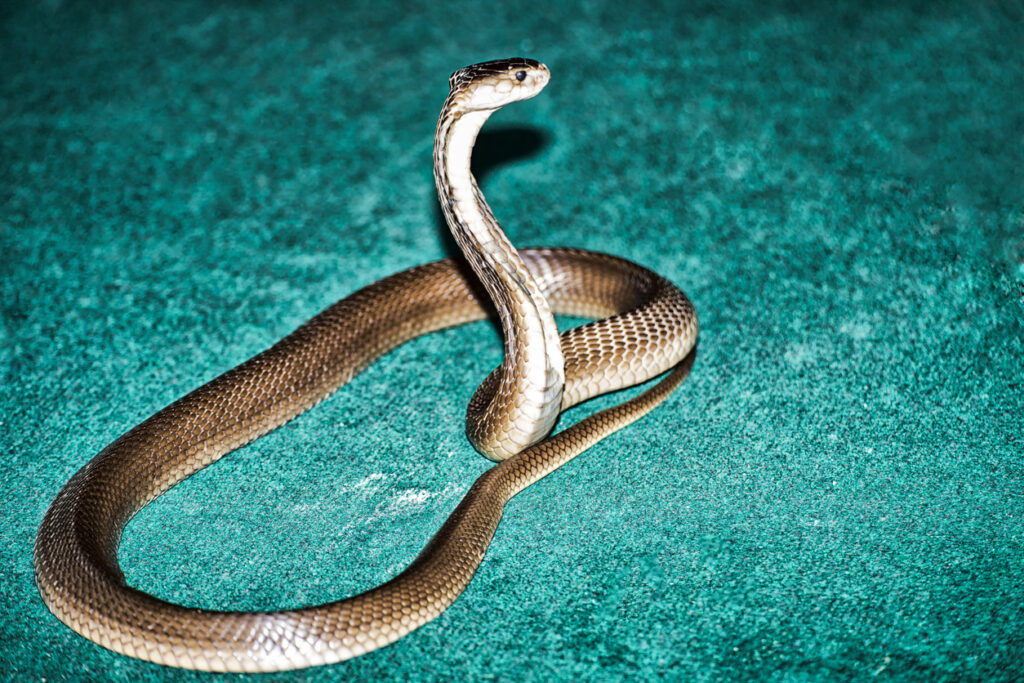
They’re called king cobras because they eat other cobras, not because they’re the biggest. It’s a dominance title, reflecting their position at the top of the snake hierarchy, not a measurement of length or weight compared to other species.
That distinction matters because people assume they’re the largest venomous snake, but reticulated pythons and anacondas are longer. King cobras are the longest venomous snake specifically, and the “king” refers to their diet and behaviour, which is actually more intimidating than just being big.