When we picture dinosaurs, it’s usually one species at a time.
However, as it turns out, the prehistoric world was far more social and complex than that. Dinosaurs didn’t live in isolation; they shared their landscapes, competed for resources, hunted one another, and sometimes even formed unlikely partnerships.
Fossil evidence and modern palaeontology now give us a clearer picture of who lived alongside whom. Some pairs coexisted peacefully, each thriving in their own niche, while others were locked in evolutionary arms races that shaped their survival. From predator and prey relationships to species that simply shared territory, these pairs reveal just how dynamic and interconnected life during the Mesozoic Era really was.
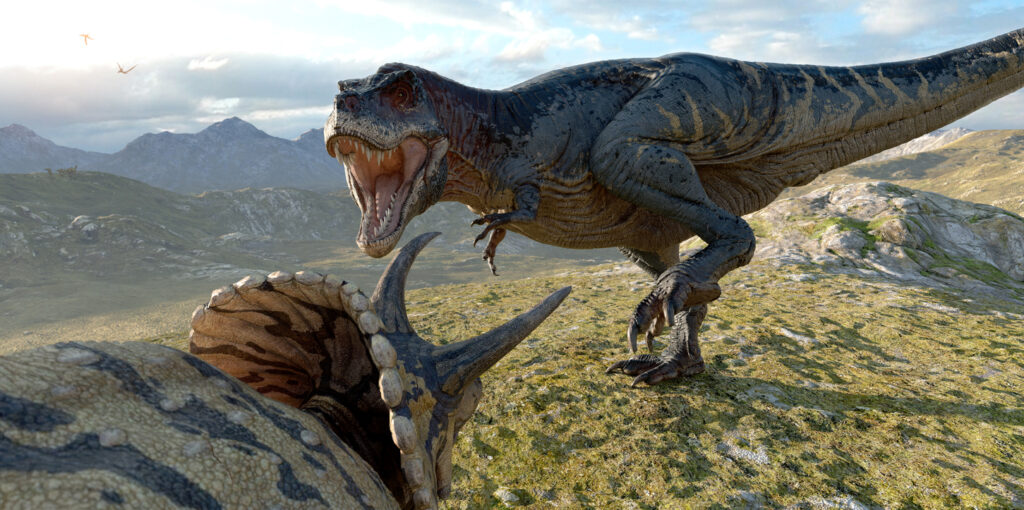
Tyrannosaurus rex and Triceratops

This pair is probably the most iconic rivalry in dinosaur history. Triceratops used its horns and massive frill to defend itself, while T. rex relied on its huge bite force and cunning to overpower it. Their clashes must’ve been explosive.
Fossil evidence shows bite marks from T. rex teeth on Triceratops bones, proving their paths crossed often. Some even suggest these fights ended in stalemates, showing how evolution made both species equally tough in different ways.
Velociraptor and Protoceratops
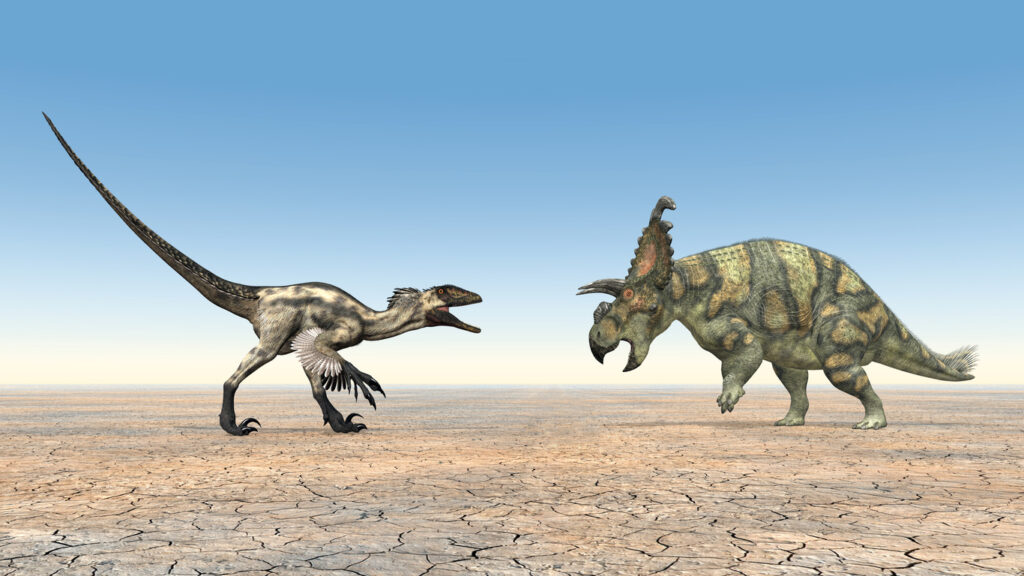
These two smaller dinosaurs became famous thanks to a fossil showing them locked in combat, frozen together for over 70 million years. The Velociraptor’s claws were embedded in its opponent’s neck, while the Protoceratops held onto its attacker.
That fossil gives a real glimpse of prehistoric life. It proves even small dinosaurs lived dangerously, and that survival often came down to seconds of instinct rather than size or strength.
Stegosaurus and Allosaurus
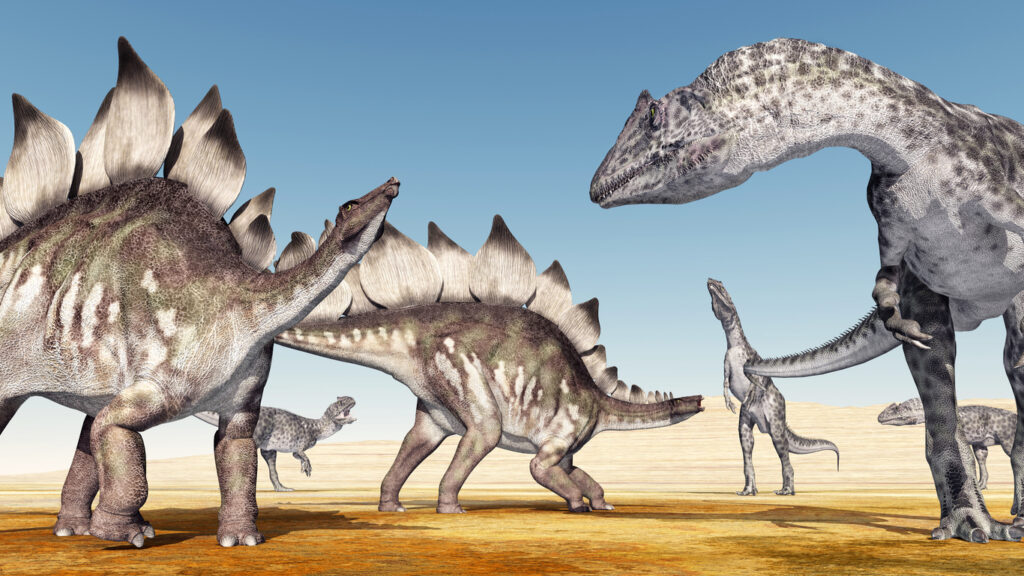
Stegosaurus, with its armour plates and tail spikes, was one of the most recognisable dinosaurs of the Jurassic. Allosaurus, on the other hand, was a fast, powerful predator that likely saw Stegosaurus as a serious challenge worth the risk.
Their fossils are often found in the same areas, suggesting they shared territory. It’s easy to imagine Allosaurus testing its luck while Stegosaurus stood its ground, using its spiked tail to keep danger at bay.
Ankylosaurus and Tyrannosaurus rex
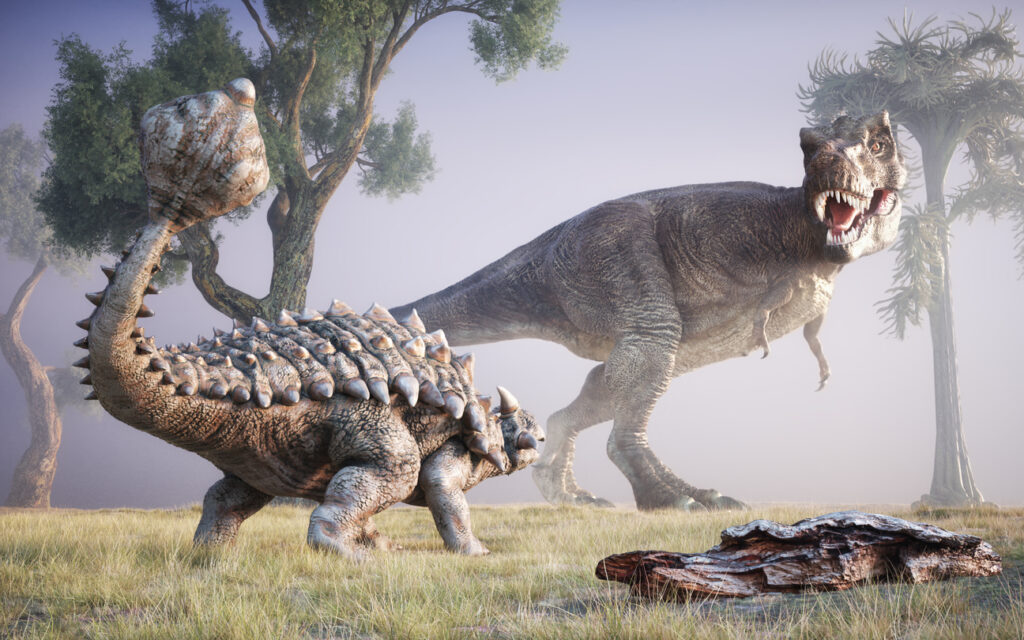
If any dinosaur could give T. rex a run for its money, it was Ankylosaurus. Its body was covered in bony plates, and its tail ended in a heavy club capable of breaking bones. One wrong move from a T. rex could’ve meant disaster.
Both lived in the same regions of North America, meaning they probably encountered each other regularly. It’s a perfect match of power against protection, as one is built to destroy, the other built to survive anything thrown at it.
Parasaurolophus and Corythosaurus

These two weren’t rivals but neighbours, both known for their distinctive crests that helped them communicate through sound. Scientists believe their calls echoed through prehistoric forests, warning others of danger or signalling to their herds.
They likely travelled together in large groups for safety, relying on teamwork rather than combat. Their relationship shows a softer side of dinosaur life, built around communication and connection rather than conflict.
Brachiosaurus and Stegosaurus

Brachiosaurus towered above the trees, eating leaves no other dinosaur could reach. Stegosaurus stayed closer to the ground, feeding on low-lying plants and ferns. Together, they created a balanced ecosystem where everyone got enough to eat.
These giants probably moved through the same territories without bothering each other. It’s a rare example of peaceful coexistence between two totally different species that simply shared the same land without competition.
Spinosaurus and Carcharodontosaurus
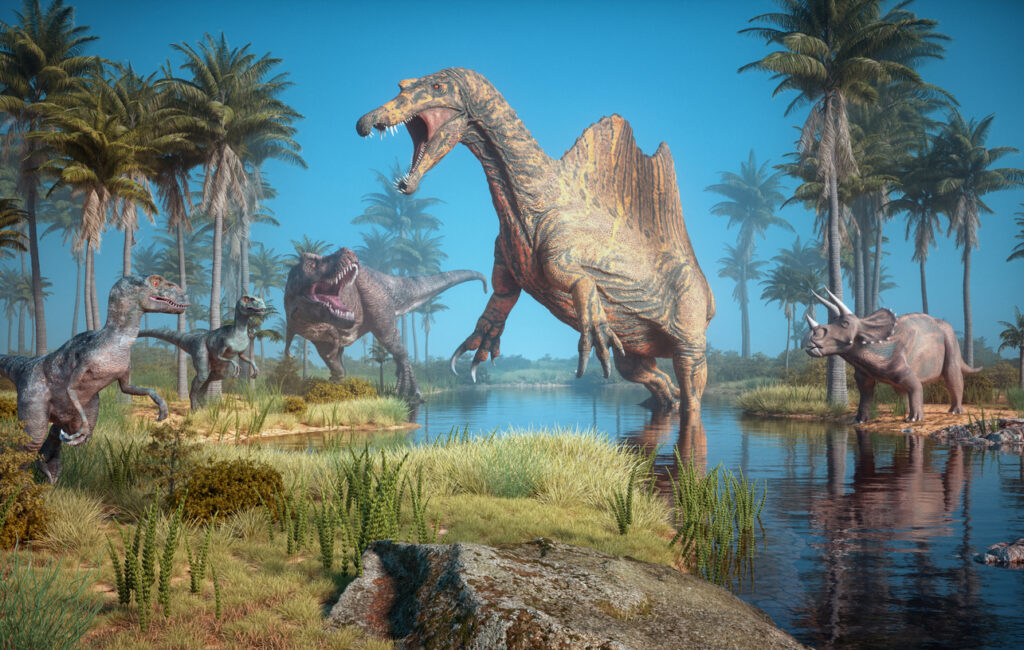
These two huge predators lived in what’s now North Africa and probably didn’t get along. Spinosaurus preferred rivers and lakes, hunting fish with its long snout, while Carcharodontosaurus ruled the land as a fierce carnivore.
Because their hunting grounds overlapped, conflict was inevitable. Fossils show signs of competition for territory, and both species were big enough to cause real damage if they ever crossed paths.
Oviraptor and Citipati
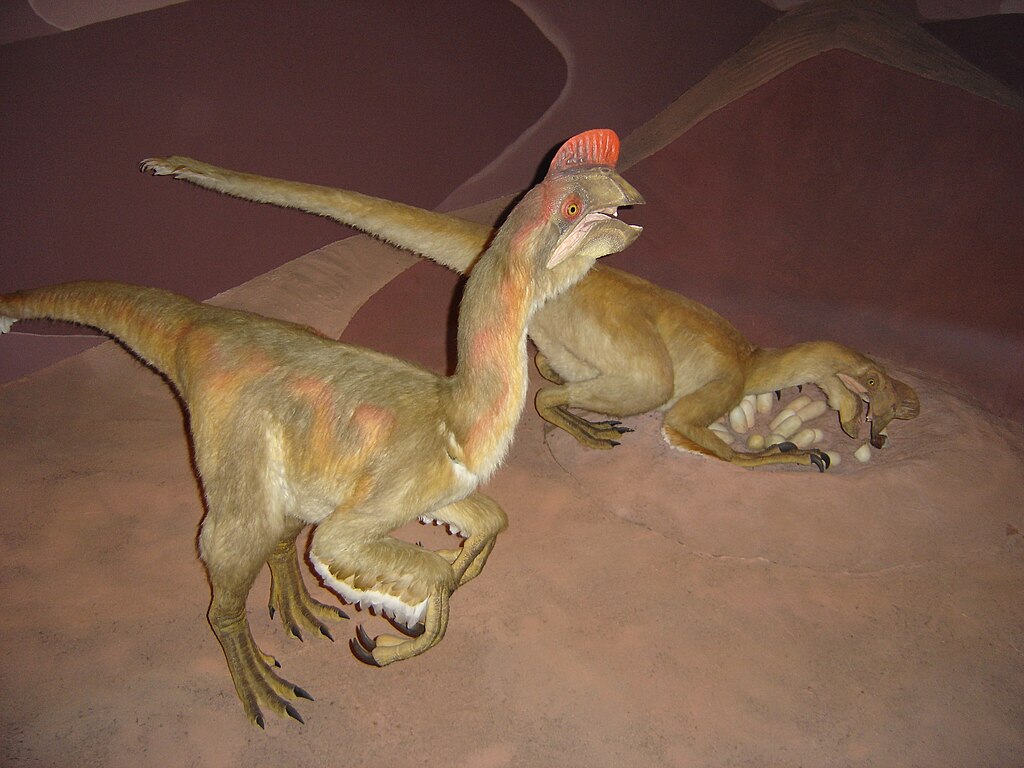
For years, scientists thought Oviraptor was a thief that stole eggs, but later discoveries revealed something touching. These dinosaurs were actually protecting their own nests, often dying while guarding their eggs.
Citipati was a close relative that shared similar habits. Both species prove that dinosaurs showed parental care, sitting over eggs like birds do today. It’s one of the earliest examples of nurturing behaviour in prehistoric life.
Iguanodon and Hypsilophodon
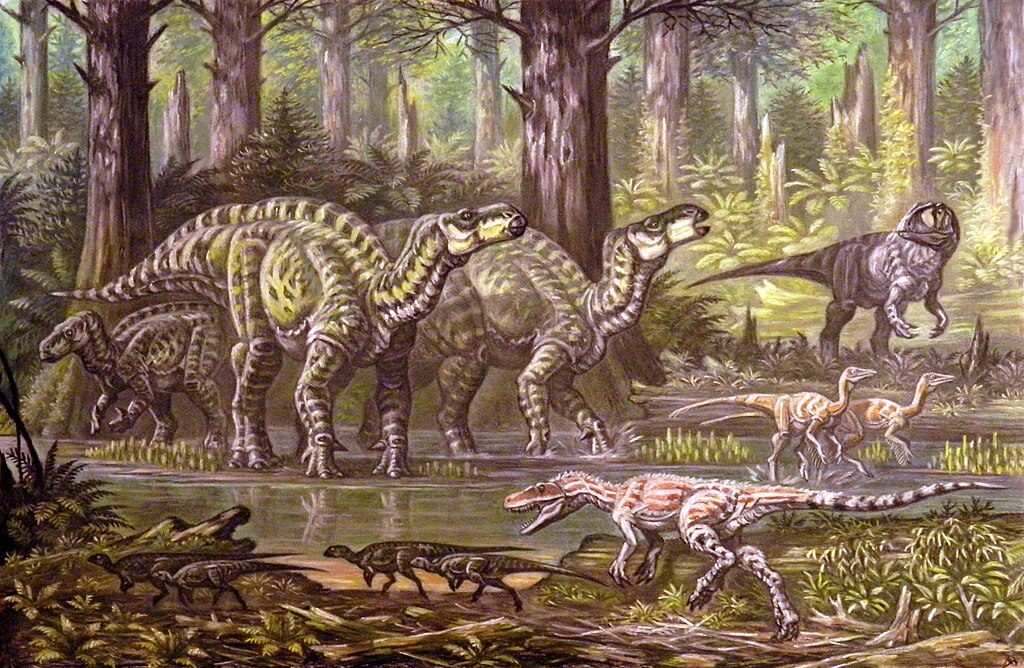
Iguanodon was a large herbivore with strong thumbs for defence, while Hypsilophodon was smaller and quicker, darting through forests to escape predators. They often lived in the same regions and likely crossed paths frequently.
They probably moved in herds, using safety in numbers to survive. The smaller species benefited from the protection of larger ones, while the bigger dinosaurs got early warnings from their faster neighbours, and that’s teamwork that helped both.
Coelophysis and Plateosaurus
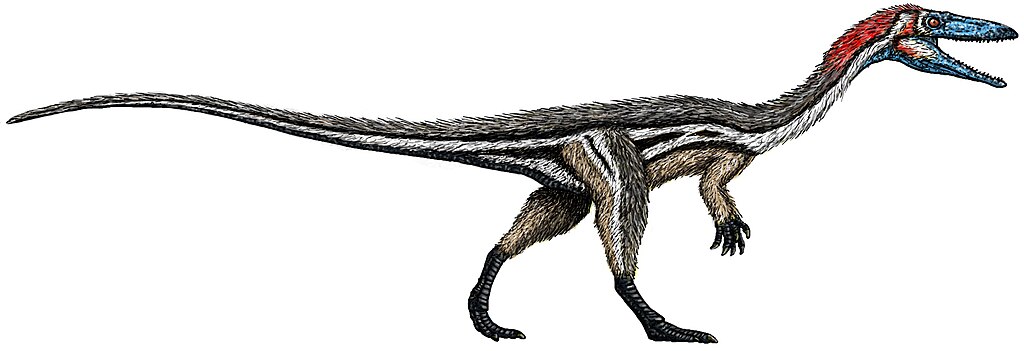
These early dinosaurs appeared over 200 million years ago, long before the more famous species arrived. Coelophysis was a small, agile hunter, while Plateosaurus was a large plant-eater that roamed wide open plains.
Their relationship laid the foundation for future predator-prey dynamics. Each pushed the other to evolve, showing how even in the earliest days of dinosaur history, nature was already fine-tuning the balance between hunter and hunted.
Edmontosaurus and Albertosaurus
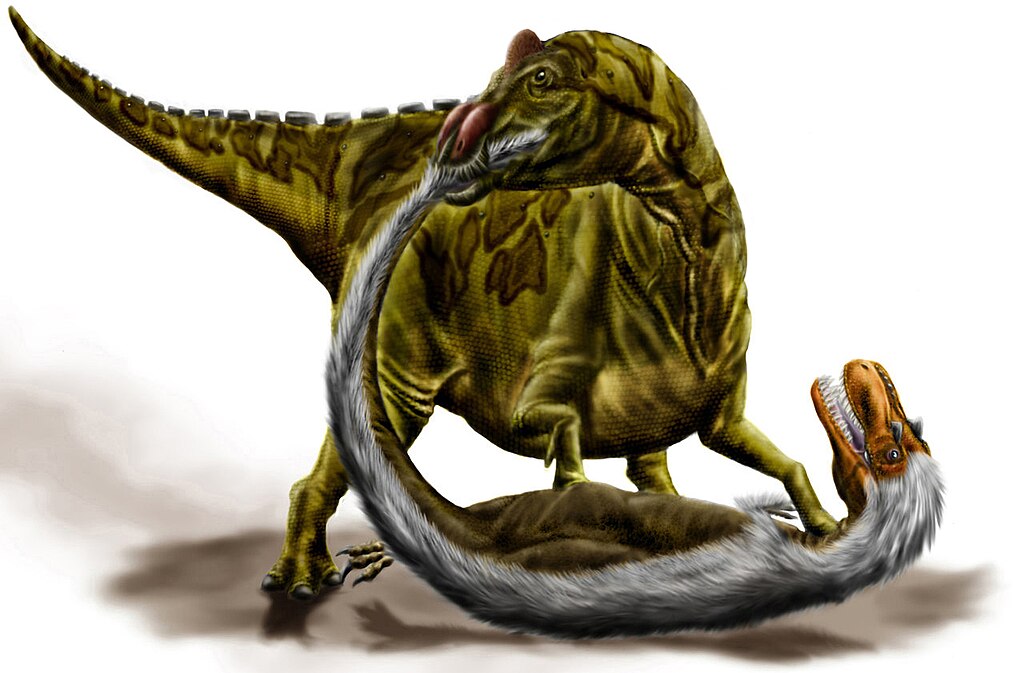
In the Late Cretaceous period, these two were key players in North America’s food chain. Edmontosaurus was a gentle plant-eater that moved in herds, while Albertosaurus, a relative of T. rex, followed closely behind as a top predator.
Fossils suggest these species lived close together, with evidence of pack hunting from Albertosaurus. The relationship between the two shows how predators relied on herbivore migration to survive, one couldn’t exist without the other.
Deinonychus and Tenontosaurus
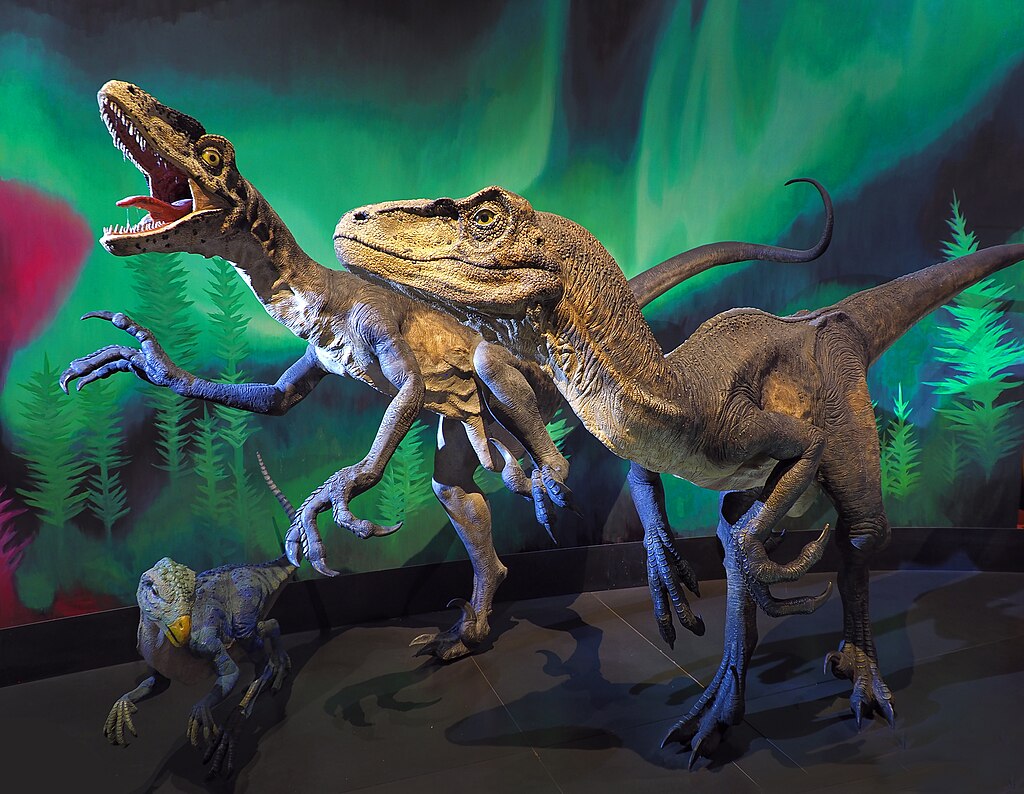
Deinonychus was a swift, intelligent hunter that probably worked in small groups, while Tenontosaurus was a sturdy plant-eater. Fossil sites have been found where the bones of both species appear together, hinting at dramatic hunts.
It’s thought that multiple Deinonychus could take down much larger prey by cooperating. Their teamwork marks one of the first known examples of group hunting in dinosaur evolution.