We all know space is cold, but some places are so extreme they make even Antarctica look comfortable. Scientists have discovered pockets of the universe that reach temperatures close to the absolute limit of cold. It’s crazy to think about just how cold things really get, and even wilder when you realise where the chilliest spot in existence is hiding.
Space itself is extremely cold.
When you drift away from stars and planets, the universe sits at about minus 270 degrees Celsius. That’s just a tiny step above absolute zero, the coldest point possible where atoms stop moving completely and heat energy disappears.
Knowing this baseline helps put things into perspective. Space may look like endless darkness, but it’s also a near-perfect freezer. Everything we measure against has to start here because nothing in nature gets colder without unusual conditions.
Absolute zero is the ultimate limit.
Absolute zero equals minus 273.15 Celsius, and at that point, all atomic movement halts. It’s the lowest temperature the laws of physics will allow, and nothing in the universe naturally reaches it, though some places come very close.
Scientists have managed to recreate near-absolute zero in labs on Earth. Using lasers and magnets, they can cool atoms to billionths of a degree above it. These experiments let researchers watch matter behave in bizarre ways, showing us new corners of physics.
The Boomerang Nebula holds the record.
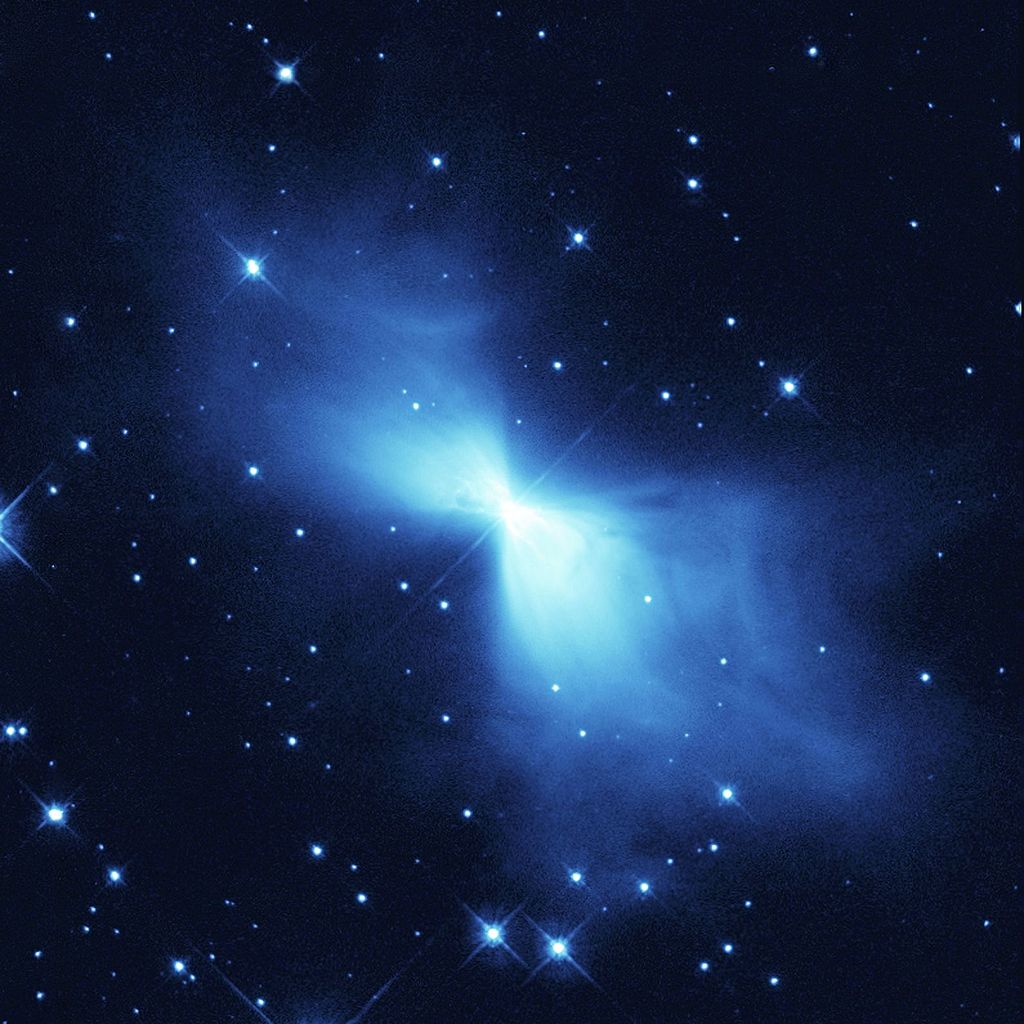
Right now, the coldest known natural place is the Boomerang Nebula, about 5,000 light years away. Temperatures inside dip to just one degree above absolute zero, making it colder than the background chill of space itself.
This record-breaking temperature happens because gas from a dying star is shooting outwards so fast it cools as it expands. The process creates a pocket of cold that no other known natural region matches.
Why is the Boomerang Nebula so cold?
The nebula has a bow tie shape, with material blasting out at incredible speeds. As the gas expands, it loses energy quickly, which strips it of heat. The faster it spreads, the colder it gets, reaching almost unimaginable lows.
Studying this helps astronomers understand what happens when stars die. It shows how violent stellar winds shape space and create extreme conditions. It’s not just a curiosity; it’s a clue to how the universe evolves.
There are plenty of other cold spots in the universe.
While the Boomerang Nebula takes the crown, there are other places nearly as frigid. Vast voids between galaxies are almost as cold because they’re empty, far from stars, and hold almost no matter to retain warmth.
These regions highlight that most of the universe isn’t bustling with stars and galaxies. Instead, it’s endless stretches of near-empty space, frozen close to absolute zero, and quietly shaping the bigger cosmic picture.
Earth’s coldest place is just a tad warmer.
For comparison, the coldest natural temperature ever recorded on Earth was minus 93 Celsius in Antarctica. That’s so harsh it can freeze human skin in seconds, yet compared to deep space, it’s mild and almost comfortable.
This comparison makes Earth’s extremes easier to appreciate. No matter how brutal our winters feel, they don’t come close to the kind of cold that dominates the wider universe.
How do scientists measure such cold, anyway?
You might wonder how anyone can measure temperatures in places thousands of light years away. Astronomers use telescopes that detect infrared and microwave light to calculate how much energy gas and dust are giving off.
By studying that faint radiation, scientists can estimate how cold or hot an object is. The less energy something releases, the colder it is. This is how we know the Boomerang Nebula is colder than space itself.
The role of cosmic microwave background shouldn’t be understated.
The whole universe is filled with faint leftover heat from the Big Bang, called the cosmic microwave background. It keeps most of space at minus 270 Celsius, which acts like a temperature floor that everything else rests on.
Without this background radiation, deep space would be even colder. Studying it doesn’t just reveal temperatures, it also helps scientists piece together how the universe first formed and how it has expanded over billions of years.
Cold experiments on Earth are ongoing.

While space is naturally frigid, scientists on Earth have pushed the limits further. In laboratories, they’ve cooled atoms to within billionths of a degree of absolute zero, which is colder than anywhere naturally found in the universe.
These extreme experiments create states of matter that don’t exist under normal conditions. They help researchers understand quantum physics and could one day shape new technologies like supercomputers or advanced medical tools.
The mystery continues!
The Boomerang Nebula is currently the coldest known natural place, but the universe is vast. There may be regions we haven’t discovered yet that are even colder. Astronomers continue scanning the skies with better instruments, searching for new surprises.
For now, we know space holds temperatures we can hardly imagine, and yet here on Earth, life thrives in a rare pocket of warmth. That contrast is a reminder of how unusual and precious our planet really is.