
Chameleons are among nature’s most fascinating colour-changers, but their amazing ability to change from green to brown to bright yellow isn’t quite what most people think it is. Camouflage plays a part, but this evolutionary ability was developed for a whole host of other reasons.
It’s not primarily about camouflage like everyone assumes.
Most people believe chameleons change colour to blend in with their surroundings, but this is actually one of their least important reasons for colour changing. While they can adjust their colours for camouflage, they’re much more likely to change colour for communication and temperature regulation.
Scientists have discovered that chameleons use colour changes more like a visual language to communicate with other chameleons. A bright display might mean “I’m ready to fight,” while duller colours could signal submission or stress.
Their skin contains special cells called chromatophores.
Chameleons have several layers of specialised cells in their skin that contain different coloured pigments. The top layer has cells called chromatophores that contain yellow and red pigments, while deeper layers contain cells with different colours, including blue and white.
These cells can expand or contract to show more or less of their colour, like tiny biological spotlights that can be turned up or down. When multiple layers work together, they can create almost any colour combination you can imagine.
They change colour to regulate their body temperature.
Dark colours absorb more heat from the sun, while lighter colours reflect heat away from the body. Chameleons can turn darker when they need to warm up in the morning or lighter when they’re getting too hot during the day.
This temperature control is crucial for chameleons because they’re cold-blooded reptiles that depend on external heat sources to maintain their body temperature. Their colour-changing ability essentially gives them a built-in thermostat.
Mood and emotions trigger dramatic colour displays.
When chameleons are angry, excited, stressed, or trying to attract a mate, they can produce incredibly vibrant colour displays that would put a rainbow to shame. An angry chameleon might turn bright red or orange, while a calm one typically shows more muted greens and browns.
Different species have their own “emotional colour palette”; what bright yellow means for one type of chameleon might be completely different for another species. It’s like each species has developed its own colour-coded language.
The colour changes happen incredibly quickly.

Chameleons can transform from one colour to another in less than 20 seconds, and sometimes much faster than that. The speed of change depends on what’s triggering it. For instance, temperature changes happen more slowly than emotional responses.
This rapid colour changing is possible because the colour-containing cells are controlled by the chameleon’s nervous system and hormones. When the brain sends a signal, the cells respond almost immediately by expanding or contracting.
Males use bright colours to show dominance and attract females.
Male chameleons often display brilliant colours during mating season to show potential mates how healthy and strong they are. The brighter and more vibrant the colours, the more attractive they appear to female chameleons.
These mating displays can include colours that chameleons never show at any other time, including electric blues, vivid pinks, and glowing oranges. It’s like they have a special wardrobe reserved just for impressing potential partners.
Different species have completely different colour ranges.
Not all chameleons can produce the same colours; each species has its own limited palette based on which pigment cells they possess. Some species can only change between greens and browns, while others can display dozens of different colours.
The Panther Chameleon, for example, can show brilliant reds, blues, and oranges, while the Common Chameleon typically sticks to greens, yellows, and browns. It’s like different species have different art supplies available for their colour displays.
Baby chameleons have less developed colour-changing abilities.
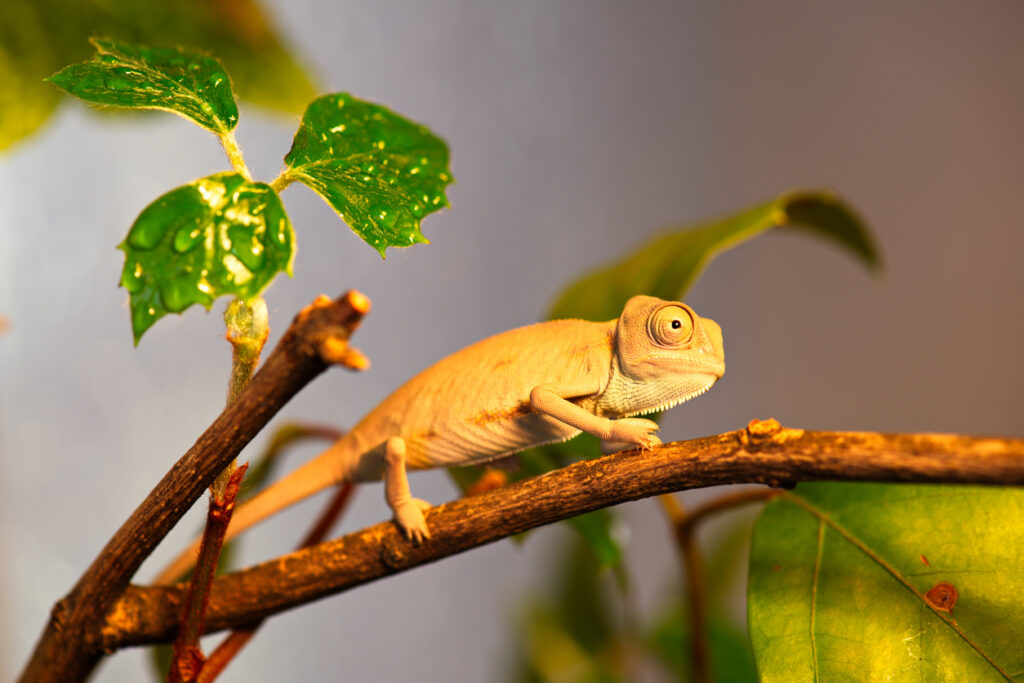
Young chameleons can change colour, but they can’t produce the full range of colours that adults can display. Their colour-changing cells aren’t fully developed yet, so they typically show more basic colour changes between light and dark.
As chameleons mature, they develop more sophisticated colour-changing abilities and learn to use their colours for communication. It’s similar to how human children gradually learn more complex language skills as they grow up.
Stress and illness affect the patterns of colours they produce.
Sick or stressed chameleons often show abnormal colour patterns or may lose their ability to change colours effectively. Veterinarians sometimes use colour changes as one way to assess a chameleon’s health and emotional state.
A chameleon that remains dark for extended periods might be too cold, stressed, or unwell, while one that can’t change colours at all may have a serious health problem requiring immediate attention.
The colour-changing ability evolved over millions of years.
Scientists believe chameleons developed their colour-changing abilities through natural selection over millions of years. Those who are better at it were more successful at surviving, reproducing, and communicating with others of their species.
This remarkable adaptation shows how evolution can create solutions to multiple problems at once, giving chameleons a way to regulate temperature, communicate with others, and occasionally blend in with their environment all through the same biological mechanism.