Most people think squirrels are those cheeky little grey creatures that steal birdseed and bury nuts in your garden.
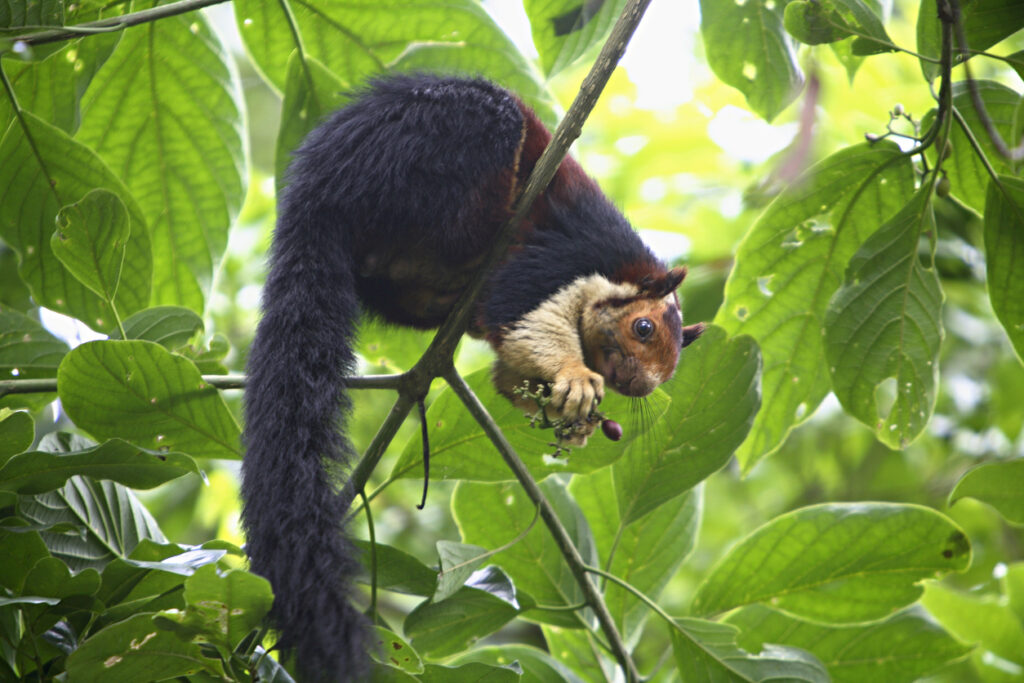
However, India’s Malabar giant squirrels are basically the supermodels of the squirrel world. These magnificent tree-dwellers are so large and colourful that spotting one feels like discovering a mythical creature that wandered out of a children’s storybook and decided to make the forests of India their runway.
1. They’re massive compared to your average backyard squirrel.
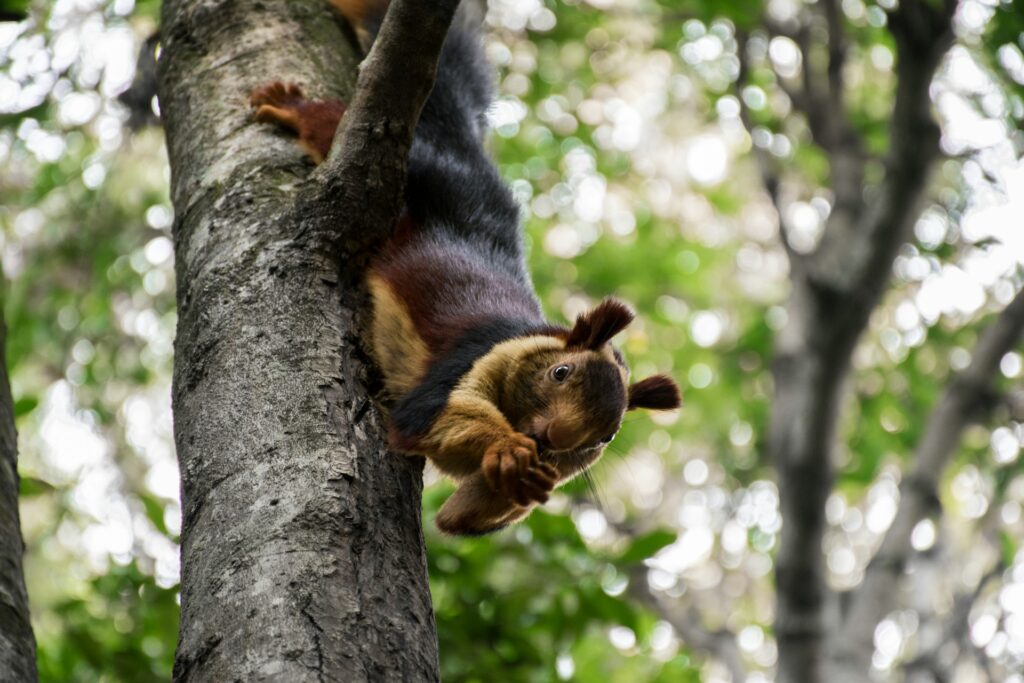
Malabar giant squirrels can grow up to three feet long from nose to tail tip, which makes them roughly the size of a small cat but with significantly better climbing skills. When you’re used to regular squirrels that fit in your palm, seeing a Malabar giant squirrel is an incredible experience.
These aren’t the compact little creatures you see raiding bird feeders. They’re proper tree-dwelling giants that make regular squirrels look like their miniature toy versions. Their size alone makes them one of the most impressive squirrel species in the world, and they know it.
2. Their colours look like someone went wild with a paintbrush.
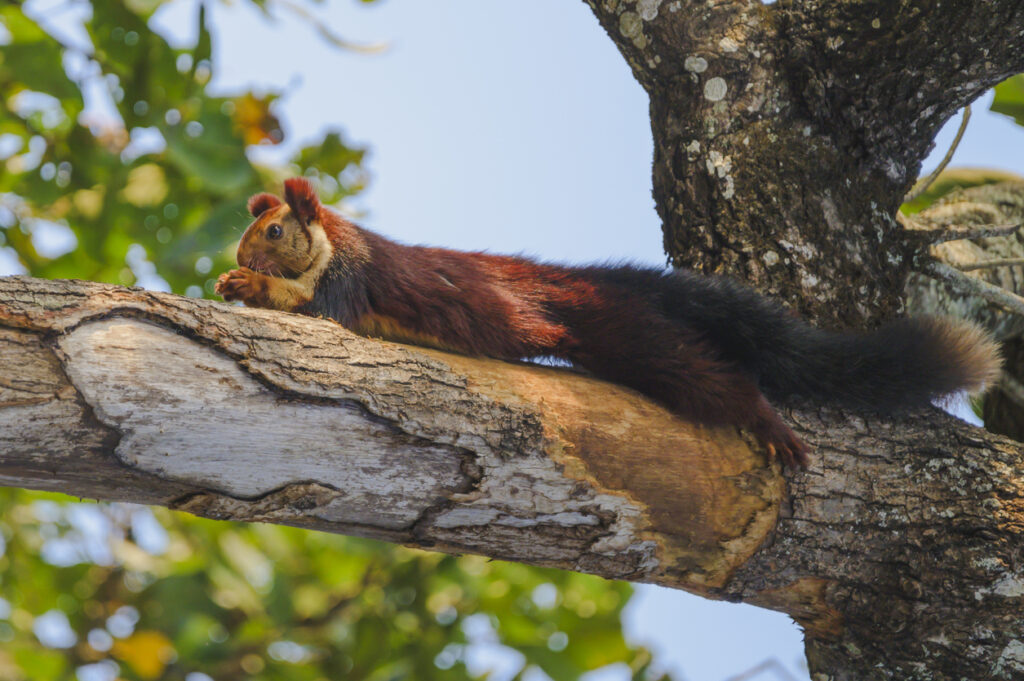
While most squirrels come in sensible shades of brown and grey, Malabar giant squirrels sport coats that combine deep purples, bright oranges, maroons, and yellows in patterns that seem almost too vibrant for a wild animal. They look like they’ve been custom-designed by an artist who decided nature needed more pizzazz.
Each squirrel has its own unique colour combination, and no two individuals look exactly the same. It’s as if someone took the idea of a regular squirrel and decided it needed to be turned into living artwork that happens to be brilliant at climbing trees.
3. They build nests that put birds to shame.
These architectural geniuses construct elaborate spherical nests high up in tree canopies using twigs, leaves, and moss that they weave together with impressive skill. Each nest can be up to two feet in diameter, and they typically build several backup nests in case their main residence needs repairs or renovation.
Unlike the simple hole-in-a-tree approach that regular squirrels prefer, Malabar giant squirrels create proper homes that could feature in a wildlife version of home design magazines. They’re basically the interior decorators of the forest canopy, with zero budget constraints and unlimited natural materials.
4. They’re incredible acrobats that put circus performers to shame.
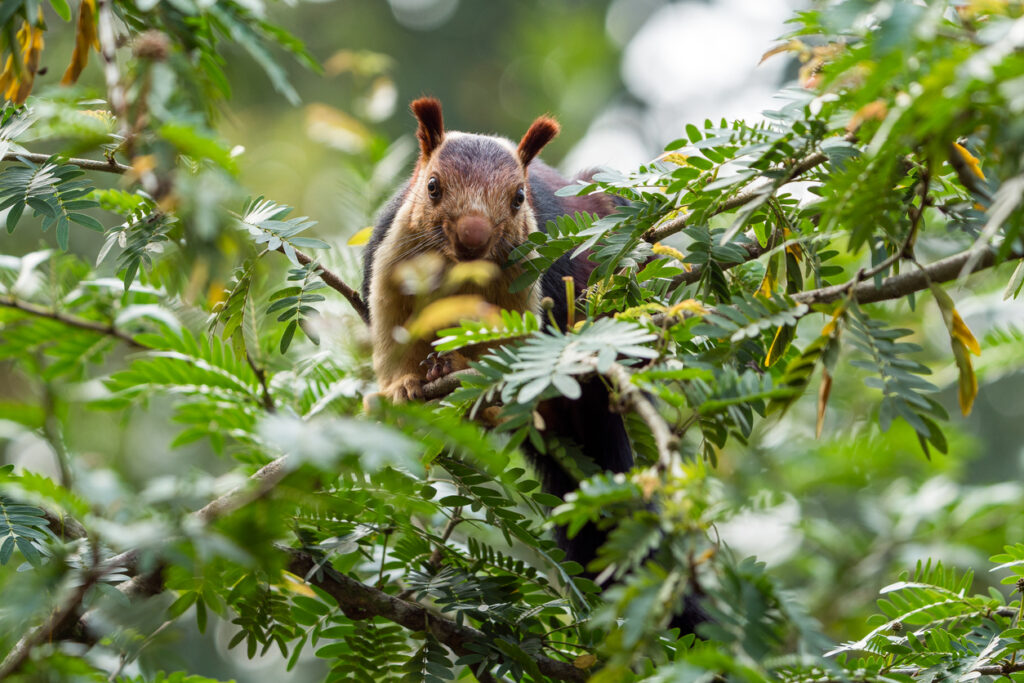
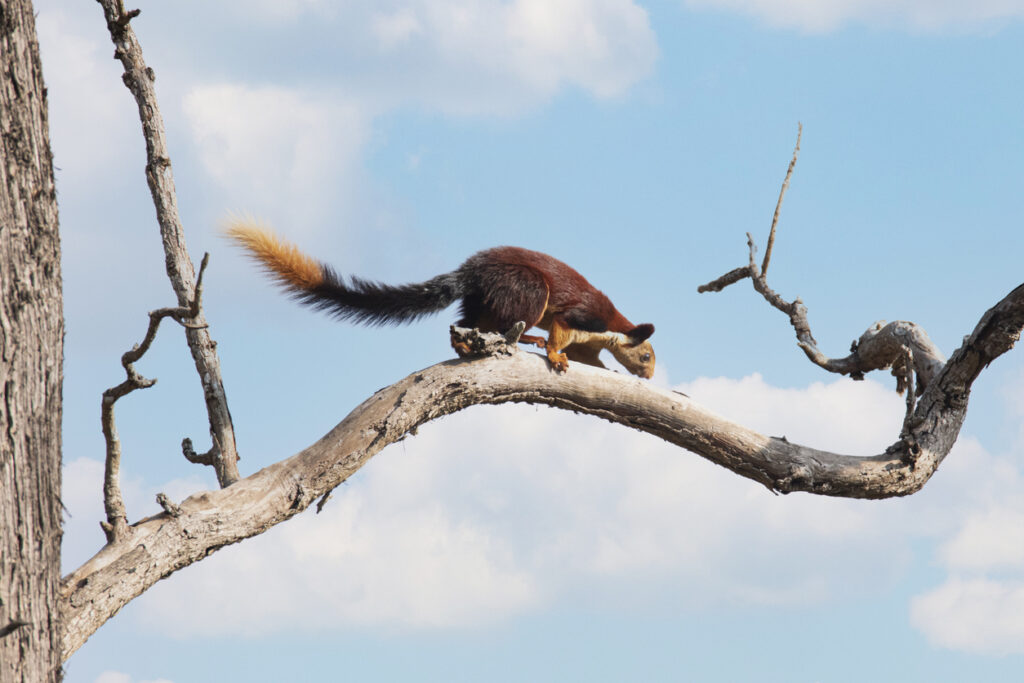
These squirrels can leap distances of up to 20 feet between trees without breaking a sweat, and they’ll do it while carrying food or nesting materials like it’s the most natural thing in the world. Watching them move through the forest canopy is akin to seeing gravity-defying stunts performed by furry athletes.
Their jumping abilities combined with their climbing skills mean they rarely need to come down to ground level, and they can navigate the treetops faster than most people can walk on flat ground. They’re essentially the Spider-Man of the squirrel world, but with better fashion sense.
5. They’re surprisingly picky eaters for wild animals.
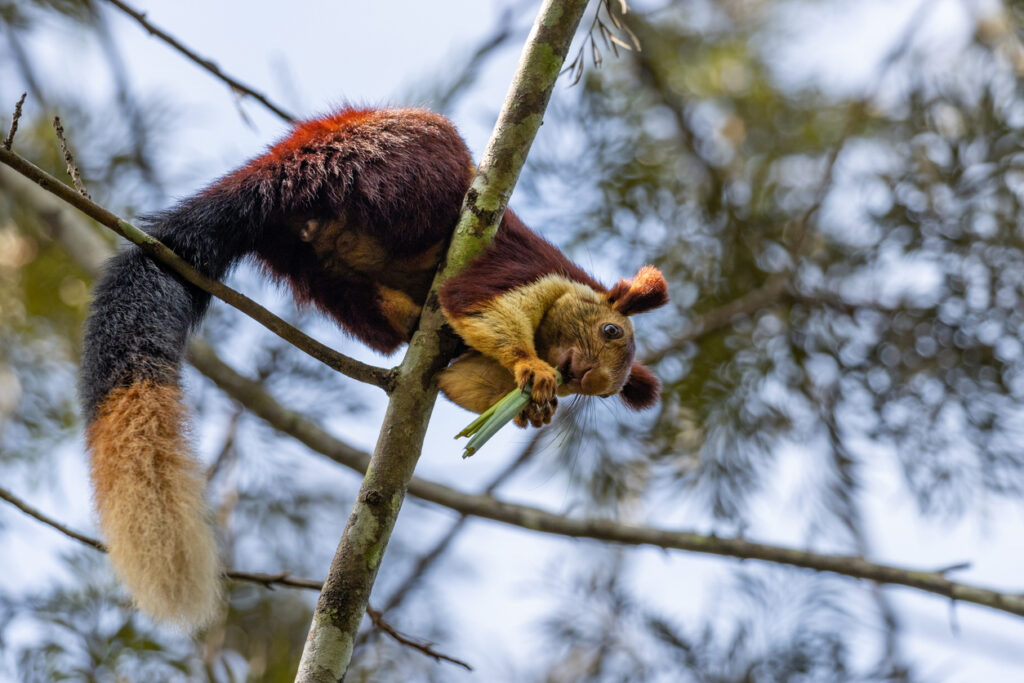
While regular squirrels will eat pretty much anything from nuts to pizza crusts, Malabar giant squirrels maintain a sophisticated diet of fruits, flowers, tree bark, and insects that they select with the precision of food critics. They particularly love jackfruit, mangoes, and various fig species that grow in their forest habitat.
Instead of the garbage-raiding opportunists you might expect from squirrel family members, they’re more like discerning gourmets who know exactly what they want from the forest’s natural menu. Their eating habits actually help with seed dispersal, making them important contributors to forest ecology.
6. They’re masters of camouflage despite their bright colours.
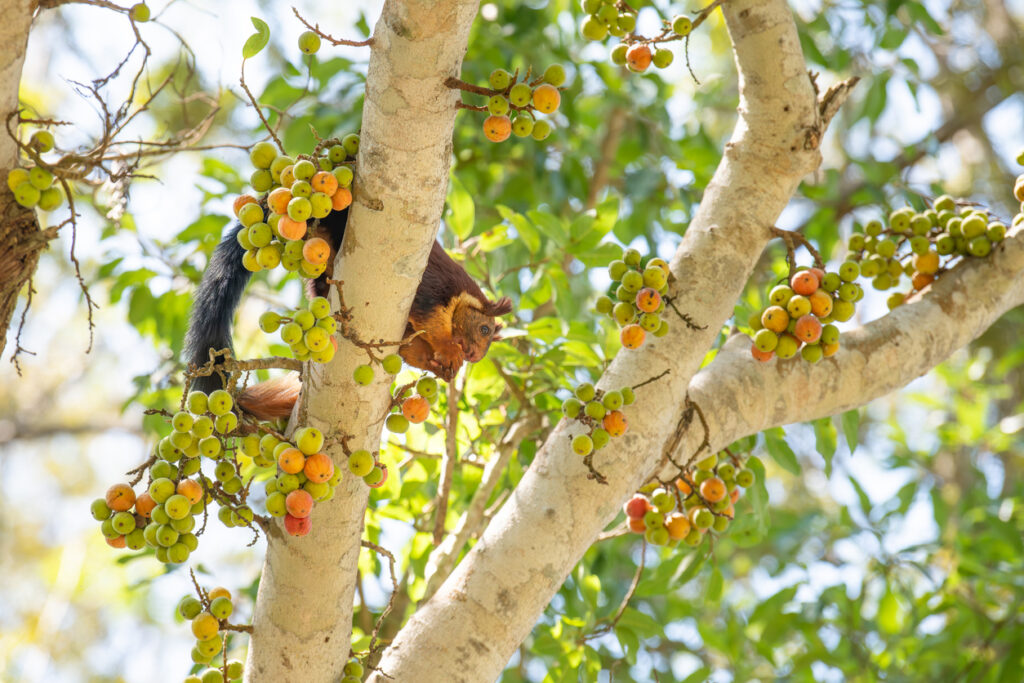
You’d think such colourful creatures would stick out like sore thumbs in the forest, but their vibrant coats actually help them blend perfectly with the dappled sunlight and colourful flowers of the Indian forest canopy. Their colours break up their outline and make them surprisingly difficult to spot among the leaves.
When they freeze in place, these giant squirrels can become nearly invisible despite their size and bright colouration. Nature basically gave them a custom camouflage pattern that works specifically in their tropical forest environment, and they use it to perfection.
7. They have tails that serve as built-in umbrellas.
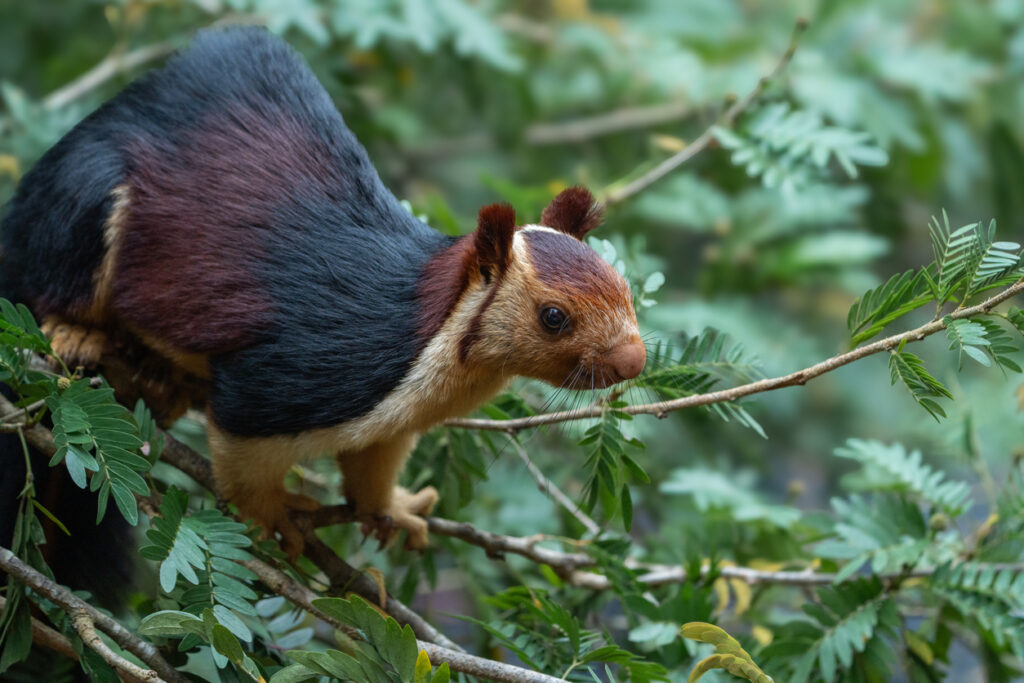
Their massive, fluffy tails aren’t just for show. They work as excellent sun shades, rain protection, and balance aids during their death-defying tree-to-tree leaps. The tail can be almost as long as the rest of their body, and they use it like a multitool for various forest survival needs.
These aren’t decorative accessories but essential equipment for canopy living. They can wrap their tails around themselves for warmth, use them as rudders during jumps, and even communicate with other squirrels through tail movements and positions.
8. They’re surprisingly social despite being tree hermits.
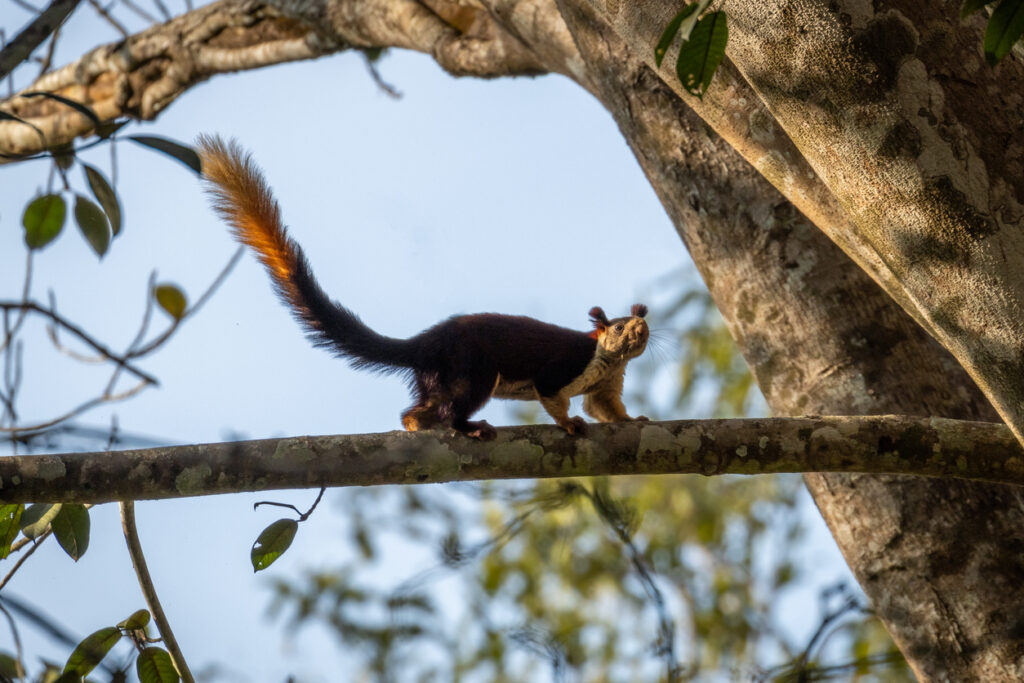
While they spend most of their time high up in the forest canopy where humans rarely see them, Malabar giant squirrels actually communicate with each other through a variety of calls, chirps, and chattering sounds that carry through the forest. They have different vocalisations for different situations, from territorial warnings to friendly greetings.
They’re not the solitary loners you might expect from such elusive creatures. They maintain complex social networks and can recognise individual voices and calls from their neighbours. It’s like they have their own forest-wide communication system that operates entirely above our heads.
9. They’re early risers that put morning people to shame.
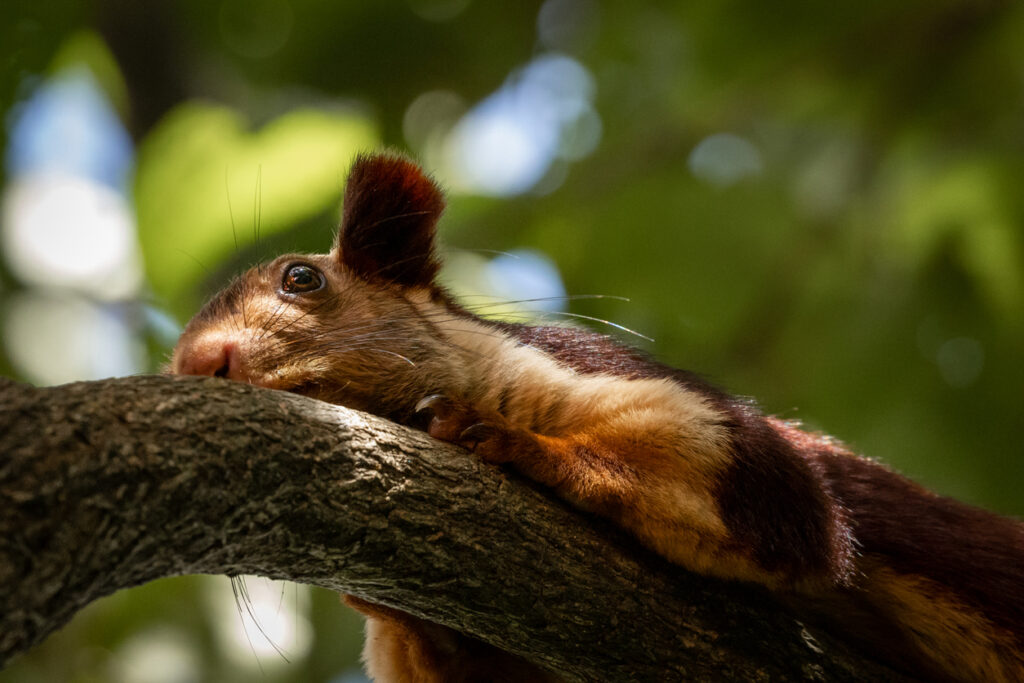
These energetic creatures are most active during the early morning hours when the forest is cool and quiet, and they’ll often spend their entire day foraging, nest-building, and socialising before settling down for afternoon rest periods. They’ve mastered the art of getting things done before the world gets busy.
Their morning activity patterns mean they avoid the heat of midday and the predators that become active later, and they get first access to the ripest fruits and best nesting materials. They’re essentially living proof that the early squirrel catches the best mangoes.
10. They’re found only in specific parts of India and nowhere else.
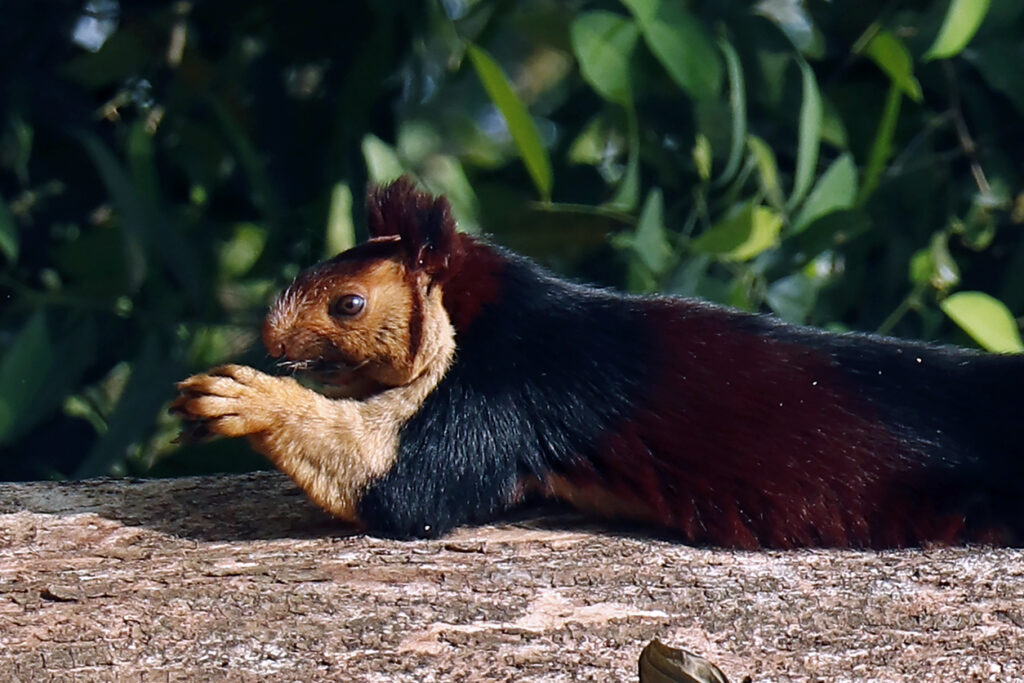
These remarkable creatures are endemic to the Western Ghats of India, which means you can’t find them anywhere else on Earth. They’ve evolved specifically for life in these particular forests, and they’re perfectly adapted to the unique ecosystem of this mountain range.
Their limited range makes them extra special, since they’re essentially India’s exclusive squirrel species that the rest of the world can only admire from photos and videos.
11. They sleep in positions that would give humans back problems.
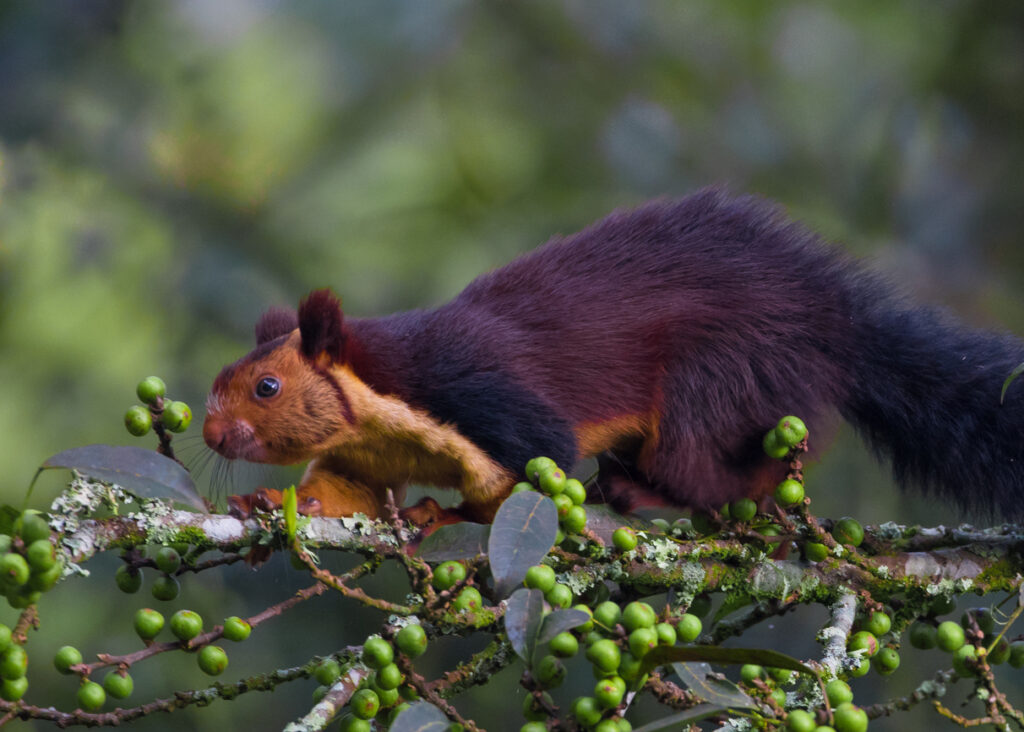
When it’s time for a nap, Malabar giant squirrels will curl up in their nests or on tree branches in positions that look incredibly uncomfortable but somehow work perfectly for them. They can sleep while wrapped around branches or tucked into impossibly small spaces in their spherical nests.
Their flexibility and comfort with heights that would terrify most mammals means they can basically sleep anywhere in the forest canopy that offers a bit of support. They’ve pretty much decided that tree branches make perfectly acceptable beds.
12. They’re incredibly shy around humans, despite their impressive size.
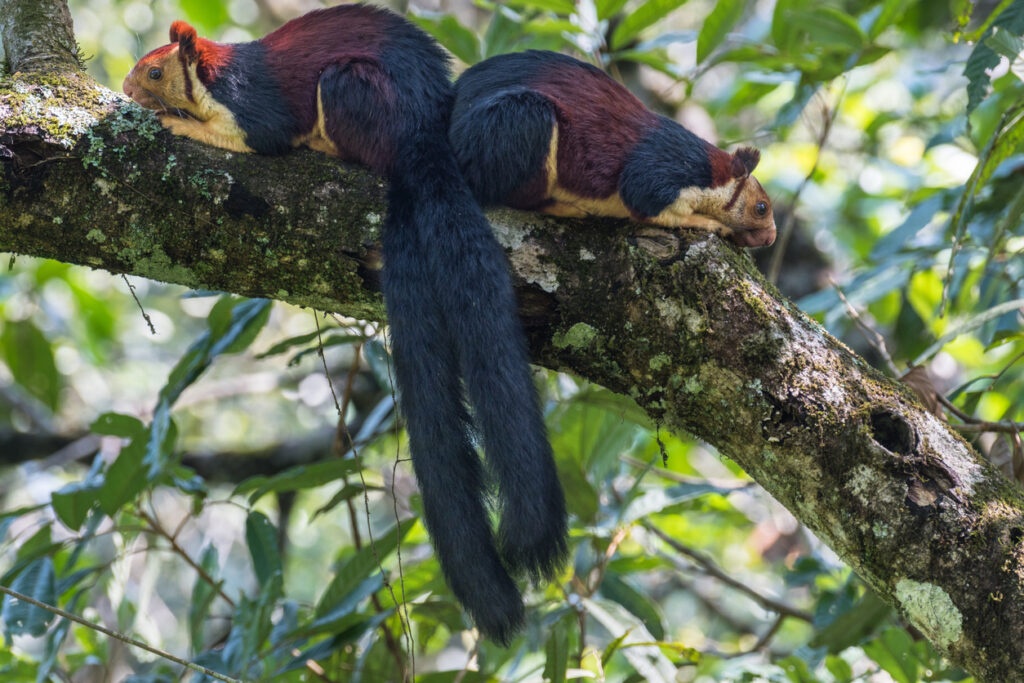
For all their acrobatic confidence and vibrant appearance, these giant squirrels are surprisingly elusive and will disappear into the canopy at the first sign of human presence. Spotting one in the wild requires patience, quiet movement, and a good bit of luck.
Their shyness has probably helped them survive in forests where human activity is increasing, and they’ve learned that staying hidden is the best strategy for avoiding trouble. They prefer to avoid people and stick to their private forest retreats.
13. They’re living proof that evolution has a sense of humour.
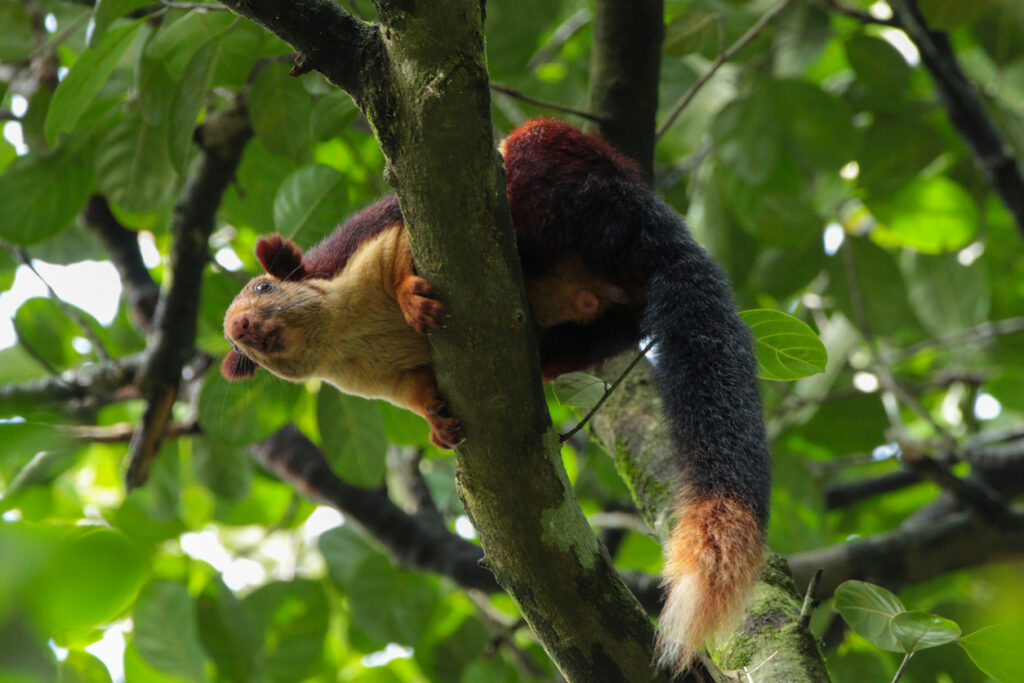
When you consider that evolution took the basic squirrel design and decided to make it three times bigger, infinitely more colourful, and capable of 20-foot leaps through tropical canopies, it’s clear that nature was having some creative fun with the Malabar giant squirrel project.
These magnificent creatures prove that the natural world still has plenty of surprises left to discover, and sometimes those surprises come in the form of giant rainbow squirrels that live like arboreal superheroes in the forests of India. They’re basically what happens when evolution decides that regular squirrels needed a serious upgrade.