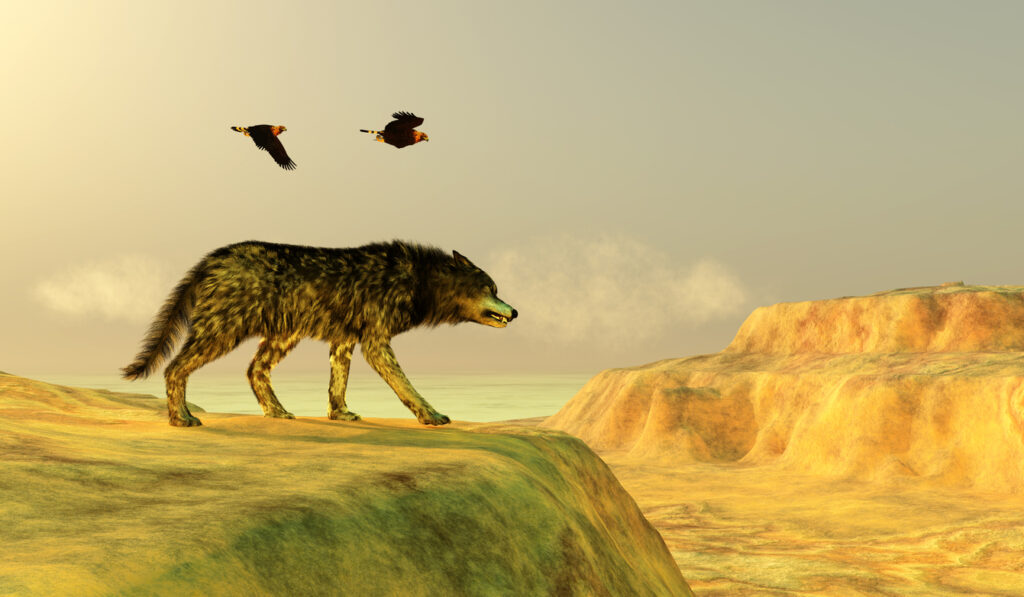
The dire wolf was basically the ice age’s ultimate predator, and scientists are learning loads of cool stuff about how animals survive massive climate changes by studying these ancient beasts. These wolf-like creatures lived through some seriously dramatic environmental changes, and their story has some pretty important lessons for today.
1. They were much bigger and stronger than modern wolves.
Dire wolves were absolute units compared to today’s wolves, weighing up to 150 pounds (68 kg) and built like furry tanks. Their skulls were massive, and their jaws were incredibly powerful, which made them perfect for taking down huge ice age prey like giant bison and ground sloths.
These beasts were built for a world where everything was supersized and dangerous. Their extra bulk and strength helped them compete with other massive predators like sabre-tooth cats and cave bears for food.
2. They lived in massive packs for survival.
While modern wolves usually hang out in small family groups, dire wolves formed absolutely enormous packs with dozens of members. Working together in huge numbers was essential for bringing down massive prey and defending territory from other predators.
These super-packs were like ancient hunting armies that could tackle prey no single predator could handle alone. The bigger the group, the better their chances of surviving in such a brutal and competitive environment.
3. They specialised too much and couldn’t adapt.
Dire wolves became incredibly good at hunting specific types of large prey, but this specialisation turned out to be their downfall. When the climate changed and their favourite massive animals became extinct, they couldn’t switch to smaller prey like modern wolves can.
Their powerful jaws and heavy bodies were perfect for crushing bones and taking down giants, but totally useless for catching smaller, faster animals. Being too specialised meant they couldn’t roll with the changes when their world transformed.
4. Climate change happened surprisingly fast.
The end of the ice age wasn’t a gradual process that took thousands of years—it happened relatively quickly and completely transformed entire ecosystems. Temperatures rose, ice sheets melted, and forests replaced grasslands in what was basically a blink of an eye in geological terms.
This rapid change caught many species completely off guard, and animals that couldn’t adapt quickly enough simply disappeared. The dire wolf’s story shows us that climate changes can be much more sudden and dramatic than we might expect.
5. Flexible animals survived, while specialists died out.
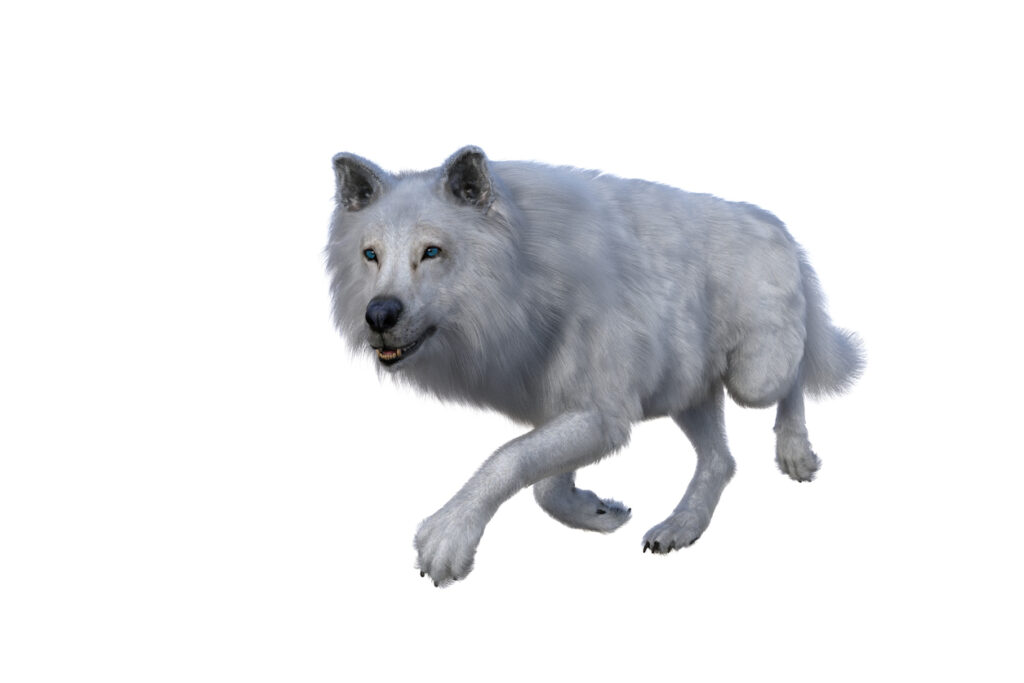
The animals that made it through the ice age extinction were generally the ones that could eat different foods and live in various habitats. Modern wolves survived because they’re incredibly adaptable and can hunt everything from deer to fish to small mammals.
Being a generalist rather than a specialist turned out to be the key to survival when everything changed rapidly. Animals that put all their eggs in one basket got wiped out when that basket disappeared.
6. Social cooperation became even more important.
During times of environmental stress, animals that could work together effectively had massive advantages over loners. Dire wolves’ pack behaviour helped them survive longer than many other predators, even though they eventually became extinct.
Modern research shows that social animals often do better during climate crises because they can share resources, protect each other, and solve problems as a group. Teamwork really does make the dream work, especially when times get tough.
7. Body size affected survival chances.
Generally speaking, smaller animals had better survival rates during the ice age extinction because they needed less food and could adapt to new environments more quickly. Massive animals like dire wolves required enormous amounts of food that simply wasn’t available anymore.
Being huge was brilliant when there were giant prey animals everywhere, but became a serious disadvantage when food became scarce. Sometimes being smaller and more efficient is better than being big and powerful.
8. Genetic diversity was crucial for adaptation.
Dire wolf DNA shows that populations with more genetic diversity lasted longer than those with limited gene pools. Having lots of genetic variation gave populations more options for adapting to changing conditions.
Inbreeding and small population sizes reduced their ability to evolve quickly enough to keep up with environmental changes. Genetic diversity is basically nature’s insurance policy against unexpected challenges.
9. Geographic range mattered for survival.

Animals that lived across wide geographic areas had better chances of survival because when conditions got bad in one place, they could potentially survive somewhere else. Dire wolves were widespread, which helped them last longer than more localised species.
Having populations spread out across different environments meant that if one habitat got destroyed, the species might survive elsewhere. It’s like not putting all your money in one investment.
10. Diet flexibility was a game-changer.
The animals that survived were often the ones that could switch their diets when their usual food sources disappeared. Dire wolves were too specialised in hunting large prey and couldn’t make the transition to eating smaller animals or different food sources.
Modern wolves can eat fish, berries, small mammals, and even insects when necessary, which is why they’re still around today. Being picky about food is a luxury that becomes dangerous during tough times.
11. Rapid reproduction helped some species.
Animals that could breed quickly and have lots of offspring were better able to bounce back from population crashes and adapt to new conditions. Species with long generation times struggled to evolve fast enough.
Quick reproduction means more chances for beneficial mutations to appear and spread through populations. It’s basically evolution on fast-forward, which becomes essential when environments are changing rapidly.
12. Migration routes became survival highways.

Animals that could move to follow changing climates and food sources had major advantages over those stuck in one place. Some species survived by constantly moving to find suitable habitats as conditions changed.
Migration allowed animals to essentially chase their preferred climate zones as the world warmed up. Species that couldn’t or wouldn’t move often got trapped in unsuitable environments and died out.
13. The lessons for modern climate change are pretty clear.
The dire wolf extinction teaches us that climate change can happen fast, specialists are vulnerable, and flexibility is key to survival. These lessons are incredibly relevant as we face our own rapidly changing climate today.
Modern conservation efforts focus on maintaining genetic diversity, protecting migration corridors, and helping species adapt to changing conditions. The dire wolf’s story is basically a prehistoric warning about what happens when the environment changes faster than evolution can keep up.