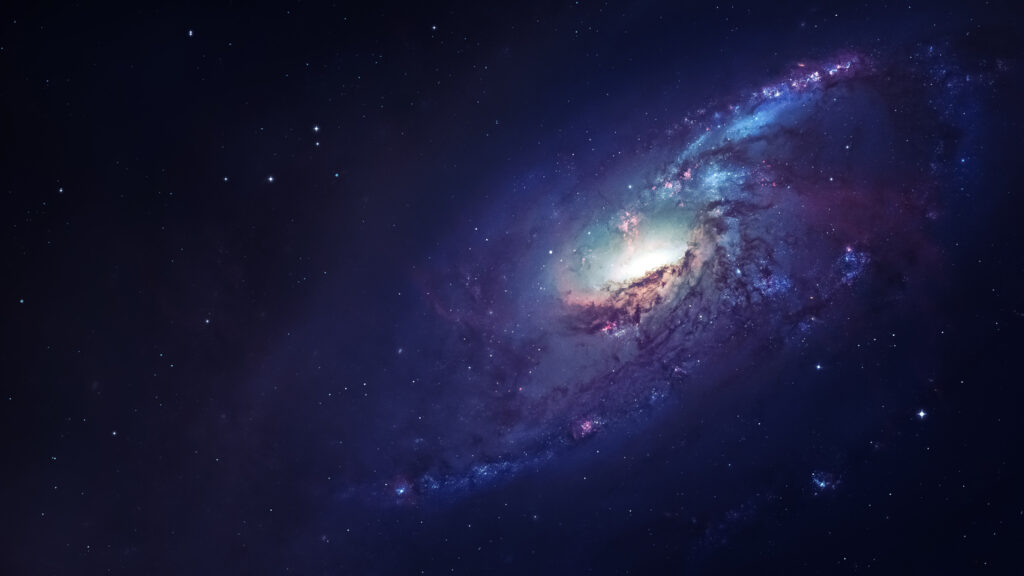
The universe is expanding, and while that fact is fascinating, it also creates a question that trips people up: if it’s growing, what exactly is it expanding into? Our brains are used to picturing objects moving into spaces, so it’s natural to imagine the universe pushing into something else. Yet, the reality does not work in the way we expect. Here are some solid explanations that help make sense of what it means when we say the universe is expanding.
Expansion means space itself stretches.
When scientists talk about expansion, they do not mean galaxies flying through a pre-existing emptiness. What is happening is that the very fabric of space is stretching, which increases the distances between galaxies. That’s why you cannot point to a boundary and ask what is beyond it. The change is happening within the universe itself, not into something outside it.
The universe has no outer edge.
It’s tempting to picture the universe like a bubble floating in a larger void, but modern science suggests there is no physical edge at all. Space just keeps going, and the expansion acts on all of it at the same time. That means the universe is not filling a bigger container. It’s everything already, so there is nothing external waiting for it to grow into.
The balloon example is limited.
A balloon being blown up is a useful analogy because it shows how all points on the surface move apart as it gets bigger. But the balloon also has surrounding air, which makes people imagine the universe must too. That’s where the comparison fails. Unlike a balloon, the universe has no “outside air” around it. Its expansion is contained within itself.
Distances increase with scale.
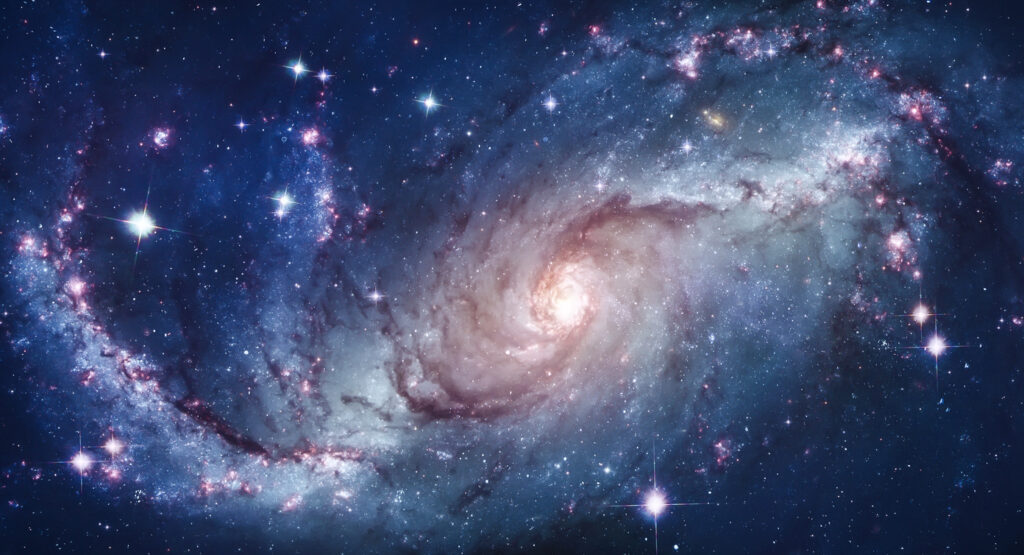
The further apart galaxies are, the faster they seem to move away from each other. This effect makes it feel as though the universe is racing outward into another space. In truth, it’s only the stretching of space that creates that impression. Galaxies themselves aren’t travelling through an external void but are carried apart by space expanding.
Everything is included within it.
Part of why the question is confusing is because the universe includes everything. Space, time, matter, and energy are all part of it, which means there is nothing outside it to expand into. Expansion is not about crossing into another region. It’s a change in the scale of distances within the universe itself.
The visible limit isn’t a wall.
We can only see as far as light has had time to travel since the Big Bang. That horizon makes it feel like there is an edge, but it’s only a limit of what we can observe. Beyond that horizon, space continues, and expansion is happening there too. The fact we cannot see it does not mean it stops.
Space may be curved.
Space could have a curved shape, which makes it finite but without boundaries, much like the surface of a sphere. You can travel across Earth endlessly without finding an edge. If this is the case, then expansion does not need an outside. It’s simply space reshaping and enlarging itself, rather than pressing into something else.
Dark energy drives it.

The acceleration of expansion is linked to dark energy, a mysterious force that makes up most of the universe. It stretches space from within and pushes galaxies apart faster over time. Because dark energy acts everywhere equally, there is no direction or external space that it pushes into. It’s a property of the universe itself.
The multiverse idea adds mystery.
Some theories suggest our universe might be one bubble among many in a vast multiverse. If true, expansion could look like bubbles forming side by side. However, this is still just speculation, since there is no way to observe other universes. Even if they exist, our expansion is still an internal process that does not rely on an outside.
Time expands with space.
Expansion is not only about physical space. The flow of time is connected to the fabric of the universe, which means time itself is part of the expansion. This is why it does not make sense to picture the universe moving into something else. Both space and time are being reshaped together as the universe grows.
Not everything expands equally.
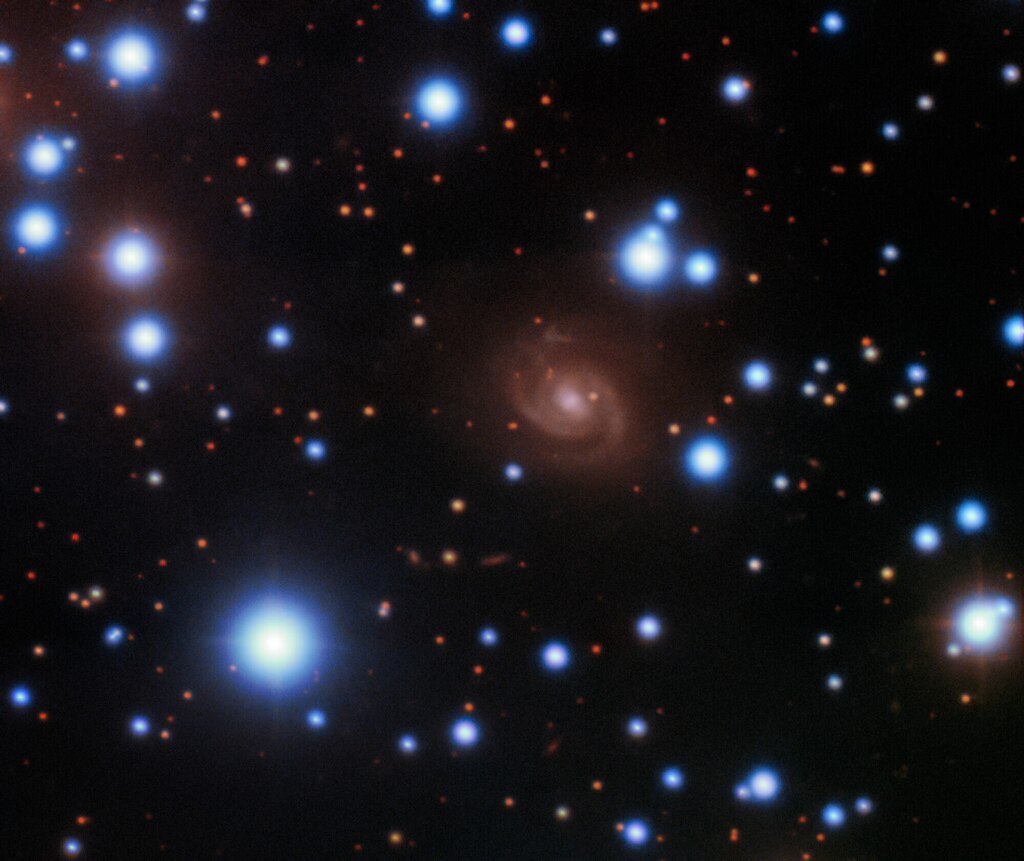
Galaxies, stars, and planets stay held together by gravity, so they do not stretch with the expansion. It only shows up on huge scales where gravity cannot keep things bound. This helps explain why expansion is not about spreading into a void. It’s a large-scale effect, not something that pulls apart everything down to the smallest details.
The question shows our limits.
We’re used to everyday objects moving into spaces, so imagining the universe expanding without an outside feels unnatural. That’s why the question is so puzzling. In reality, the universe is not moving into anything else. It’s the structure of space itself that’s changing, which is something our everyday perspective struggles to grasp.