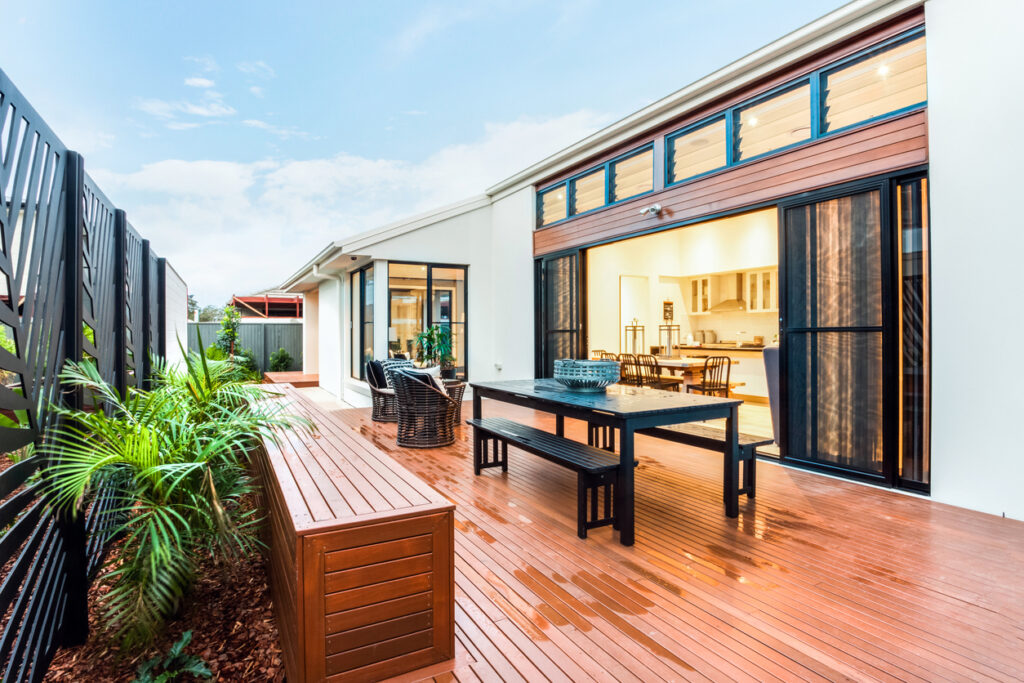
Slippery decking creates serious safety hazards, especially when wet from rain, dew, or snow. If you’ve ever nearly fallen over (or actually went down), you know just how lethal this can be. The right approach to making things a bit safer depends on your deck material and budget, but there are effective solutions for every situation that can dramatically improve traction.
1. Clean your deck thoroughly before applying any treatments.
Built-up dirt, algae, moss, and organic debris create an extra slippery layer on top of already smooth surfaces. Power washing or scrubbing removes this film and reveals the actual deck surface you’re working with.
Use a deck cleaner specifically designed for your material—wood, composite, or vinyl each require different cleaning approaches. Allow the deck to dry completely before applying any anti-slip treatments, as moisture prevents proper adhesion.
2. Apply anti-slip deck paint or stain with grip additives.
Specialised deck paints and stains contain textured particles that create a rougher surface while also protecting the underlying material. These products come in various colours and can completely transform both appearance and safety.
Choose products specifically designed for outdoor decking rather than general anti-slip paint. The additives need to withstand weather exposure without wearing away quickly, which requires marine-grade or deck-specific formulations.
3. Install anti-slip strips or mats in high-traffic areas.
Adhesive anti-slip strips provide immediate traction improvement in specific locations like stairs, ramps, or frequently used walkways. These strips are particularly effective for composite or vinyl decking where other treatments might not adhere well.
Place strips strategically on stair treads, at doorway entrances, and along main walking paths. Choose strips designed for outdoor use that can handle temperature changes and UV exposure without peeling or degrading.
4. Add textured deck tiles or interlocking mats.
Modular deck tiles with built-in texture can cover existing slippery surfaces without permanent modification. These tiles often feature drainage channels that prevent water pooling and provide excellent grip. Interlocking systems allow you to cover large areas while maintaining the ability to remove tiles for cleaning or deck maintenance underneath. Choose materials that complement your deck’s aesthetic and also give the traction you need.
5. Sand smooth wooden decking to create natural texture.
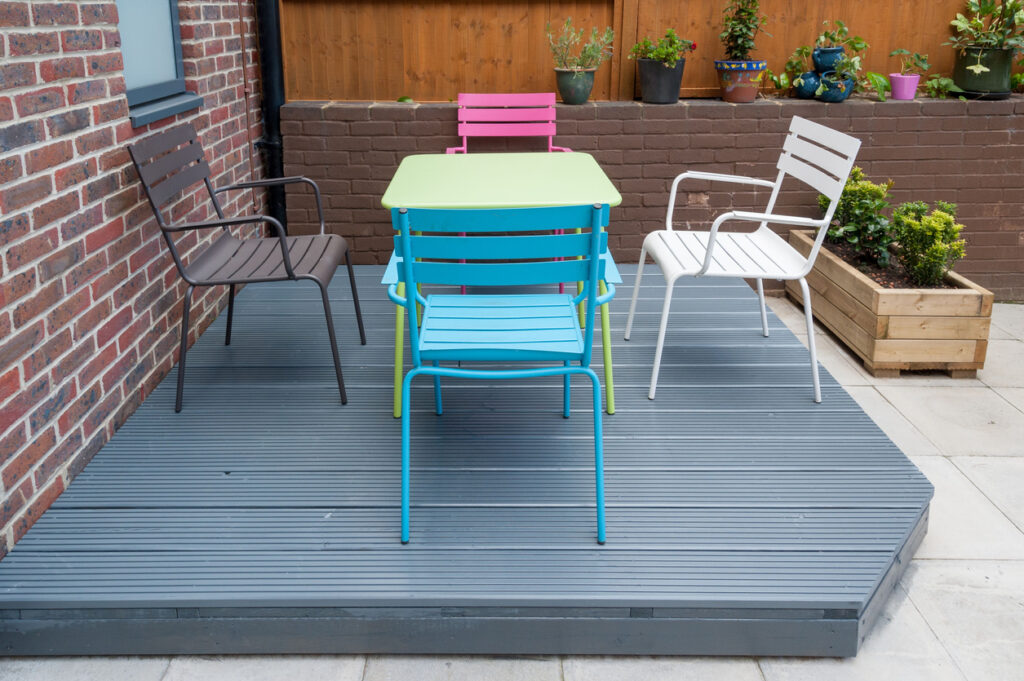
Smooth wooden decks can be sanded to create a slightly rougher surface that provides better grip but still maintains the natural wood appearance. This approach works best for decks that aren’t severely worn or damaged. Use progressively finer grits to achieve the right balance between traction and comfort for bare feet. Start with coarse sandpaper to remove the slick surface, then finish with finer grits to smooth any harsh edges.
6. Apply clear anti-slip coating with invisible texture.
Clear coatings with microscopic texture particles maintain your deck’s appearance while dramatically improving traction. These products are ideal when you want safety improvements without changing the deck’s colour or visual character.
Multiple thin coats work better than single thick applications. Follow manufacturer instructions carefully regarding temperature and humidity conditions during application, as these factors affect how well the coating bonds and cures.
7. Improve drainage to prevent water accumulation.
Standing water makes any surface more dangerous, so addressing drainage problems reduces slip hazards significantly. Proper water flow prevents puddles that create ice patches in winter and breeding grounds for algae in summer. Check that deck boards have adequate spacing for drainage and that water flows away from the structure rather than pooling in corners or against railings. Add drainage solutions like deck drains or adjust board spacing if needed.
8. Use outdoor rugs with non-slip backing.
Weather-resistant rugs provide instant traction improvement while adding colour and comfort to deck spaces. Choose rugs specifically designed for outdoor use that can handle moisture without developing mould or mildew. Ensure rugs have proper non-slip backing or use rug pads designed for outdoor surfaces. Secure rugs properly to prevent them from becoming trip hazards themselves, but make sure they still give you the grip you need underfoot.
9. Install grip tape on stairs and ramps.
Heavy-duty grip tape designed for outdoor use provides excellent traction on steps and sloped surfaces where falls are most dangerous. Marine-grade tape withstands weather exposure while maintaining its adhesive properties. Apply tape to the full width of each step, paying special attention to the front edge where feet make initial contact. Clean the surface thoroughly before application and press firmly to ensure long-lasting adhesion.
10. Consider decking screws with wider heads for better grip.
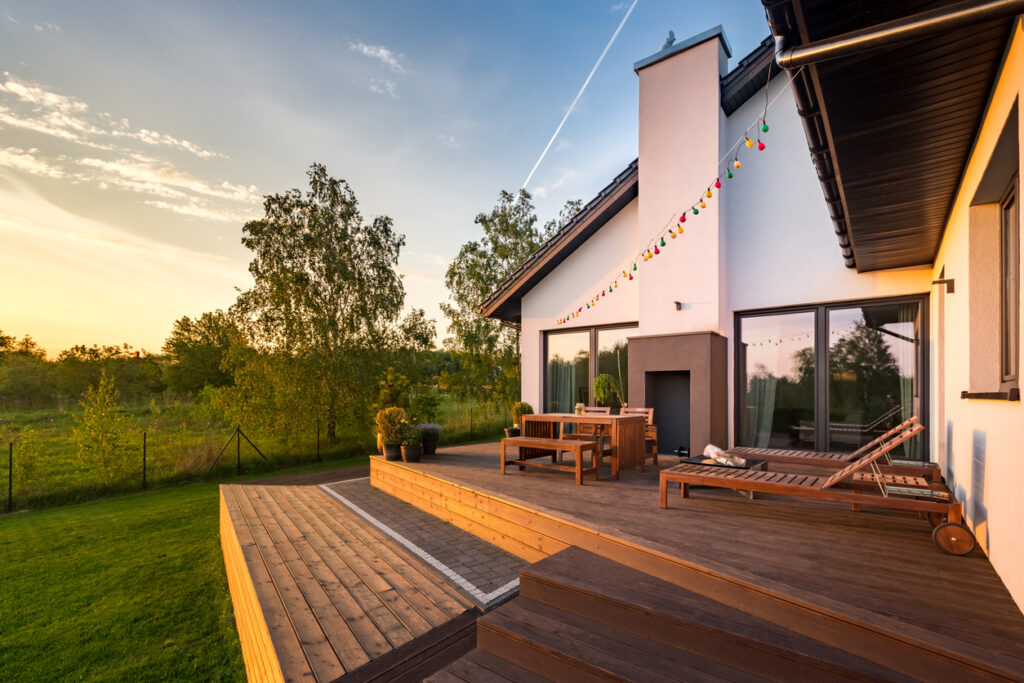
When installing new decking or replacing boards, choose screws with larger, textured heads that sit slightly proud of the surface. These create small but effective grip points without being uncomfortable for bare feet. Slightly raised screw heads break up smooth surfaces and provide micro-traction points that improve overall grip. This approach works particularly well for composite decking where other texture methods might not be suitable.
11. Apply crushed walnut shells or sand mixed with sealant.
Natural additives like fine sand or crushed walnut shells can be mixed into deck sealers or topcoats to create custom anti-slip surfaces. Doing things this way allows you to control the texture level while using environmentally friendly materials. Mix additives thoroughly and apply evenly to avoid creating rough patches or bare spots. Test the mixture on a small area first to ensure you achieve the desired texture without making the surface too abrasive.
12. Regular maintenance prevents slippery buildup.
Consistent cleaning and maintenance prevents the gradual accumulation of organic matter that makes decks increasingly slippery over time. Regular attention is much easier than major restoration projects. Schedule seasonal deck cleaning to remove leaves, pollen, and other debris before it creates slippery conditions. Address moss or algae growth immediately, rather than letting it establish and spread across larger areas.