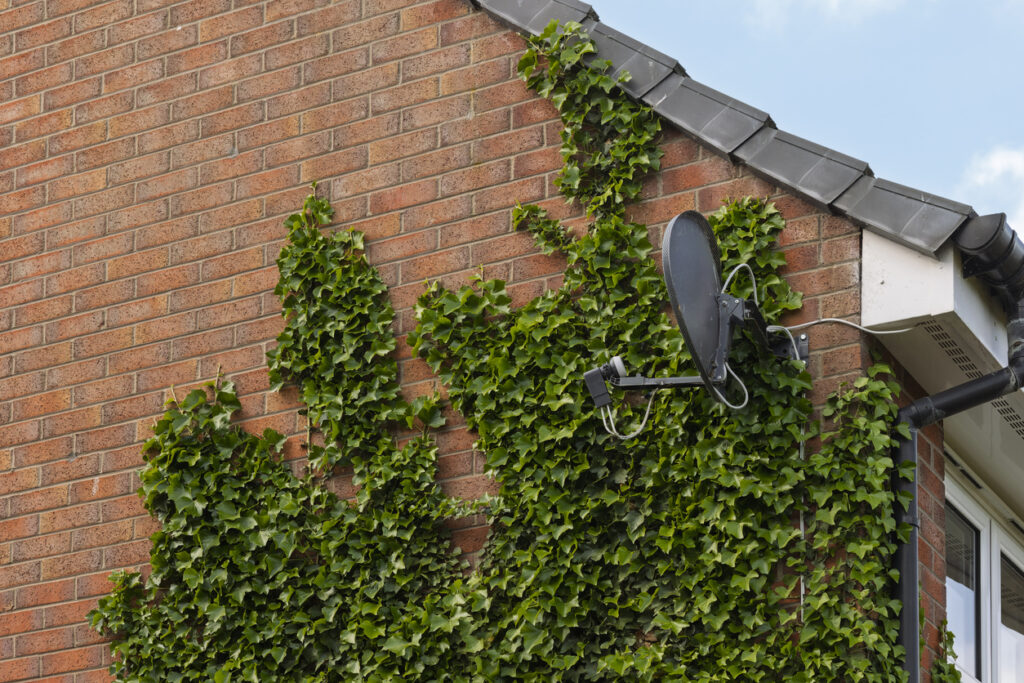
Ivy might look pretty at first, but once it goes mental and starts taking over everything, it becomes this nightmare plant that’s basically impossible to get rid of without a proper plan. The annoying thing about ivy is that it’s incredibly stubborn. You can’t just pull it up and expect it to stay gone because it’ll come back stronger than ever if you don’t do it properly.
1. Start by cutting all the thick main stems at the bottom.
Find the thickest, oldest stems that are feeding the whole ivy system and cut them right at ground level with some proper secateurs or a saw if they’re really thick. This cuts off the food supply to all the ivy growing up walls and trees, which will eventually kill the top parts.
Don’t worry about the ivy that’s already growing high up on walls or trees, as once you cut the main stems, that stuff will die off by itself over the next few months. Just focus on finding and cutting every single thick stem you can see at the base.
2. Dig out all the roots you can possibly find.
This is the really boring bit, but you need to get as many roots out of the ground as possible because even tiny bits left behind can grow into new plants. Ivy roots spread everywhere underground, so you’ll probably find them in places you weren’t expecting.
Use a fork or spade to carefully dig around where the stems were growing and pull out every bit of root you can see. The roots are usually quite shallow, but they spread out loads, so you might be digging for ages to get them all.
3. Cover the area with thick cardboard or landscape fabric.
Once you’ve got as many roots out as possible, cover the whole area with cardboard or proper landscape fabric to stop any remaining bits from getting sunlight. Ivy needs light to photosynthesise, so blocking it out will weaken any roots you missed.
Leave the covering down for at least a whole year, maybe longer if the ivy was really established. You can put mulch or bark chips on top to make it look nicer, but don’t remove the covering too early or the ivy will just come back.
4. Apply glyphosate to any regrowth immediately.
When you see new ivy shoots popping up (and you definitely will), hit them straight away with glyphosate weedkiller on a calm, dry day. Don’t wait for them to get bigger; catch them when they’re small and weak. Be really careful not to get the weedkiller on plants you want to keep, and follow all the instructions on the bottle. You might need to do this several times as new shoots appear, but each time they’ll be weaker than the last.
5. Pull up any new growth by hand regularly.
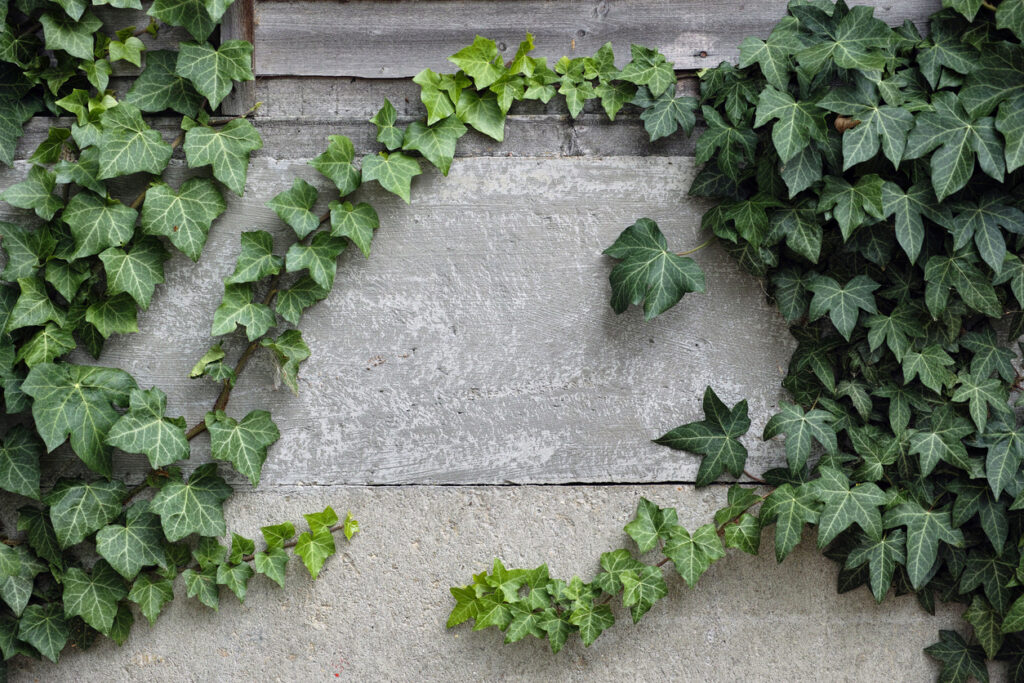
Keep checking the area every few weeks and pull up any tiny new ivy plants you spot before they get established. It’s much easier to deal with when it’s just a small shoot than when it’s had time to grow proper roots. That ongoing maintenance is really important because ivy is sneaky and will try to come back from tiny root fragments you missed. Stay on top of it, and eventually, you’ll win the war of attrition.
6. Don’t compost any of the ivy you remove.
Chuck all the ivy stems, leaves, and roots straight in your household waste or take them to the tip—never put them on your compost heap or anywhere else in your garden. Ivy can regrow from tiny pieces, so even bits you think are dead might spring back to life. Some people burn ivy if they’re allowed to have bonfires, but make sure it’s completely dry first and be careful of the smoke. The safest option is just to bin it all and forget about it.
7. Plant something else there as soon as possible.
Once you’ve cleared the ivy and the soil has had time to recover, plant something else in that spot, so the ivy can’t easily come back. Choose plants that are quite vigorous and will compete with any sneaky ivy shoots that try to establish themselves. Ground cover plants like ajuga or pachysandra work well, or you could plant shrubs that will shade out any ivy seedlings. The key is not leaving bare soil that gives ivy an easy opportunity to regrow.
8. Check neighbouring properties for ivy sources.
If your neighbours have ivy growing on their side of the fence, it might keep sending shoots under or through into your garden, no matter how much you clear on your side. You might need to have a polite chat with them about the problem. Ivy doesn’t respect property boundaries and can travel quite far underground, so even ivy that looks like it’s nowhere near your garden might actually be connected to stuff growing on your land.
9. Treat any ivy growing up trees immediately.
If ivy has grown up trees in your garden, cut it at the base and leave the top part to die naturally, rather than trying to pull it all down. Pulling ivy off trees can damage the bark and hurt the tree more than just leaving the dead ivy there. The ivy growing up the tree will die once you cut the connection to the roots, and it’ll gradually fall off by itself over time. This is much safer for the tree than trying to strip it all off manually.
10. Be patient because the process takes ages.
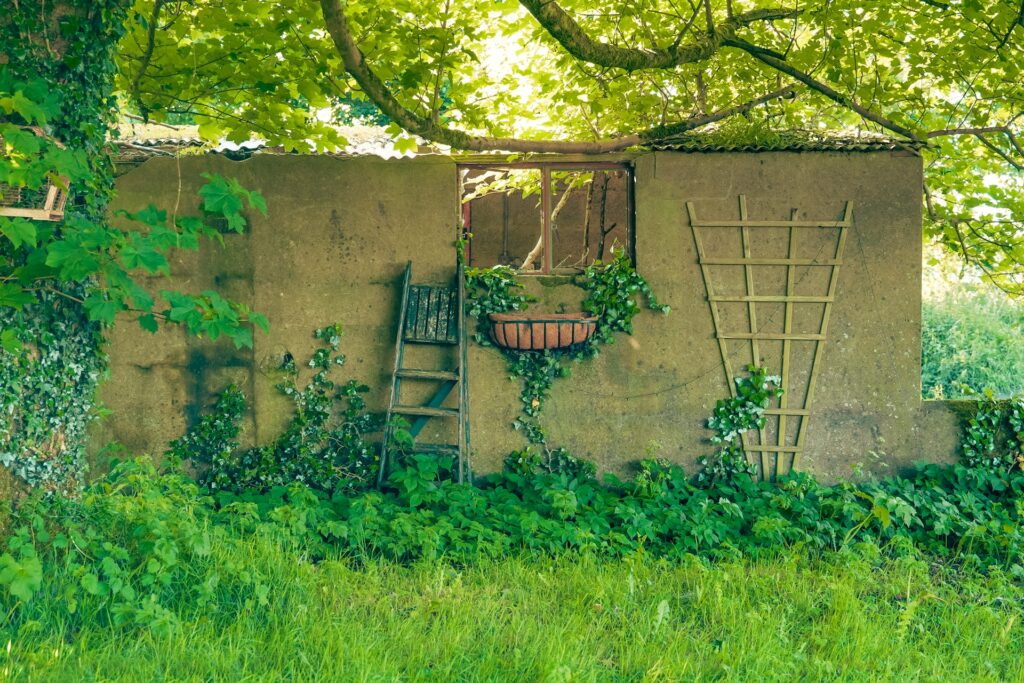
Getting rid of established ivy properly can take several years of persistent effort, so don’t get discouraged if you’re still finding new shoots popping up months after you thought you’d sorted it. This is totally normal and doesn’t mean you’re doing it wrong.
Each time the ivy tries to regrow, it’s using up energy from its root system, so eventually you’ll wear it down completely. The key is being more stubborn than the ivy, which takes some doing because ivy is ridiculously persistent.
11. Consider getting professionals in for massive infestations.
If the ivy has completely taken over a large area or grown really high up buildings, it might be worth getting professional gardeners or tree surgeons to deal with it safely. They’ll have the right equipment and experience to tackle really big jobs.
This is especially important if the ivy is growing on buildings where pulling it down might damage the walls or if it’s high up where you can’t safely reach it yourself. Sometimes it’s worth paying someone else to do the dangerous or really difficult bits.
12. Never plant ivy anywhere ever again.
Once you’ve been through the nightmare of removing out-of-control ivy, you’ll never want to plant it anywhere in your garden again. There are loads of other climbing plants that look just as good but don’t try to take over the entire neighbourhood.
If you want something that climbs walls or fences, try clematis, honeysuckle, or climbing roses instead. They’re much better behaved and won’t turn your garden into a green jungle that requires military-style tactics to control.