Seeing a tiger before it sees you could be the difference between a tense encounter and a real problem.

That’s because tigers are famously stealthy. They’re ambush predators, not showy ones, which means they’re designed to stay hidden until the very last moment. However, that doesn’t mean you’re completely out of luck. With a bit of awareness, and an understanding of how they behave in the wild, there are some signs to watch out for that might just give you a head start. Here’s what to look for, before you’re the one being hunted.
1. Know their favourite times.

Tigers aren’t usually on the prowl in the heat of the day. They’re crepuscular, which means they’re most active around dawn and dusk. If you’re walking through tiger country at those times, your guard should definitely be up. Don’t be paranoid about it or anything, but be aware of when their hunting instincts are switched on. That early morning or late evening silence? It’s not just peaceful. It’s when tigers are most likely to be on the move.
2. Listen for sudden silence.

The jungle is usually noisy—think birds chirping, insects buzzing, monkeys calling. When that background noise suddenly drops off, it can be a sign that a predator is nearby. Prey animals often go quiet when something big and dangerous is in the area. If the chatter of the forest suddenly vanishes, take it seriously. It doesn’t mean a tiger is definitely around, but it’s worth pausing and paying close attention. Nature rarely goes silent without a reason.
3. Watch for alarm calls.

Many jungle animals alert each other to danger. Langurs, deer, and even birds like peacocks will let out specific alarm calls if they spot a tiger. These sounds are different from their usual chatter: sharper, repetitive, and often directed toward something moving on the ground. If you hear an animal making a fuss, and you can’t see why, it could be pointing you straight toward a lurking predator. Paying attention to these calls can give you a warning you wouldn’t otherwise have.
4. Look for fresh tracks.

Tiger paw prints are huge, about the size of a large human hand, and you can sometimes see them in soft soil, sandy paths, or near water sources. Fresh prints will have clear edges and little signs of weathering or disturbance. They might also be accompanied by drag marks from a tail or signs of stalking posture (closer, lower prints). If you spot them going in your direction, it’s probably time to stop or turn back. Following them is definitely not the move.
5. Pay attention near water.

Tigers love water. Unlike many cats, they’ll happily wade into streams or lie in shallow pools to cool off. If you’re near a watering hole, riverbank, or swampy area, your odds of encountering one go up. Look for paw prints in the mud, flattened grass where one might’ve rested, or that earthy, musky smell they sometimes leave behind. They might not be visible, but signs of their presence often are.
6. Scan for movement at ground level.

Tigers are masters of camouflage. Their stripes help them blend in with dappled light and tall grass. If you’re scanning the treetops, you’re looking in the wrong place, so keep your eyes at ground level and just above it. Focus on small, subtle shifts in shadow or shape. You won’t usually see the whole tiger first; you might catch a flick of a tail, the twitch of an ear, or just something that feels slightly… off. Trust that gut flicker of “that doesn’t look right.”
7. Be alert in narrow trails.

Ambush predators thrive in tight spaces. If you’re walking on a narrow forest path with tall vegetation or blind corners, your visibility is low, and that’s exactly what a tiger counts on when stalking prey. Make your presence known. Talk, sing, or clap occasionally so you don’t surprise anything that might be up ahead. Tigers usually avoid humans when they hear them coming, but surprising one at close range is where trouble begins.
8. Look for claw marks on trees.

Territorial tigers often mark trees with vertical claw scratches and sometimes scent markings. These trees usually stand along well-used animal paths or at the edges of their range. Fresh claw marks can tell you that you’re in an area that’s regularly patrolled. It doesn’t mean a tiger is nearby at that exact moment, but it does mean you’re walking through their space, and that should shift your mindset into alert mode.
9. Notice unusual smells.

Tigers have a strong scent, especially when they’ve recently marked territory. Some describe it as a musky, sweetish, almost spicy smell that’s strong and hard to ignore if it’s fresh. If the air suddenly changes and smells like something wild and unfamiliar, don’t dismiss it. It might mean a tiger passed through recently, or one is bedding down nearby. Either way, it’s not something to brush off.
10. Don’t ignore instinct.
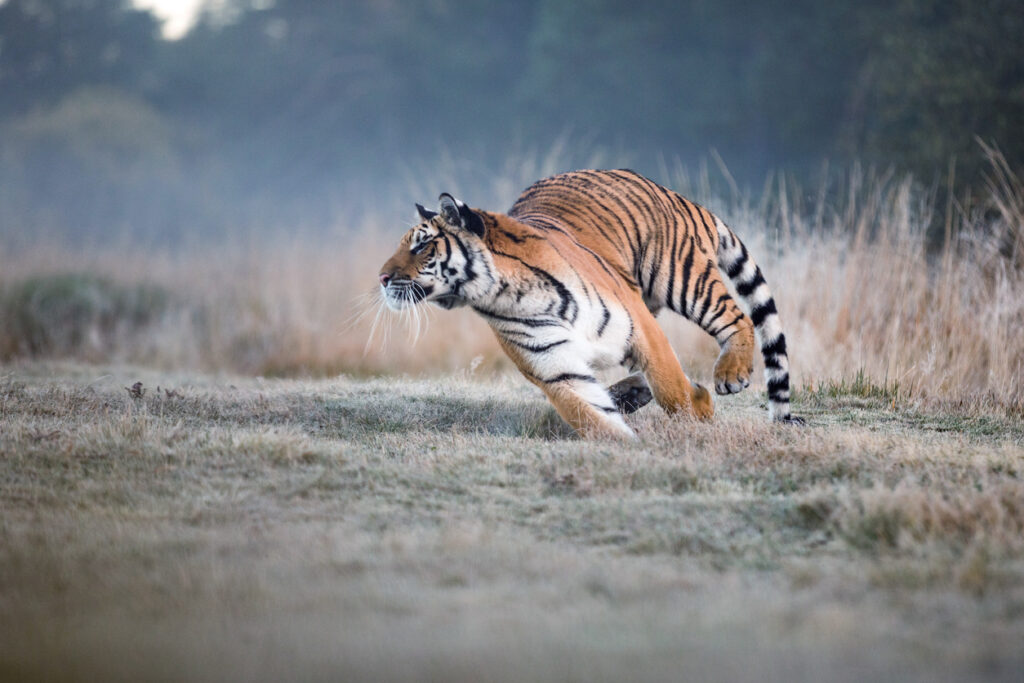
Sometimes, it’s not about what you see or hear; it’s just a sudden feeling that something’s watching you or that something’s wrong. That might sound vague, but humans have evolved to pick up on threats subconsciously, just like other animals do. If you feel uneasy in a certain spot for no clear reason, take it seriously. It might be your brain picking up on subtle cues you haven’t consciously noticed yet. Stop, listen, scan, and move cautiously.
11. Stay especially alert if the prey disappears.

If you’re in an area where you’ve seen lots of prey animals—deer, monkeys, wild boar—and then suddenly see none, that could be a red flag. A top predator may be in the area, and everything else is already reacting. It’s not a sure sign on its own, but it’s definitely worth noting. If the jungle suddenly feels empty, you’re either very lucky, or something big is moving through nearby. And it’s probably not in a hurry.
12. Don’t rely on spotting the tiger itself.

The hard truth? If you’re waiting to see a whole tiger before reacting, you’re too late. They’re built to stay invisible until it’s time to pounce, and they’re very good at it. Most people don’t spot a tiger until it’s already seen them. That’s why noticing the signs matters so much. It’s about patterns in sound, scent, and movement. The real skill isn’t spotting the tiger; it’s recognising the atmosphere that says, “There might be one nearby.” That’s what gives you the chance to stay safe.