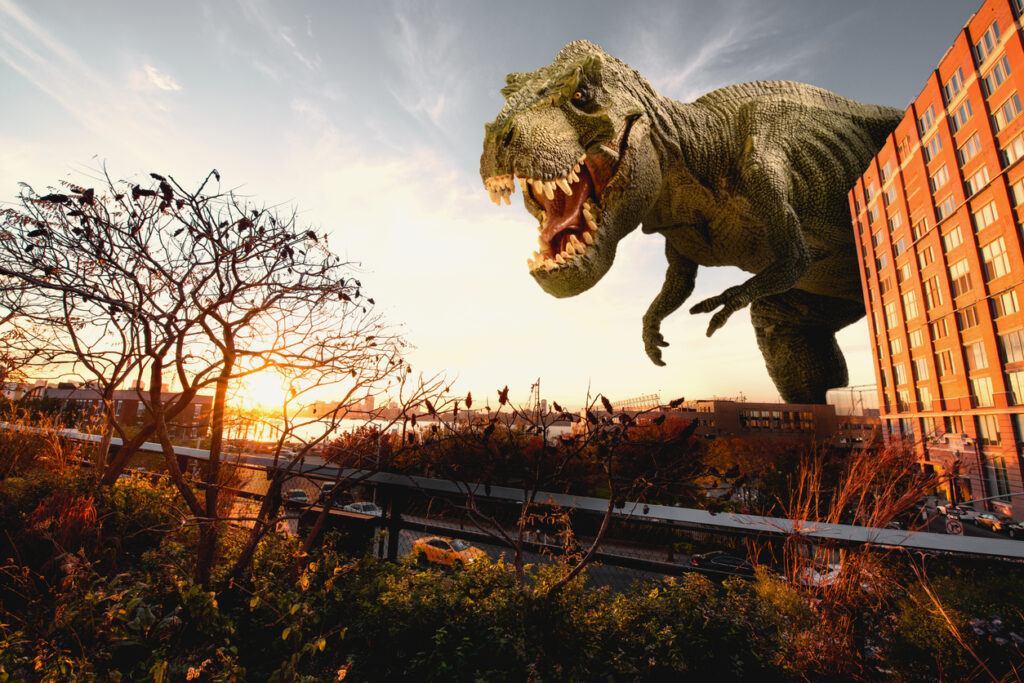
It’s hard not to wonder what life would look like if dinosaurs had never become extinct. Would humans have ever evolved? Would cities exist, or would they be overrun by colossal reptiles roaming the streets? The thought is equal parts thrilling and terrifying. After all, imagine a world where the most powerful creatures in history still walk, fly, and hunt among us.
If dinosaurs were still alive, every part of modern life would be different, from how we build cities to how we grow food and travel. Science, technology, and even our daily routines would have evolved to coexist with animals capable of flattening a car or taking down a plane.
These are just some of the fascinating things that might have happened if dinosaurs were still alive today, and how they’d reshape life as we know it.
Humans probably wouldn’t exist at all.
Mammals only got their chance to thrive and evolve into us because the dinosaurs died out and left loads of ecological niches empty. If dinosaurs were still dominating the planet, our tiny mammal ancestors would’ve stayed small and hiding in burrows forever.
Evolution doesn’t happen in a vacuum, it responds to available opportunities. Without the mass extinction creating space for mammals to diversify and grow larger, the evolutionary path that led to humans would never have happened.
Cities would need to be built completely differently.
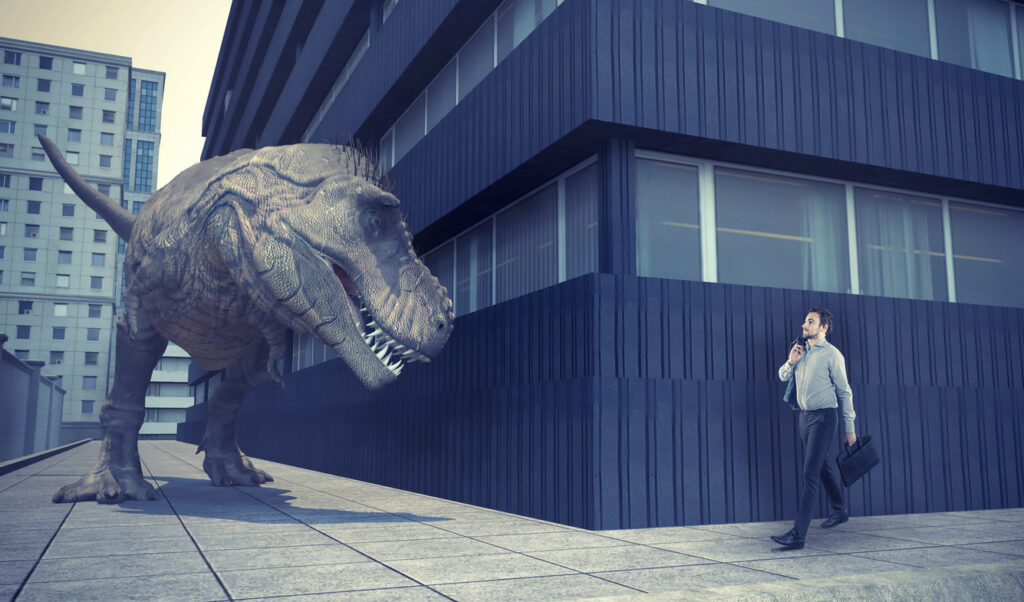
If somehow humans did evolve alongside dinosaurs, our cities would look mental compared to what we’ve got now. You’d need massive walls and barriers to keep out dangerous species, and buildings would have to be designed to withstand potential dinosaur damage.
Architecture would focus on protection and height rather than just aesthetics and space. Ground floors would be heavily fortified and most living would happen well above street level where smaller predatory dinosaurs couldn’t reach.
Flying dinosaurs would make air travel dangerous.
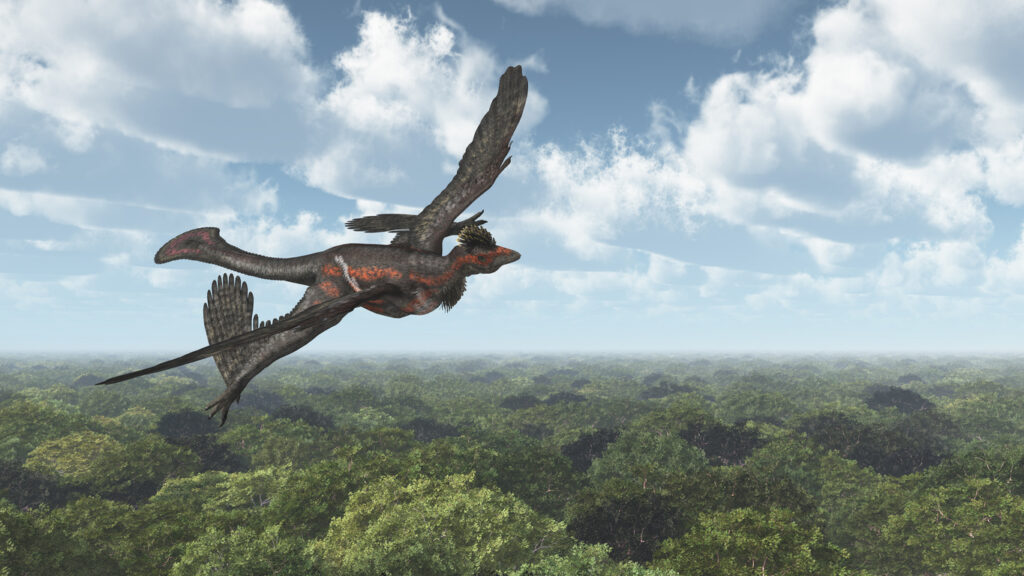
Pterosaurs soaring around would create massive hazards for aeroplanes in the same way bird strikes do now, except way more dangerous because some of these things had wingspans of 10 metres. Air travel might not even have developed the way it did.
Aviation would either be impossible or incredibly restricted to certain safe corridors and altitudes. The skies wouldn’t be ours to use freely, they’d belong to creatures that were using them millions of years before we showed up.
Agriculture would be almost impossible.
Herbivorous dinosaurs would absolutely demolish crops on a scale that would make current pest problems look like nothing. A single sauropod could eat tonnes of vegetation daily, and herds of them would devastate farmland faster than we could replant.
Feeding a human population would require completely different strategies, probably involving indoor farming or heavily protected growing areas. The open field agriculture we rely on wouldn’t work when massive herbivores can wander through and destroy months of work in hours.
The food chain would be terrifyingly different.
Humans wouldn’t be apex predators, we’d be somewhere in the middle of a food chain dominated by creatures that are bigger, faster, and deadlier than us. Going outside would involve genuine risk of being hunted, rather than just being mildly inconvenient.
Our whole psychology and culture would be shaped by being prey animals rather than predators. The confidence humans have now comes from not having natural predators, and that would completely vanish if T. rexes were still around.
Transportation would look completely bizarre.
Cars and roads would need to account for dinosaurs crossing or attacking vehicles. You’d probably see armoured vehicles as standard rather than luxury, and traffic wouldn’t be your biggest worry on the commute.
Public transport would be underground or elevated by necessity. Ground level transport would be too vulnerable to dinosaur interference, whether from curious herbivores or aggressive carnivores seeing vehicles as threats or prey.
Domestication would include some wild options.
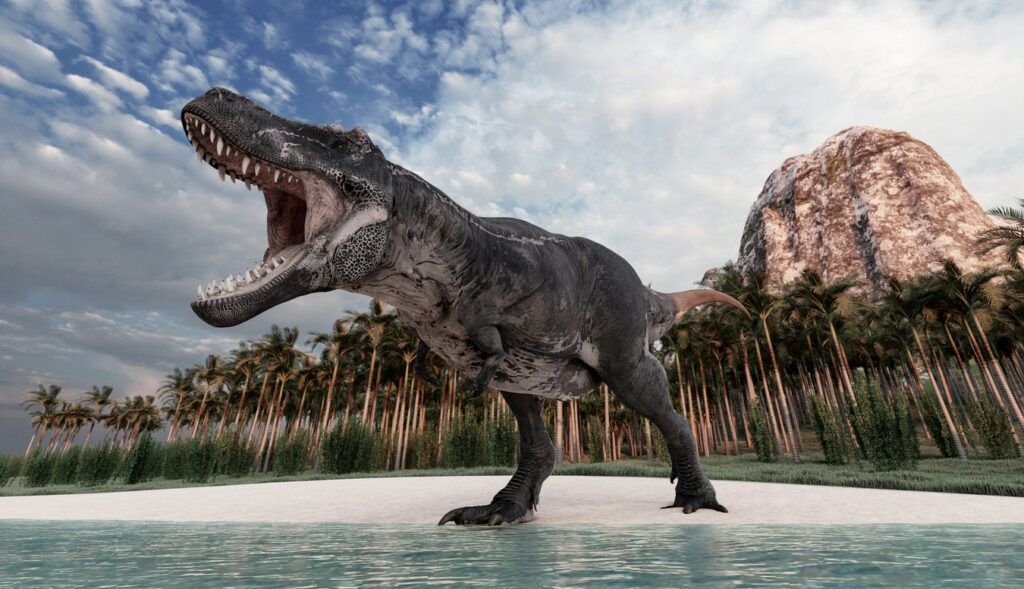
If we managed to domesticate smaller dinosaur species the way we did with horses and dogs, imagine using a velociraptor sized dinosaur for herding or a small herbivore for transport. Pets would be way more dangerous and interesting.
That domestication would fundamentally change human society and capabilities. Having dinosaurs doing work for us would create technologies and industries we can’t even imagine because our entire development has been without them.
Ecosystems would be unrecognisable.
Every habitat on earth would be structured completely differently with dinosaurs still in the mix. Forests would be shaped by massive herbivores eating the canopy, grasslands would be trampled and grazed differently, and marine ecosystems would have massive reptiles instead of whales.
Modern animals either wouldn’t exist or would look nothing like they do now because they evolved to fill niches that dinosaurs left empty. The whole web of life would be fundamentally different at every level.
Climate would probably be different too.
Dinosaurs thrived in warmer, more humid climates with higher CO2 levels than we have now. If they’d survived, their influence on vegetation and the carbon cycle might mean the planet’s climate developed along a different trajectory entirely.
That different climate would affect everything from weather patterns to which areas were habitable. The ice ages might not have happened the same way, which would completely alter the geography and evolution of everything, including potential human ancestors.
Religion and mythology would be wild.
If humans somehow existed alongside dinosaurs, our religions, and myths would be full of real dragon-like creatures rather than imaginary ones. Gods and monsters would be inspired by actual terrifying animals people encountered regularly.
That shared experience with massive, dangerous animals would completely change human storytelling and belief systems. Instead of making up monsters, we’d be trying to explain and understand real ones that were even more impressive than anything we imagined.
Warfare would involve dinosaur cavalry.
Militaries throughout history have used whatever animals they could for warfare, so if dinosaurs existed you’d absolutely see attempts to weaponise them. Imagine armies riding armoured herbivores into battle or using predators as biological weapons.
That would make historical warfare even more brutal and unpredictable than it already was. Controlling and deploying dinosaurs would become a major military advantage, changing the entire nature of conflict and which civilisations rose to power.
Medical understanding would be totally different.
Studying dinosaur biology and diseases would give us completely different medical knowledge than what we developed. We might understand certain conditions better or worse depending on how dinosaur physiology compared to mammals.
Diseases would probably be different too, with illnesses jumping between species in ways we can’t predict. Zoonotic diseases wouldn’t just come from birds and mammals, but from reptilian dinosaurs with completely different biology.
The extinction question would still loom.
Dinosaurs dominated for 165 million years, but they still got wiped out by an asteroid. If they’d survived that, there’s no guarantee they’d survive everything else that’s happened since, including ice ages, volcanic eruptions, and now human-induced climate change.
We might be living through their slow extinction anyway, watching these magnificent creatures die out from habitat loss and changing conditions. The same way we’re currently causing mass extinctions, dinosaurs might be victims of it too if they’d made it this far.
Space exploration would be even more urgent.
Sharing a planet with dinosaurs would make the species survival argument for space colonisation even stronger. Having all your eggs in one basket feels more dangerous when that basket also contains creatures that could eat you and compete with you for every resource.
The drive to spread beyond Earth would be motivated not just by curiosity and survival instinct, but by the practical need to have populations beyond the reach of planetary catastrophes or dinosaur related disasters. We’d see space as escape as much as exploration.