We’ve spent decades looking at dinosaurs through the lens of old museum models and films that basically portrayed them as overgrown, scaly lizards that did nothing but roar and eat.
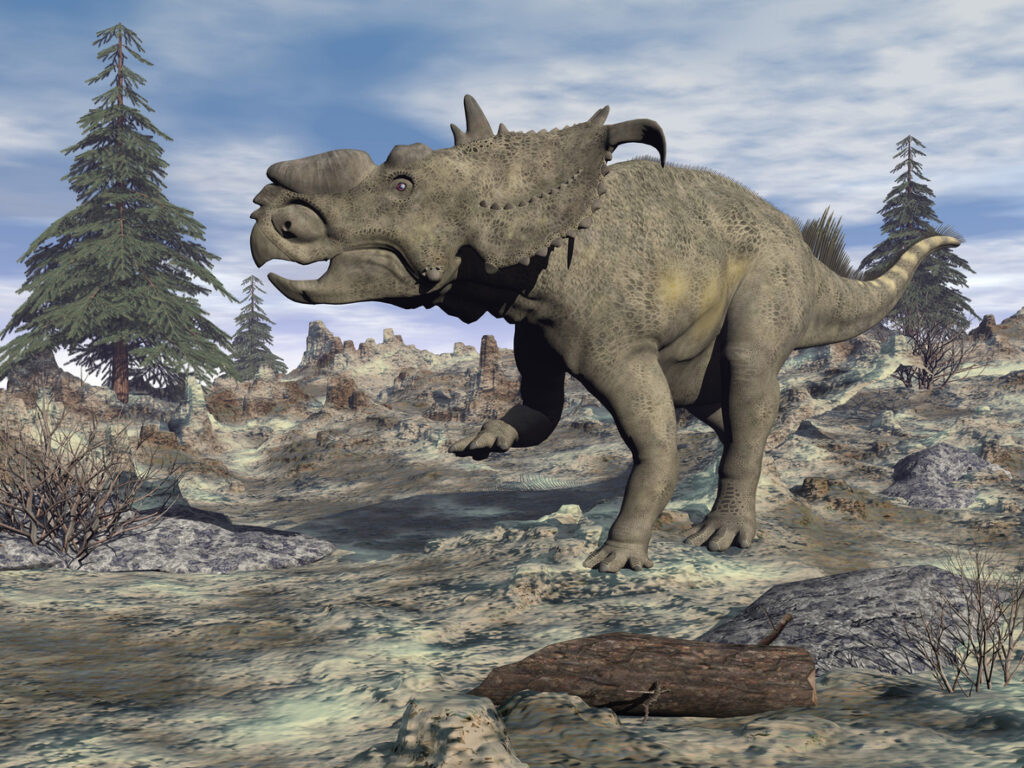
It’s a bit of a disservice to a group of animals that ran the show for well over 100 million years. As our tech gets better, and we find more than just the odd bone, we’re beginning to realise that these creatures weren’t just big; they were incredibly sophisticated.
The more we dig, the more we find evidence of behaviours and physical abilities that make them look less like monsters and more like complex, living beings that would’ve been genuinely staggering to see in the flesh. From the way they handled their social lives to some of the bizarre ways they regulated their own bodies, there are 13 specific things dinosaurs managed to pull off that are still causing a bit of a stir in the scientific community.
1. Some dinosaurs likely slept in bird-like positions.
For a long time, dinosaurs were imagined as sprawling, tail-dragging creatures that collapsed wherever they fell asleep. Fossil discoveries have totally changed that picture. Several small theropods have been found preserved with their heads tucked under their forelimbs, in almost exactly the same posture modern birds use when they rest.
It wasn’t just a random position. It suggests a level of neurological control, comfort-seeking, and temperature regulation that scientists didn’t expect from animals once thought to be sluggish and simple. Sleeping like this also hints that many dinosaurs were already using behaviours that later became standard in birds.
2. They may have cared for their eggs more than once believed.
Early dinosaur reconstructions painted them as indifferent reproducers, laying eggs and moving on. Fossil nests tell a very different story. Some dinosaurs arranged eggs carefully, guarded them, and possibly even regulated their temperature.
In a few cases, adults have been found fossilised directly on top of nests, suggesting brooding behaviour rather than abandonment. That kind of parental investment surprised scientists because it blurs the line between reptile and bird behaviour far earlier than expected.
3. Many dinosaurs could regulate their body temperature.
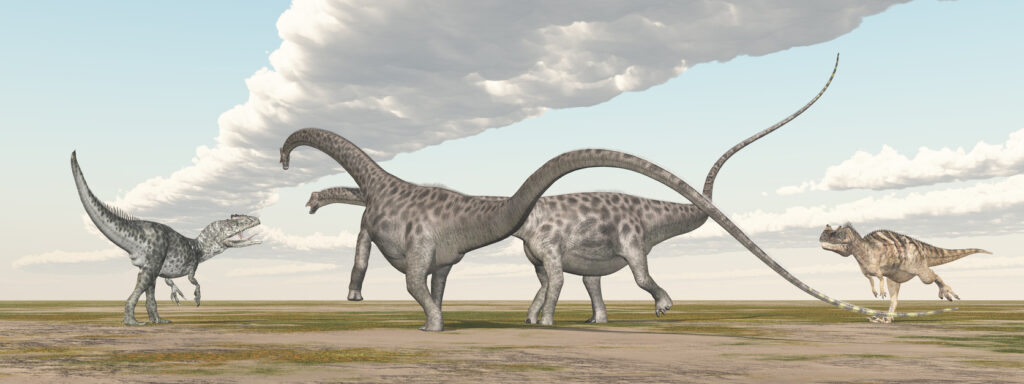
For decades, dinosaurs were labelled cold-blooded by default, simply because they were reptiles. Bone structure, growth rates, and isotopic analysis have challenged that idea. Evidence now suggests many dinosaurs sat somewhere between cold-blooded and warm-blooded, or even leaned strongly toward warm-blooded physiology.
This ability would have allowed them to stay active in cooler climates, grow faster, and sustain higher energy levels. It helps explain why dinosaurs thrived across such a wide range of environments for so long.
4. Some dinosaurs likely had feathers long before birds existed.
Feathers were once considered a strictly bird feature. Fossils from China and elsewhere have shown that many non-flying dinosaurs had feathered bodies, some with complex structures rather than simple fuzz.
What’s surprising is that these feathers likely evolved for insulation, display, or communication, not flight. Flight came later. This discovery completely reframed how scientists understand dinosaur appearance and behaviour, moving them away from scaly stereotypes.
5. Dinosaurs may have communicated with low-frequency sounds.
Vocal dinosaurs were once imagined roaring like movie monsters. Soft tissue fossils and comparisons with modern animals suggest something very different. Some dinosaurs may have produced deep, low-frequency sounds that travelled long distances without being loud. That kind of communication would have been ideal for signalling across vast plains or dense forests. It also suggests complex social interactions that didn’t rely on constant visual contact.
6. They could heal from serious injuries.

Fossilised bones often show signs of healed fractures, infections, and even bite wounds. These injuries weren’t minor. Some dinosaurs survived damage that would have severely limited their movement.
The fact that healing occurred suggests strong immune responses and, in some cases, possible social support. An injured predator surviving long enough to heal raises questions about whether others helped it survive, or whether dinosaurs were tougher than we assume.
7. Some dinosaurs likely migrated long distances.
Migration is often associated with birds and mammals, but evidence suggests some dinosaurs travelled seasonally. Trackways and bone chemistry hint at long-distance movement in response to climate or food availability. This ability would have required navigation skills, memory, and group coordination. It also challenges the idea that dinosaurs were tied to narrow habitats or simple routines.
8. Dinosaurs may have been surprisingly fast learners.
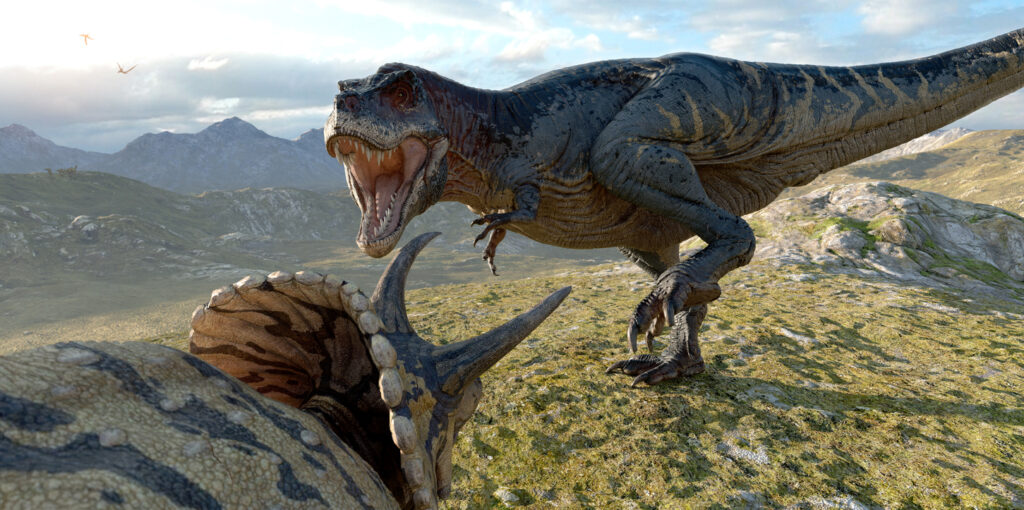
Brain structure analysis shows that some dinosaurs, especially theropods, had brain regions associated with learning and sensory processing that were more developed than expected. This suggests they could adapt behaviour based on experience, rather than relying purely on instinct. Learning how to hunt more effectively, avoid danger, or navigate territory would have given them a huge survival advantage.
9. Some dinosaurs used colour for communication.
For a long time, dinosaur colour was pure guesswork. Recent discoveries of preserved pigment structures have allowed scientists to infer colour patterns in some species. Stripes, dark backs, light bellies, and even iridescent feathers suggest colour played a role in camouflage, mating, and social signalling. Dinosaurs weren’t dull or uniform, they were visually expressive animals.
10. They may have lived in complex social groups.
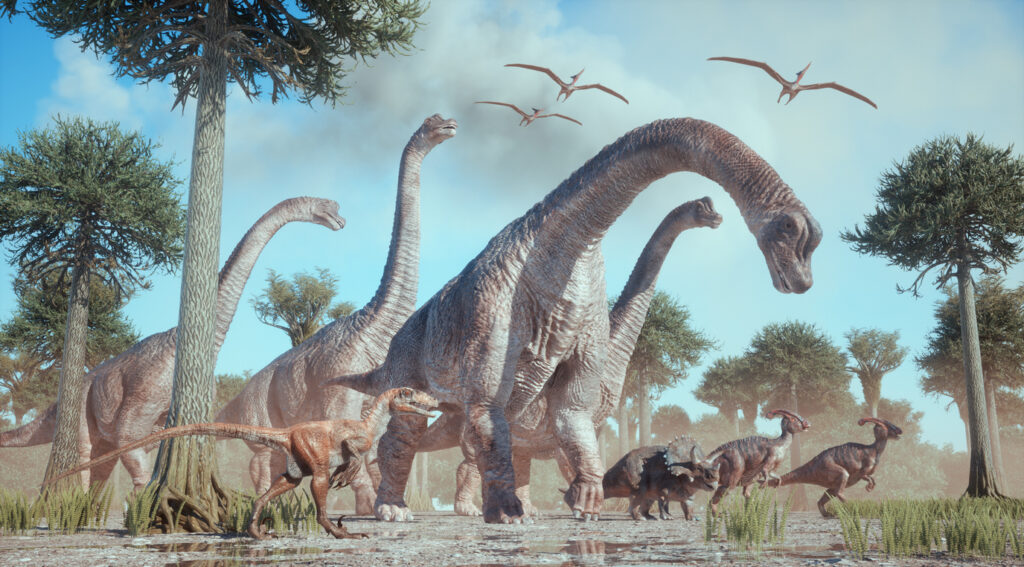
Mass fossil sites containing multiple individuals of the same species suggest herding or pack behaviour. This wasn’t limited to plant-eaters. Some predators appear to have lived or hunted in groups. Social living requires coordination, communication, and some form of social structure. That level of organisation surprised scientists, who once imagined dinosaurs as mostly solitary.
11. Some dinosaurs were excellent swimmers.
Dinosaurs were traditionally seen as land-locked animals. Fossil trackways and skeletal adaptations show that some species were capable swimmers. Long tails, dense bones, and limb structures suggest they could cross rivers or even hunt aquatic prey. This flexibility would have expanded their range and food options significantly.
12. They could adapt to extreme environments.

Dinosaur fossils have been found near what were once polar regions, where months of darkness and cold would have posed serious challenges. Surviving there suggests adaptations like insulation, seasonal behaviour changes, or metabolic flexibility. Dinosaurs weren’t limited to tropical comfort zones, they thrived in demanding conditions.
13. Some dinosaurs lived far longer than expected.
Growth rings in bones, similar to tree rings, show that some dinosaurs lived decades longer than scientists once assumed. They didn’t all burn out quickly due to size. Long lifespans allow for learning, stable social structures, and generational knowledge. It paints dinosaurs not as short-lived giants, but as long-term residents of their ecosystems.
The more scientists learn about dinosaurs, the less they resemble the clumsy, slow creatures of old illustrations. They were active, adaptable, and deeply connected to their environments. What keeps surprising researchers isn’t just what dinosaurs could do, but how familiar many of those abilities feel when compared to animals alive today.