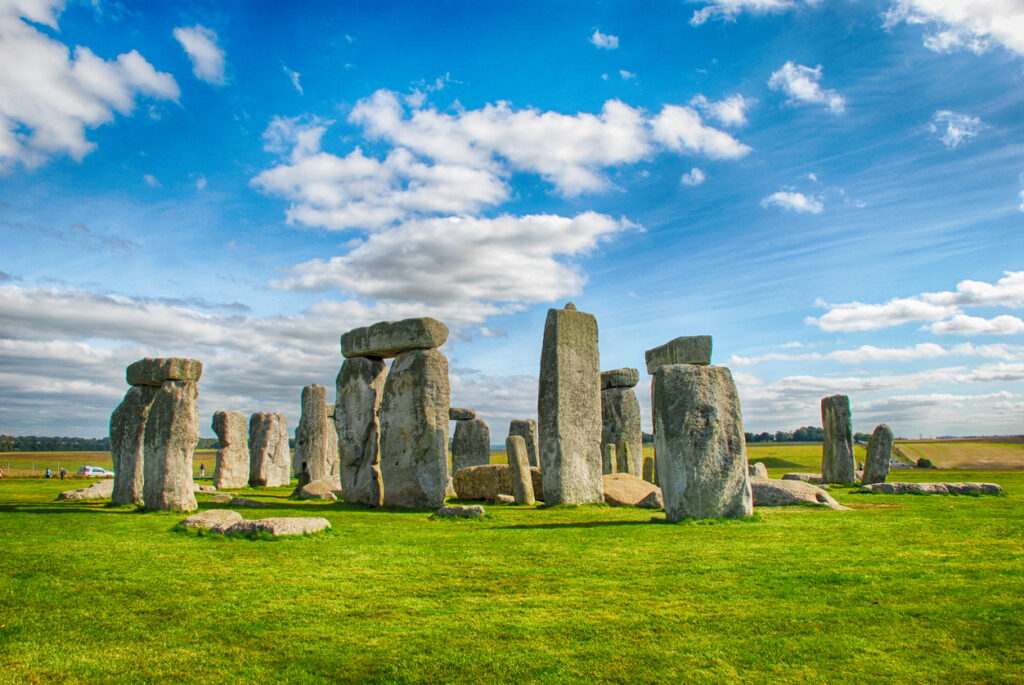
Stonehenge has been sitting on the Salisbury Plain for around 5,000 years, and even now, it raises more questions than answers. The stones are enormous, the layout is precise, and the builders managed it all without metal tools, cranes, or modern engineering knowledge. Archaeologists have made huge progress in understanding the monument, but there are still parts of the puzzle that leave even experts scratching their heads.
How people moved stones weighing up to 25 tons
The massive sarsen stones that form the main circle each weigh roughly the same as a large truck. They were quarried around 20 miles away in the Marlborough Downs, yet somehow transported to the Stonehenge site long before roads or heavy machinery existed.
Various theories suggest wooden sledges, rollers, and teams of hundreds of people pulling with ropes. Experiments have shown it’s possible, but still extremely demanding. The sheer organisation required to move dozens of these stones across uneven ground remains one of the biggest logistical mysteries.
Why smaller bluestones came from over 150 miles away
While the larger stones are local, the smaller bluestones originated in the Preseli Hills of Wales, more than 150 miles away. That distance alone makes their journey extraordinary for the time.
Researchers have debated whether the stones were dragged overland, transported by raft along rivers and coastlines, or moved in stages over many years. Even with modern reconstructions, moving that many stones such a long distance would have required careful planning and huge labour.
How the stones were lifted upright without cranes
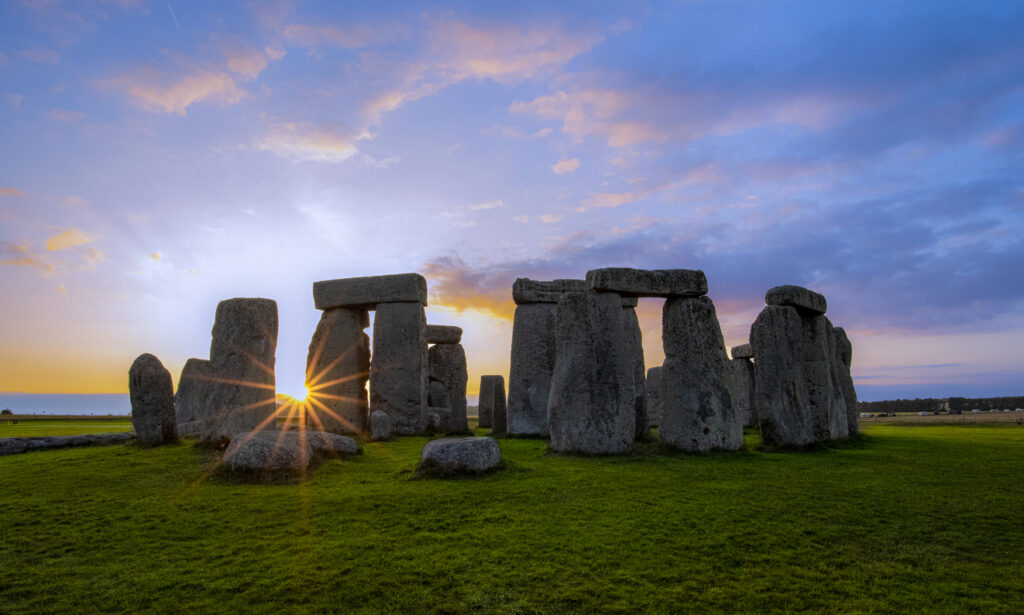
Once the stones reached the site, they still had to be raised vertically into prepared pits. Each block stands several metres tall and weighs many tonnes, making the lifting process a major engineering challenge.
Archaeologists believe builders dug a hole, tipped the stone upright using ropes and wooden frames, and then packed earth and smaller stones around the base. Even so, coordinating that process safely with prehistoric tools would have taken impressive teamwork and understanding of leverage.
The precise shaping of the sarsen stones
The large stones weren’t simply rough blocks placed in a circle. They were carefully shaped, with flattened sides and smooth surfaces that suggest deliberate craftsmanship. What makes this remarkable is that the shaping was done using stone tools. Achieving that level of uniformity would have required patience, skill, and a clear vision of the final structure.
The stone joints that resemble carpentry
One of the most fascinating engineering details at Stonehenge is the use of joints similar to those used in woodworking. The horizontal lintel stones sit on top of the upright stones using mortise and tenon joints. The builders even used tongue and groove joints between neighbouring lintel stones. These techniques helped lock the structure together so it remained stable despite weather and shifting ground.
The careful circular layout of the monument
Stonehenge isn’t a rough ring of stones placed randomly in a field. The builders created a remarkably accurate circle using heavy blocks that had to be positioned precisely. Maintaining that level of geometry without modern measuring tools suggests the builders used ropes, stakes, and careful surveying techniques. The fact that the circle remains so balanced today shows just how accurate their layout was.
The alignment with the summer solstice sunrise
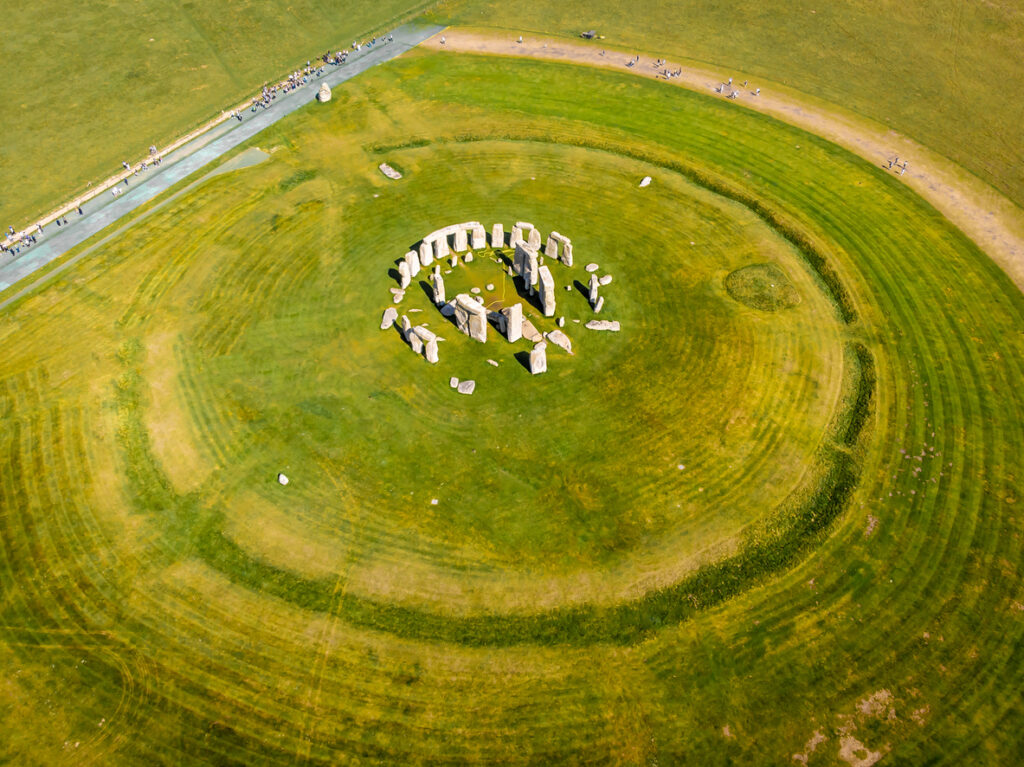
One of the most famous features of Stonehenge is its alignment with the summer solstice. On the longest day of the year, the sun rises in direct alignment with the monument’s main axis. This suggests the builders had a clear understanding of seasonal solar movement. Tracking the sun’s position across years would have required careful observation and long-term planning.
The massive lintel stones forming the top ring
The horizontal lintel stones that sit on top of the uprights weigh several tons each. Lifting them several metres into the air would have been one of the most difficult stages of construction. Some researchers believe earthen ramps or timber frameworks were used to raise them gradually. Whatever the exact method, placing heavy stones so precisely on top of vertical pillars would have demanded remarkable coordination.
The monument was built in several stages
Stonehenge wasn’t constructed all at once. Archaeological evidence shows it evolved through multiple phases over roughly 1,500 years. Early stages included earthworks and wooden structures before the famous stone circle appeared. This gradual development suggests that different generations continued adding to the site, each building on earlier designs.
The stones still stand after thousands of years
Even after millennia of weather, frost, and shifting soil, much of the structure remains standing. The stability of the stones shows that the builders understood how to distribute weight and anchor the stones securely. Modern restorations have helped stabilise some areas, but the core structure has survived, largely thanks to the original engineering decisions made thousands of years ago.
How the builders coordinated such a massive workforce

Transporting, shaping, and erecting dozens of giant stones would have required a large and organised workforce. People would have needed food, tools, and direction during long periods of construction. This raises questions about the social structure behind the project. Organising that scale of labour suggests leadership, planning, and possibly ceremonial importance that motivated people to take part.
Why this specific location was chosen
Stonehenge sits on a landscape already rich with ancient burial mounds and ceremonial sites. The area may have held spiritual significance long before the stone circle appeared. However, from an engineering perspective, the location is also practical. The chalk ground drains well and provides a stable base for heavy stones. Whether chosen for spiritual or practical reasons, the site has proven durable for thousands of years.
Stonehenge continues to fascinate because it combines impressive engineering with unanswered questions. The people who built it didn’t leave written records explaining their methods or intentions. All we have are the stones themselves and the clues buried in the surrounding landscape. Yet, those clues still show that prehistoric builders possessed remarkable ingenuity, organisation, and determination.