From flowerbeds to windowsills, the UK is teeming with insects, especially at this time of year.

Most of them are harmless, but many of them fascinating once you know what you’re looking at. That being said, it can be tricky to tell what’s what when something small and winged buzzes by. Whether you’re a gardener, walker, or just tired of saying “some kind of beetle,” this guide will help you spot and identify some of the UK’s most common insects without needing a degree in entomology.
1. Seven-spot ladybird

This is the UK’s most familiar ladybird, with its red shell and yes, seven black spots. It’s rounded, shiny, and usually about the size of your little fingernail. You’ll find them from spring to autumn, especially in gardens and hedgerows. They’re good news for gardeners because they eat aphids by the dozen. If you spot clusters of yellow eggs on leaves, that’s probably a ladybird laying the next generation of your garden’s tiny pest patrol.
2. Green shield bug

Also known as the “stink bug” due to the smell it gives off when disturbed, the green shield bug is a bright green, shield-shaped insect you’ll often spot basking on leaves. It’s roughly 12–14mm long and turns a bronzy colour in autumn. Despite the name, it doesn’t do much harm to most plants. They feed on sap but rarely in numbers large enough to cause real damage. There’s also a brown “parent bug” variety that looks similar but isn’t quite as vivid.
3. Peacock butterfly
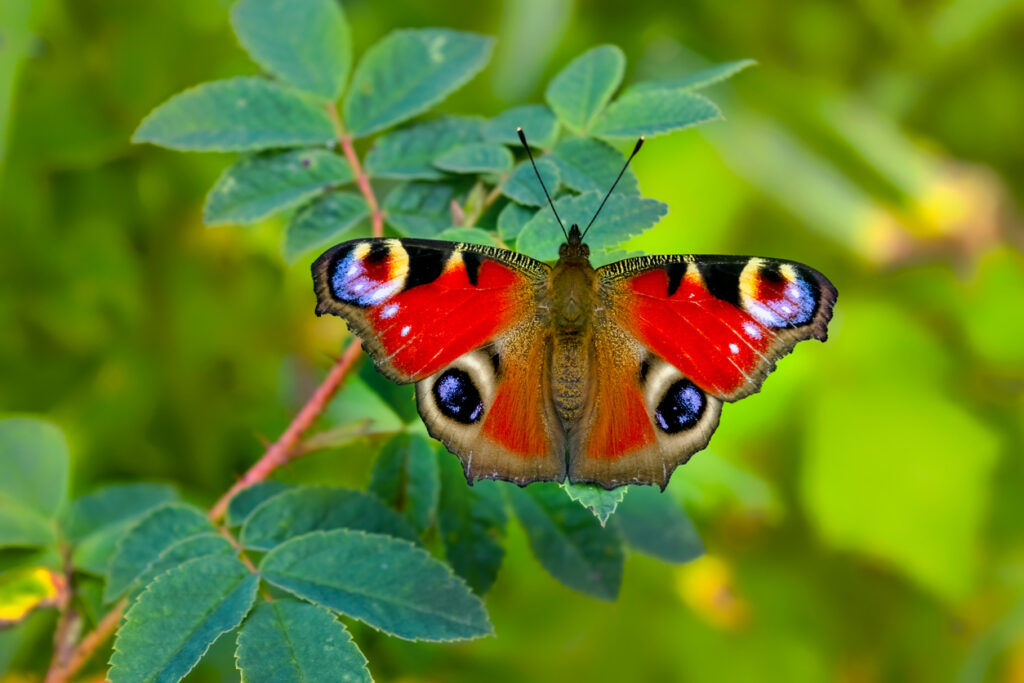
With its dramatic eyespots and reddish wings, the peacock butterfly is one of the most recognisable in Britain. It’s common in gardens, parks, and even urban streets from early spring to late summer. It overwinters as an adult, so it’s often one of the first butterflies you’ll see as the weather warms up. The large “eyes” on its wings help deter predators, giving it a survival trick as well as beauty.
4. Honeybee

Smaller and slimmer than a bumblebee, honeybees have narrow, golden-brown bodies with black stripes. They’re social insects, living in large colonies, and play a vital role in pollinating plants and crops. You’ll most often spot them on flowers during warm, sunny days from spring to early autumn. Unlike wasps, honeybees aren’t aggressive unless threatened, and they die after stinging, so they’re not keen to pick fights.
5. Common wasp
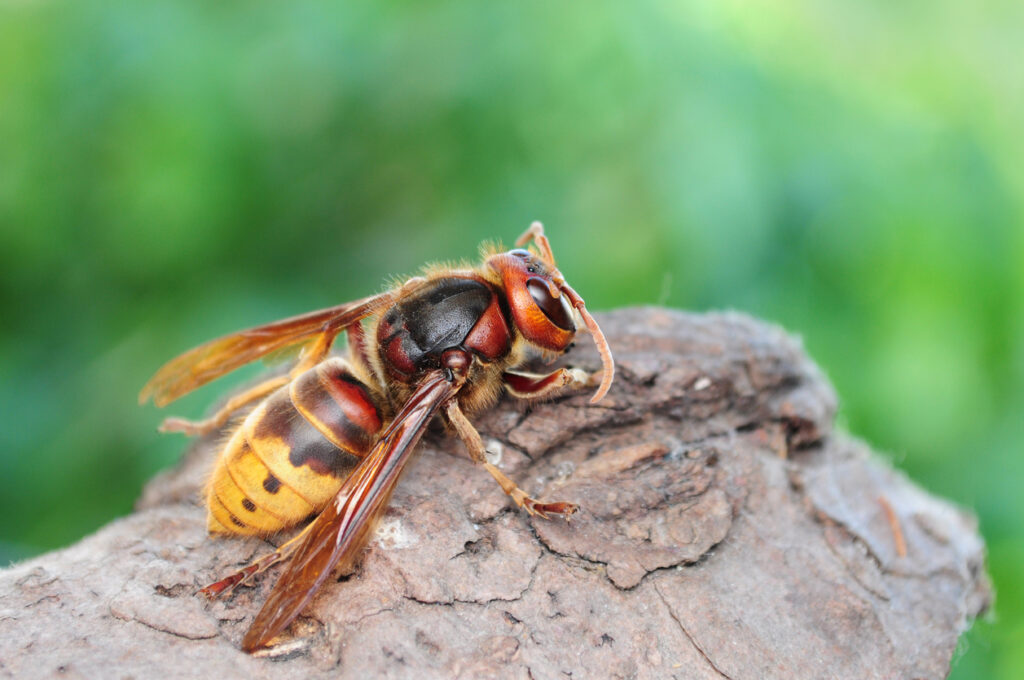
Bright yellow with sharp black stripes and a noticeably narrower “waist,” the common wasp is a familiar (and sometimes annoying) sight, especially in late summer when they crash picnics and barbecues. They’re actually useful pest controllers, eating flies, caterpillars and spiders. But once their colony stops needing protein, they go looking for sugar, hence their love of your cider or jam sandwich in August.
6. Red admiral butterfly
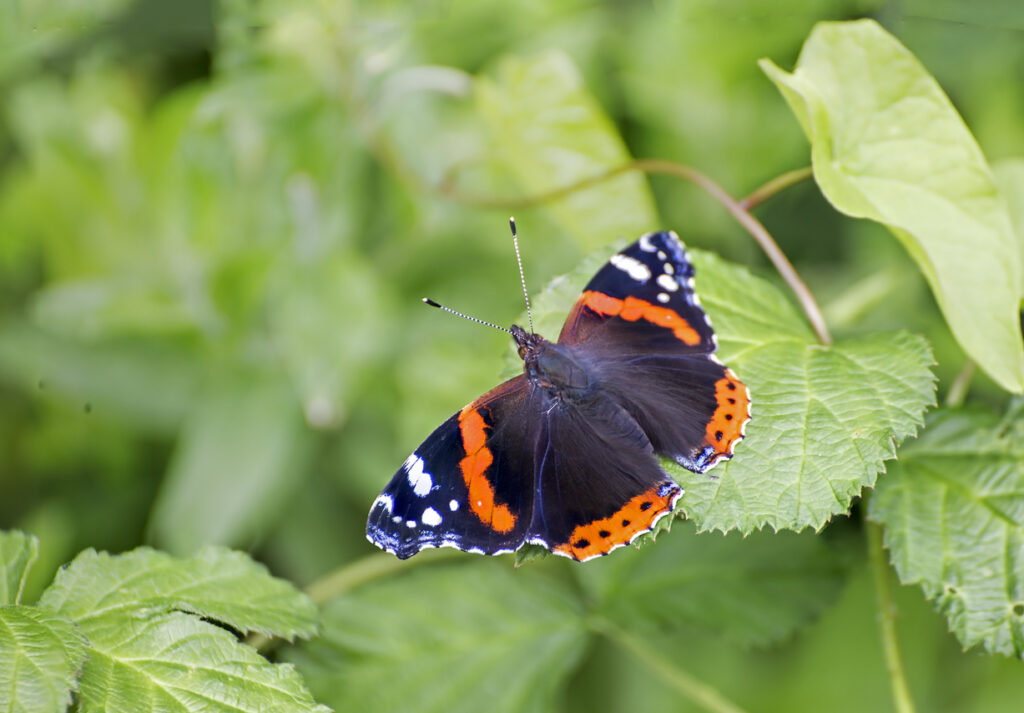
This striking butterfly has dark wings with red bands and white spots, making it easy to spot on buddleia, blackberries, or ripe fruit. It’s one of the most widespread butterflies in the UK. They migrate here from southern Europe each year and can be seen from spring through to autumn. Late in the season, they’re often found feasting on windfall apples or ivy flowers, stocking up before winter.
7. Bluebottle fly
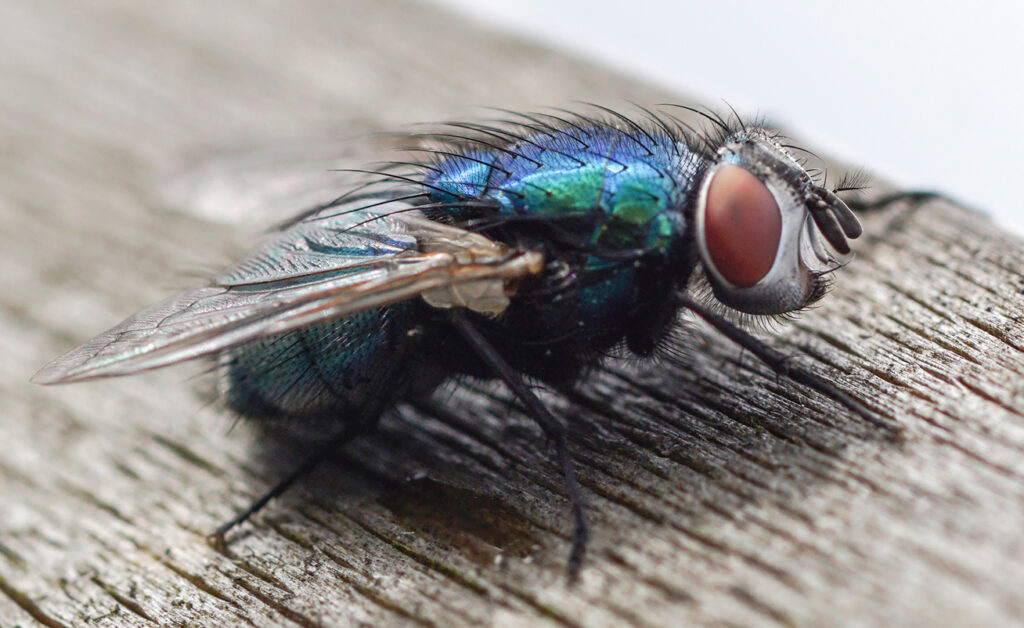
Big, noisy, and metallic blue, bluebottle flies aren’t exactly beloved, but they’re part of the ecosystem. They often hang around bins or compost heaps and are easy to identify by their iridescent sheen and loud buzz. They’re decomposers, meaning they help break down dead matter. While annoying indoors, they’re important outside for clearing up waste and feeding other creatures like spiders and birds.
8. Common carder bee
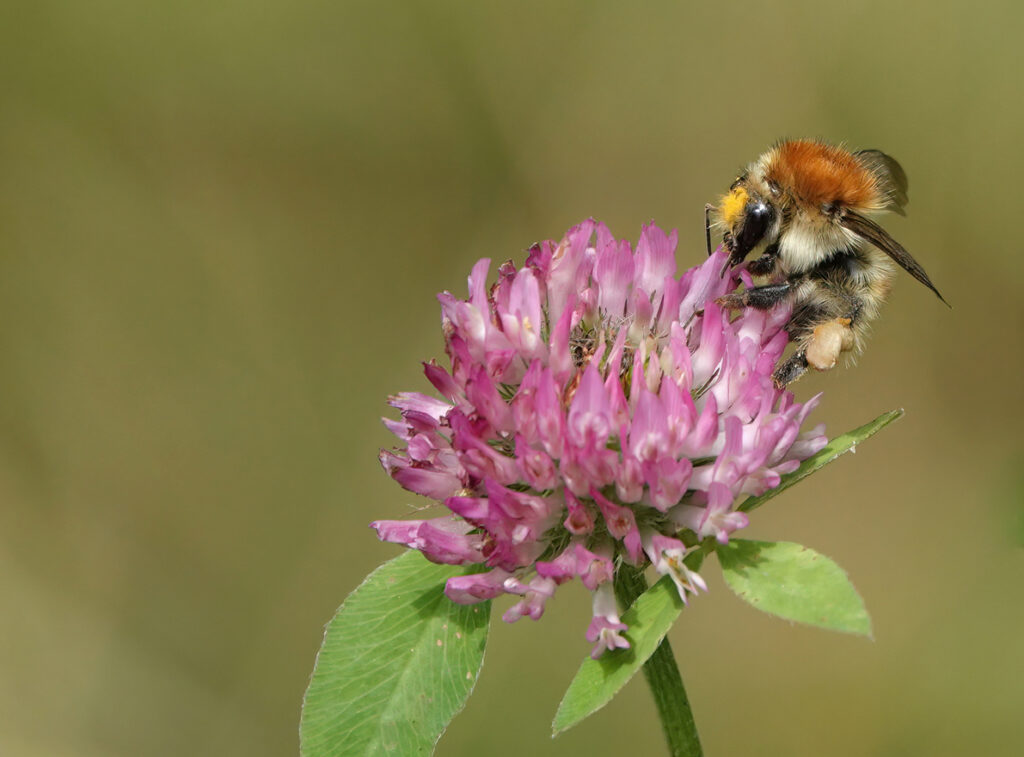
This is one of the UK’s more reddish-toned bumblebees, with ginger fur on its thorax and sometimes black or grey on its abdomen. It’s smaller than some other bumblebee types but no less busy. It nests close to the ground, often in long grass or compost heaps, and prefers open flowers like clover or knapweed. It’s gentle in nature, making it one of the more approachable bees you’ll find buzzing around.
9. Greenbottle fly
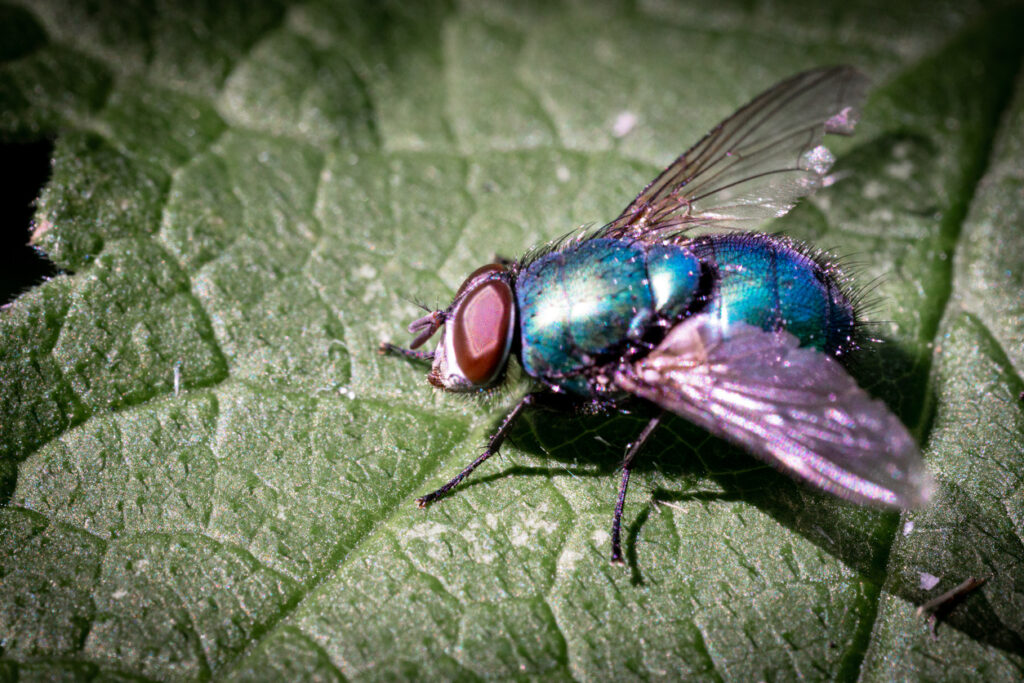
Similar in size and shape to a bluebottle, greenbottle flies have a bright, metallic green colour that shimmers in the sun. They’re common in gardens, fields, and woodland edges, especially near decaying material. Like their blue cousins, they’re also important recyclers of dead animals and waste. If you see one in your house, it likely found its way in through food smells or warm drafts, not because it wants to move in.
10. Soldier beetle

Sometimes called the “bloodsucker” beetle (though it doesn’t bite), this insect has a long, flat body with a reddish-orange colour and dark wing tips. You’ll often find them on flowers or tall grasses in midsummer. They’re useful in the garden, feeding on aphids and small insects. If you see them in pairs, don’t be surprised. They’re known for mating in full view, often right on top of daisy heads or umbellifers.
11. Speckled wood butterfly
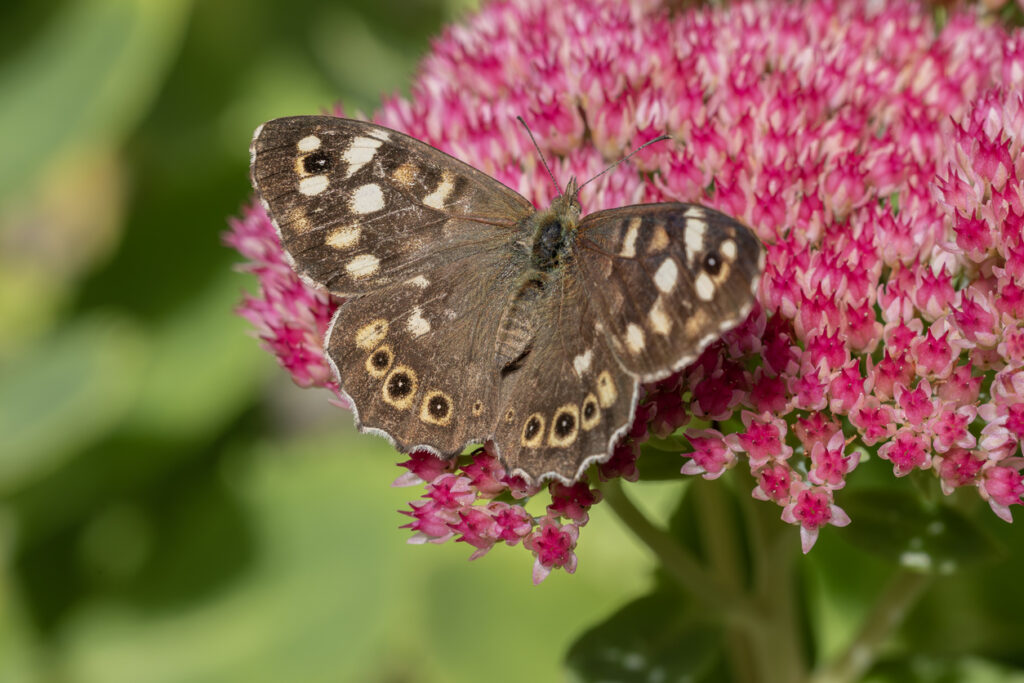
This brown butterfly with creamy spots is most at home in dappled woodland or hedgerows. Unlike most butterflies, speckled woods are happy flying in shade as well as sun, which gives them a bit of an advantage in cool summers. They can be surprisingly territorial, chasing off other butterflies from their patch of path or shrub. Look for them fluttering low among ferns, brambles, and nettles in late spring and summer.
12. Harlequin ladybird

These non-native ladybirds come in a huge variety of colours and spot patterns: sometimes orange with no spots, sometimes black with red spots. They’re larger than the native seven-spot and have a more domed shape. While still aphid munchers, harlequins are considered invasive because they compete with and sometimes eat native ladybirds. You can tell them apart by their wide range of appearances and the pale M- or W-shaped mark on their pronotum (just behind the head).