The Galápagos Islands are often described as a living laboratory, a remote volcanic archipelago where the usual rules of evolution seem to have been tossed out the window.

Because these islands are so isolated, the creatures that ended up there had to adapt in some of the most creative and bizarre ways imaginable just to survive the harsh environment. You aren’t just looking at standard wildlife here; you’re looking at animals that have developed traits you won’t find anywhere else on the planet, from lizards that have learned to graze on the sea floor to birds with bright blue feet used for a very specific type of showmanship. Each of these 10 species carries a bit of the island’s history in its biology, making them some of the most distinct and fascinating examples of life on Earth.
Giant tortoises look like they’ve seen everything.
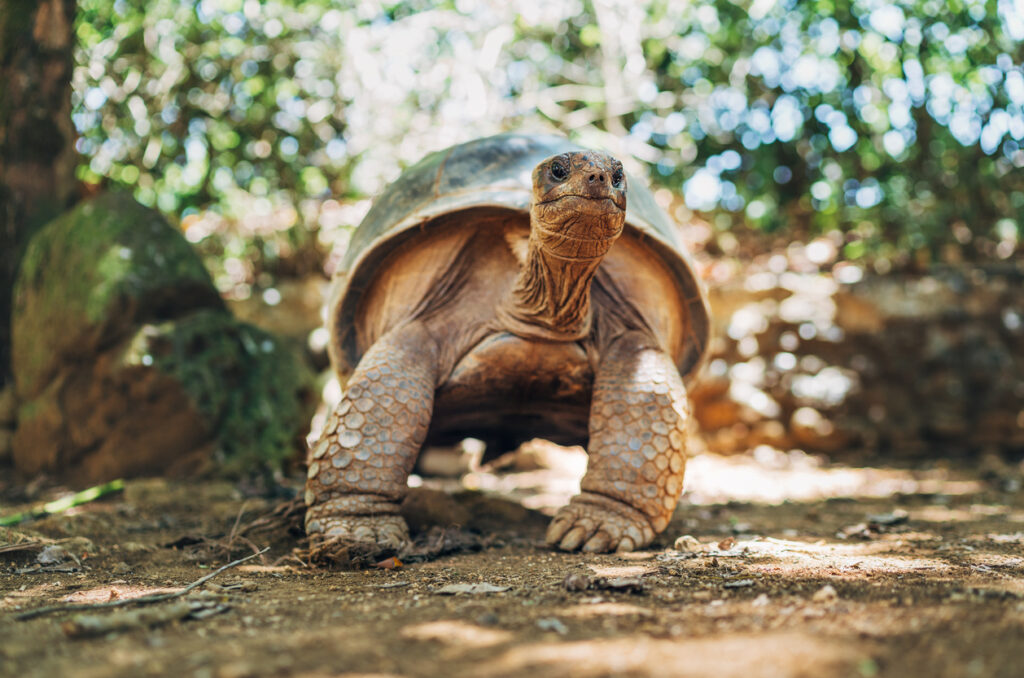
Galápagos giant tortoises are the headline act for a reason. They’re huge, slow, and strangely calm, like they’ve got nowhere to be and nothing to prove. Different islands ended up with slightly different types, which is why you’ll hear about saddleback shells in some places and more domed shells in others. That shape difference isn’t just trivia, it links to how they feed and what plants are available. When you see one up close, the size lands properly. Their legs look like sturdy tree trunks, and their faces have that ancient, almost gentle look that makes people instantly soften.
What really gets people is how long they live and how steady they seem. These tortoises can spend hours just grazing, then wander off with zero fuss, as if the whole world is on their timetable. They’re also a big part of the islands’ ecology because they move seeds around and shape vegetation as they feed. When their numbers dropped in the past, it affected the whole landscape, which shows how one animal can quietly hold an entire system together. Seeing them in the wild doesn’t feel like spotting a random reptile, it feels like bumping into a living piece of history.
Marine iguanas learned to swim for dinner.

Marine iguanas are one of those animals that sound made up until you see them. They look like chunky little dragons sprawled across black lava rocks, then they shuffle into the sea like it’s the most normal thing in the world. They’re the only lizards that have properly adapted to feeding in the ocean, grazing on algae and seaweed. When they climb back out, they’ll often just pile together in groups to warm up because the water steals their heat fast. It’s a brilliant, slightly scruffy routine that suits the islands perfectly.
They’ve also got a few features that make them even stranger once you notice. They sneeze out salt because taking in salty seawater comes with extra baggage, and their bodies have to dump it somehow. Their dark colour helps them soak up warmth again after a swim, which is handy when you’re basically doing cold plunges for food. They can look a bit grumpy and battered, but that’s part of the charm because they’re not trying to be pretty. They’re built for survival in a place where the sea, sun, and sharp rocks run the show.
Darwin’s finches make evolution feel real.

Darwin’s finches are small birds, but they’ve got a massive reputation. The reason is their beaks, as different finch species ended up with different beak shapes depending on what food was easiest to get on their island or in their habitat. Some beaks are better for cracking seeds, others for picking insects, others for nibbling plant material. It’s one of those things that sounds simple until you watch them and realise that tiny changes in shape can decide whether a bird eats well or struggles. They’re a real-life reminder that nature tweaks what works.
What’s also interesting is that these finches aren’t just museum mascots. They’re still living, adapting, and dealing with real pressures, like changing weather patterns and introduced diseases. When food availability changes, the finches that can cope are the ones that do better, which is natural selection in motion, not just a textbook line. You might not even clock you’re looking at a famous animal at first, because they can look like normal little birds hopping about. Then you remember what they represent, and suddenly, you’re paying attention to every tiny detail like it’s a nature documentary in real time.
Blue-footed boobies look like they’ve stepped in paint.

Blue-footed boobies are one of the easiest Galápagos animals to fall in love with, mainly because they look so daft and confident at the same time. Their bright blue feet are real, and yes, they really do lift them up in a sort of high-step dance during courtship. The colour matters because it can signal health, so the feet are basically part of the sales pitch. Their faces also have a slightly unimpressed expression, which makes the whole thing funnier, like they’re doing a romantic performance while pretending they don’t care.
When they’re not dancing, they’re diving. Boobies hunt by plunge-diving into the sea at speed, which is why they’ve got those sleek bodies built for impact and quick grabs. You’ll often see them nesting right on the ground, sometimes just a few feet from a path, completely unbothered by humans. That lack of fear is common in Galápagos wildlife, though it doesn’t mean you should crowd them, since stress is still stress. Watching a group of them is pure entertainment because even when they’re standing still, they’ve got that slightly awkward, overgrown-seabird vibe that feels like a comedy character come to life.
Galápagos penguins live way too close to the equator.

Penguins in the tropics feels like a trick question, but the Galápagos penguin is very real. It’s the only penguin species that lives on the equator, and it gets away with it because the islands have cooler currents and nutrient-rich waters that keep fish coming. They’re much smaller than the penguins people picture on ice, which helps too because smaller bodies can manage heat better. Seeing one on a sunny shoreline is strangely disorienting, like you’ve spotted a snow animal on holiday.
They’re also a good example of how tough island life can be, since their numbers can rise and fall depending on ocean conditions. When waters warm and food becomes harder to find, penguins struggle, especially when they’re raising chicks. They nest in cracks and caves to avoid direct sun and to keep predators away, which makes them feel a bit secretive compared to big penguin colonies elsewhere. If you do spot one, it often looks busy and alert, darting in and out of the water like it’s on a tight schedule. For a small animal, it carries a lot of charm and a lot of grit.
Flightless cormorants traded flying for swimming.

The flightless cormorant looks like a bird that forgot to finish getting dressed. Its wings are tiny, it has a heavy body, and it sort of waddles around like it knows it’s being judged. But the trade-off makes sense for the Galápagos. With few natural predators and a life spent hunting in coastal waters, flying became less useful than being a strong swimmer. Their bodies are built for diving and chasing fish underwater, and those stumpy wings are basically the receipt for that choice.
Watching them dry their wings is another classic moment because they still do the outstretched-wing pose, even though those wings aren’t taking them anywhere. They often hang around rocky shores and shallow waters where they can hunt effectively, and they move with a calm confidence that doesn’t match their awkward look on land. It’s the kind of animal that’s easy to underestimate until you picture what it’s like underwater, moving fast, steering hard, and grabbing prey. The Galápagos is full of creatures like this, where the body tells you exactly what the animal had to become in order to live there.
Sea lions act like the islands’ laid-back locals.
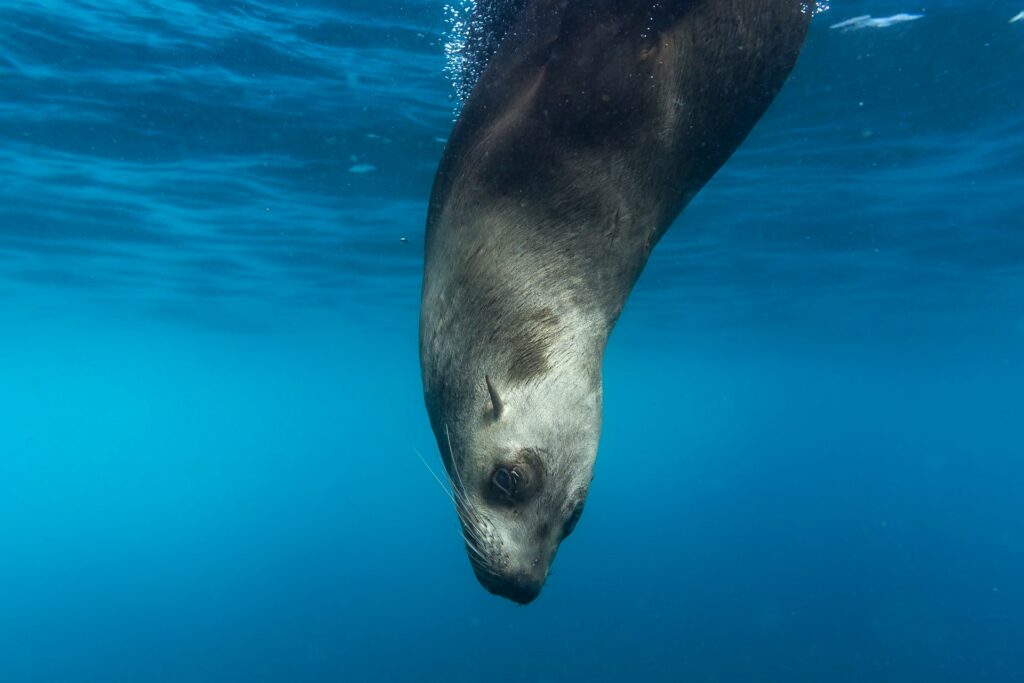
Galápagos sea lions are everywhere, and they behave like they own the place because in a way, they do. You’ll find them flopped on beaches, sprawled across benches, blocking walkways, and snoozing in the sun with zero shame. They’ve got a confident, playful energy, especially the younger ones, who seem to spend half their time practising wrestling moves. They’re also very expressive, with loud barks and grunts that make it obvious when someone’s annoyed or trying to show off.
Underneath the chilled vibe, they’re serious hunters. They swim out to feed on fish and squid, then come back to rest and nurse pups, often in busy, noisy groups. You’ll notice how mums and pups recognise each other by sound, which matters in a colony full of lookalikes. Their comfort around humans can make people forget they’re still wild animals with sharp teeth and strong jaws. Giving them space isn’t just polite, it’s common sense, as the calm can flip quickly if they feel crowded. They’re one of the best reminders that wild animals can look relaxed without being tame.
Land iguanas look like sun-baked dinosaurs.

Land iguanas are the ones people imagine when they think of ancient reptiles. They’re thick-bodied, often yellowish or golden in colour, and they sit in the heat like they’re charging up. They feed mainly on plants, including prickly pear cactus, which looks like a painful meal until you remember they’re built for it. On some islands you can spot them around dry, open areas where they can bask and forage, and once you’ve seen one, you realise why people keep saying the Galápagos feels prehistoric.
They’re also a good example of how island animals can specialise. If your main food source is cactus, you need a body and gut that can handle it, plus the patience to live off what’s available. Land iguanas dig burrows or use natural shelter to manage heat, and their daily rhythm is often about balancing sun exposure with survival. They don’t move fast, but they don’t need to because their whole strategy is slow, steady, and well adapted. When you see one close up, the scales, the claws, and the heavy head make it obvious you’re looking at a creature with a very old design.
Green sea turtles turn the coast into a slow-motion parade.

Green sea turtles are one of the calmest sights in the Galápagos, especially when you see them gliding through clear water like they’re floating rather than swimming. They come into shallower areas to feed and rest, and they can look almost gentle, even though they’re powerful animals. On land, nesting season is the big moment because females haul themselves up beaches to lay eggs, which is hard work for an animal built for the sea. It’s one of those wildlife moments that makes you automatically lower your voice, even if nobody asked you to.
They also show how long-term and patient nature can be. Turtles take years to mature, and a lot can happen to them between hatching and adulthood, which is why protecting nesting beaches matters so much. In the water, they’re not just pretty to look at, they’re part of the ecosystem, helping keep seagrass beds healthy through grazing. They can also end up caught in human problems that drift into the sea, like plastic waste and fishing gear, which is a hard reality in even the most remote places. Seeing a turtle in the Galápagos can feel peaceful, but it also carries that reminder that their survival depends on a lot going right for a very long time.
Sally Lightfoot crabs turn rocks into a colour show.

Sally Lightfoot crabs are the little flashes of colour you start noticing once you’ve looked past the bigger animals. They cling to lava rocks near the shoreline, often in places where waves crash and spray keeps everything slick. Their colours can be bright and almost unreal, with reds, oranges, and blues that stand out against black rock. They move fast, darting sideways in quick bursts, which makes them feel like the nervous energy of the shoreline. If you stop and watch, you’ll see them picking at algae and scraps, doing the cleanup work that keeps coastal areas ticking over.
They’re also a great example of how much life is packed into the edges of the islands. The shoreline is a busy zone, with birds hunting, iguanas grazing, sea lions hauling out, and crabs trying to survive in the middle of it all. These crabs have to deal with heat, waves, and hungry predators, so they stay alert and ready to bolt. They can look decorative, like they’re there for photos, but they’ve got a real job in the ecosystem and a tough lifestyle to match. Once you start paying attention to them, the whole coastline feels more alive because you realise the islands aren’t only about the famous animals.